5 Min Read
Noticing black-coloured stool can feel alarming, and it’s natural to wonder what it means. In many cases, it’s something harmless, often linked to certain foods or medications. However, sometimes it can point to a more serious issue, like bleeding in the upper digestive tract. The key is to understand the possible causes and pay attention to any sudden or persistent changes. Knowing when it’s harmless and when to seek medical advice can help you stay calm and take the right steps for your health.
Synopsis
What Does Black Stool Mean?
Black stool means your poop looks very dark or black instead of its usual brown colour. It may also look sticky or tar-like and sometimes have a strong smell. This change can happen for simple reasons, such as eating foods like black liquorice or taking medicines like iron tablets or certain supplements.
However, in some cases, black stool can be a sign of bleeding in the upper part of the digestive system, such as the stomach. When blood is digested, it turns the stool black. If this change happens suddenly, lasts for a few days, or is seen along with symptoms like weakness, dizziness, or stomach pain, it’s important to consult a doctor. Understanding these signs can help you decide when it’s harmless and when to seek medical care.
Black stool may occur in two different forms:
-
Harmless dark stool caused by food or medicines
-
Tarry, sticky black stool (melena), which may indicate digested blood from the stomach or upper intestine
The appearance, texture, and smell can help differentiate between the two.
Common Causes of Black Stool
Black stool can happen for different reasons. Some causes are harmless, while others may need medical attention. Here are the most common ones explained in simple terms:
1. Iron Supplements
Taking iron tablets is one of the most common reasons for black stool. This is a normal and harmless side effect, so there is usually no need to worry.
2. Certain Medications
Some medicines used for acidity or an upset stomach, especially those containing bismuth, can make your stool look dark or black. This change is temporary and goes away once you stop the medicine.
3. Food Items
Certain foods can also change the colour of your stool. For example:
-
Black licorice
-
Blueberries
-
Dark chocolate
-
Foods with dark colouring
If food is the cause, the colour usually returns to normal after a day or two.
4. Gastrointestinal Bleeding
In some cases, black stool can be a sign of bleeding in the upper part of the digestive system, such as the stomach, food pipe (oesophagus), or small intestine. When blood is digested, it turns the stool black and sticky (often called tar-like).
This type of bleeding may be caused by:
-
Stomach ulcers
-
Inflammation of the stomach (gastritis)
-
Severe acid reflux
-
Rarely, growths or tumours
If black stool appears suddenly, looks sticky, or is accompanied by symptoms like weakness, dizziness, or stomach pain, it is important to consult a doctor.
Symptoms That May Accompany Serious Causes
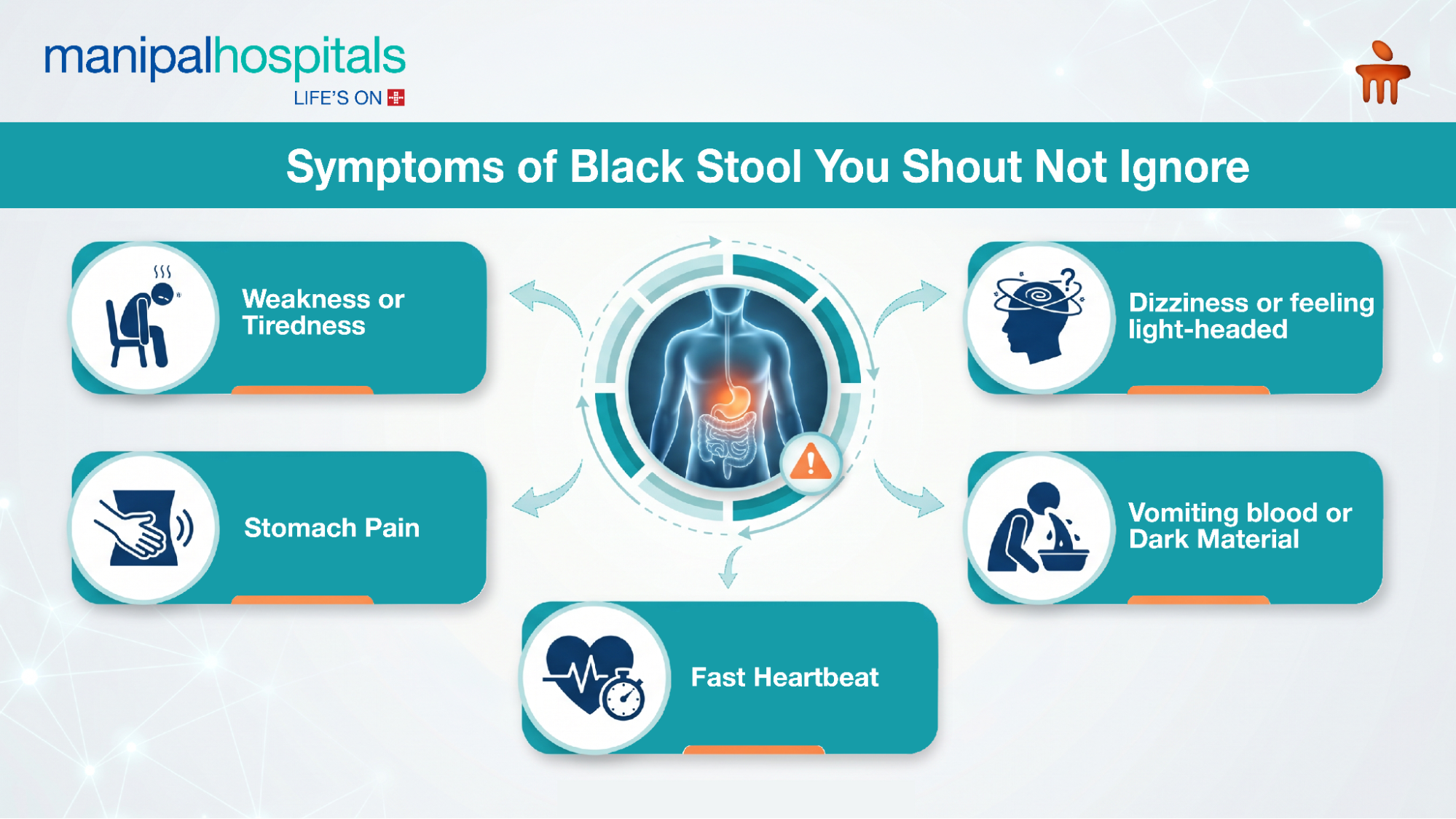
If black stool is caused by internal bleeding, it is often accompanied by other warning signs. These symptoms should not be ignored:
-
Weakness or tiredness: You may feel unusually low on energy or easily exhausted.
-
Dizziness or feeling light-headed: This can happen due to blood loss.
-
Stomach pain: You may experience discomfort or pain in the abdomen.
-
Vomiting blood or dark material: Vomit may appear red or look like coffee grounds.
-
Fast heartbeat: Your heart may beat faster than usual as the body tries to compensate for blood loss.
If you notice black stool along with any of these symptoms, it is important to seek medical help immediately. Early diagnosis and treatment can prevent serious complications.
When Should You See a Doctor?
You should consult a doctor if:
-
Black stool appears without an obvious dietary or medicinal cause
-
It persists for more than a few days
-
It is accompanied by weakness, pain, or vomiting
-
You have a history of ulcers or digestive issues
Diagnosis
To find out the exact cause of black stool, your doctor may suggest a few simple health checkup tests:
-
Stool test: To check if there is blood in the stool.
-
Blood tests: To see if you have low haemoglobin (anaemia), which can happen due to bleeding.
-
Endoscopy: A procedure where a thin tube with a camera is used to look inside the food pipe, stomach, and upper intestine. This helps identify any bleeding or ulcers.
These tests help the doctor understand whether the condition is harmless or needs treatment.
Treatment
Treatment depends on what is causing the black stool:
-
Diet or iron supplements: If the cause is food or iron tablets, no treatment is needed. The stool colour will return to normal on its own.
-
Ulcers or gastritis: Doctors may prescribe medicines to reduce stomach acid and help the stomach lining heal.
-
Bleeding conditions: If there is internal bleeding, immediate medical care may be required. In some cases, hospital treatment is needed to control the bleeding and prevent complications.
Getting the right diagnosis early ensures proper treatment and helps avoid serious health issues.
Conclusion
Black stool is not always something serious, but it should never be ignored. In many cases, it happens due to certain foods or medicines and is harmless, but sometimes it can be a sign of bleeding inside the digestive system, which needs medical attention. If you are unsure about the cause or notice any unusual symptoms, it is always best to consult a doctor, as early diagnosis can help prevent serious health problems and ensure proper treatment.
At Manipal Hospitals, our specialists in the Department of Gastroenterology provide comprehensive evaluation, accurate diagnosis, and advanced treatment for conditions causing black stool, including gastrointestinal bleeding, ulcers, and gastritis, helping identify the underlying cause early, manage symptoms effectively, and support long-term digestive health and overall well-being.
FAQ's
Black stool can happen due to certain foods, iron tablets, or some medicines. In some cases, it may also be due to bleeding in the stomach or upper digestive tract.
Common reasons include iron supplements, medications like bismuth, dark-coloured foods, and sometimes digestive tract bleeding.
Black stool is caused either by harmless factors like diet and medicines or by medical conditions such as stomach ulcers, gastritis, or internal bleeding.
You should worry if black stool appears suddenly, looks sticky or tar-like, or is accompanied by symptoms like dizziness, weakness, stomach pain, or vomiting blood.
Share this article on: