


 5 Min Read
Jelly-like mucus in stool is a thick, gel-like substance produced by the lining of the intestines. Under normal conditions, the intestines continuously produce small amounts of mucus. This mucus is not usually visible and plays an important role in protecting the gut lining from friction, stomach acids, and harmful bacteria, while also helping stool move smoothly through the digestive tract.
When mucus becomes visible in stool, appears in larger amounts, or has a jelly-like consistency, it usually indicates that the intestines are reacting to some form of irritation, infection, or inflammation. This may be temporary, such as during a mild digestive upset, or it may be associated with ongoing conditions affecting the bowel. In some cases, it can also be seen along with changes in stool pattern, such as diarrhoea or constipation, depending on the underlying cause.
Synopsis
Common Causes for Mucus
Jelly-like mucus appears when the bowel lining reacts to irritation. Common causes include:
-
Irritable Bowel Syndrome (IBS) – one of the most common functional gut disorders.
-
Infections – bacterial, viral, or parasitic infections of the intestine.
-
Constipation – hard stool irritates the bowel lining.
-
Inflammatory Bowel Disease (IBD) – Crohn’s disease or ulcerative colitis.
-
Food intolerance – such as lactose or gluten sensitivity.
-
Haemorrhoids or rectal irritation.
-
Less commonly, serious conditions like colorectal disease.
Symptoms for Mucus
Mucus in stool is usually not seen alone and often appears along with other digestive symptoms. The exact symptoms depend on the underlying cause affecting the intestines.
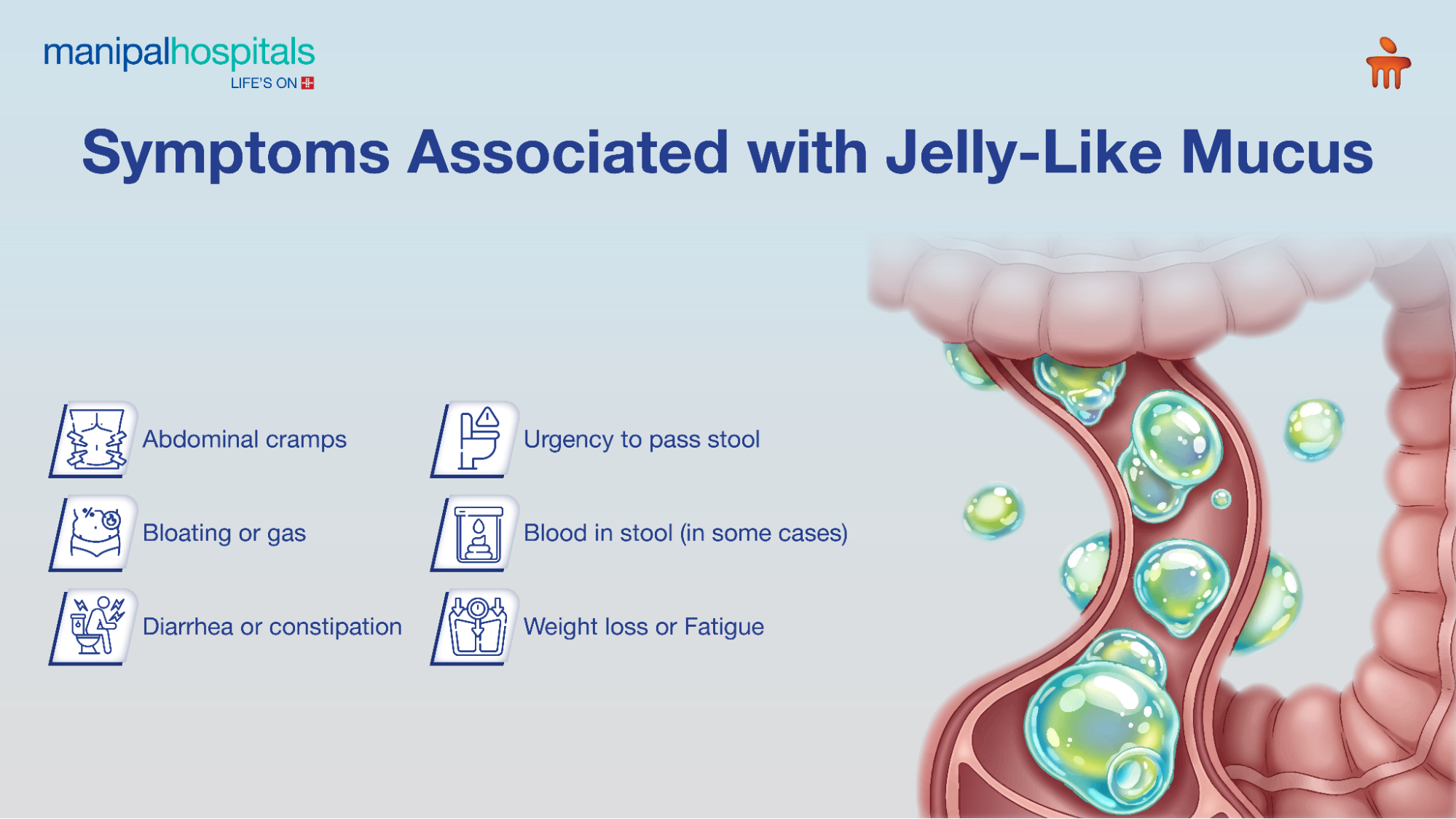
Abdominal cramps or discomfort: Irritation or inflammation in the gut can cause mild to moderate pain or a cramping sensation in the abdomen.
-
Diarrhoea or constipation: Changes in bowel movement are common. Some conditions speed up bowel activity, causing diarrhoea, while others slow it down, leading to constipation.
-
Bloating or gas: Excess gas formation or a feeling of fullness in the abdomen may occur due to digestive imbalance or infection.
-
Urgency to pass stool: Some people may feel a sudden or frequent need to empty the bowels, even when there is little stool.
-
Blood in stool (in some conditions): Inflammatory or more serious bowel conditions may cause small or visible traces of blood along with mucus.
-
Fatigue or weight loss (in chronic diseases): Long-term intestinal conditions can affect nutrient absorption, leading to tiredness and unexplained weight loss.
These symptoms help doctors understand whether the mucus is due to a mild digestive issue or an underlying gastrointestinal condition that needs further evaluation.
When to See a Doctor
Medical attention is important if:
-
Mucus appears frequently or increases over time
-
There is blood mixed with mucus or stool
-
Symptoms last more than a few days
-
Severe abdominal pain or fever is present
-
There is unexplained weight loss or weakness
Persistent symptoms may indicate infections or inflammatory bowel disease that require proper diagnosis.
How Doctors Diagnose the Cause
To identify why mucus is appearing in stool, doctors first review symptoms, medical history, and bowel habits. Based on the suspected cause, they may recommend a few diagnostic tests to get a clearer understanding of what is happening in the digestive system.
-
Stool tests (infection check): A stool sample is examined to detect infections caused by bacteria, viruses, or parasites. It can also help identify hidden blood or signs of inflammation.
-
Blood tests (infection or inflammation markers): Blood tests help check for signs of infection, anaemia, or inflammation in the body. They can also indicate whether the immune system is reacting to an underlying condition.
-
Colonoscopy (to examine intestines directly): In this procedure, a flexible camera is used to view the inner lining of the large intestine. It helps detect inflammation, ulcers, polyps, or other abnormalities that may be causing mucus production.
-
Imaging tests if required: Scans such as CT or MRI may be used in certain cases to get detailed images of the abdominal organs and identify structural or inflammatory changes.
The main goal of these investigations is to determine whether the mucus is due to a functional issue like IBS, an infection in the gut, or an inflammatory condition such as IBD so that appropriate treatment can be started.Regular digestive health check-ups and timely medical evaluations can help identify underlying bowel conditions early and ensure appropriate treatment when symptoms like mucus in stool persist.
Treatment Options
Treatment for mucus in stool is not the same for everyone. It depends on what is causing the intestinal irritation or inflammation. Doctors focus on treating the underlying condition rather than the mucus itself, as mucus usually reduces once the root cause is managed.
-
IBS (Irritable Bowel Syndrome): This is managed with dietary changes such as avoiding trigger foods, improving fibre intake, stress-control techniques, and medications when required to regulate bowel movements and relieve discomfort.
-
Infections: If mucus is due to bacterial, viral, or parasitic infections, treatment may include antibiotics or antiparasitic medicines to clear the infection and restore normal bowel function.
-
Constipation: Increasing water intake, consuming more dietary fibre, and making lifestyle changes like regular physical activity can help soften stool and reduce strain on the intestines, which may lower mucus production.
-
IBD (Inflammatory Bowel Disease): Conditions like Crohn’s disease or ulcerative colitis require long-term medical management using anti-inflammatory or immune-modifying medications to control intestinal inflammation.
-
Food intolerance: If certain foods are triggering symptoms, doctors may advise eliminating those foods from the diet to prevent gut irritation and mucus formation.
Lifestyle and Diet Support
Supportive measures may help reduce symptoms:
-
Drink enough water daily.
-
Increase dietary fibre gradually.
-
Avoid trigger foods (spicy, fatty, or intolerant foods).
-
Maintain a gut-friendly diet (curd, probiotics).
-
Regular physical activity.
Conclusion
Jelly-like mucus in stool is usually a sign of intestinal irritation. Most causes are mild, such as IBS, constipation, or infection, but persistent or severe symptoms should be medically evaluated to rule out inflammatory or serious bowel conditions.
At Manipal Hospitals, experienced gastroenterology specialists provide comprehensive evaluation, accurate diagnosis, and advanced medical and endoscopic care for patients with digestive system disorders, ensuring effective treatment outcomes, improved gut health, and long-term gastrointestinal well-being.
FAQ's
No. It is often due to minor gut irritation, but persistent mucus needs evaluation.
Yes. Stress can worsen IBS, which may increase mucus production.
Yes. Food intolerance or poor diet may irritate the gut lining.
No. Mucus itself is not contagious, but infections causing it may be.
Yes, if caused by temporary irritation or mild infection.
Share this article on:






