7 Min Read
Feeling nauseous or like you might vomit after eating is quite common, but many people don’t talk about it. Sometimes it’s mild and goes away on its own, but in other cases, it could be a sign that something isn’t working properly in your body, such as your digestion, metabolism, or overall health.
There can be many reasons for this, including certain foods not suiting you, irritation in the stomach, slow digestion, or other medical conditions. Understanding these possible causes is important so the problem can be identified and managed properly. Here, we’ll look at why nausea happens after eating and simple ways to reduce it and feel more comfortable after meals.
Synopsis
What is Nausea?
Nausea is an uncomfortable feeling in the upper stomach or throat that makes you feel like you might vomit.
It is not a disease on its own but a symptom that can happen for many different reasons. It may be triggered by signals from the brain or from the digestive system due to normal body processes, changes in metabolism, or certain health conditions.
Nausea often comes before vomiting, but it can also occur on its own without actually leading to vomiting.
Common Causes for Nausea
Feeling nauseous after a meal can happen for many different reasons:
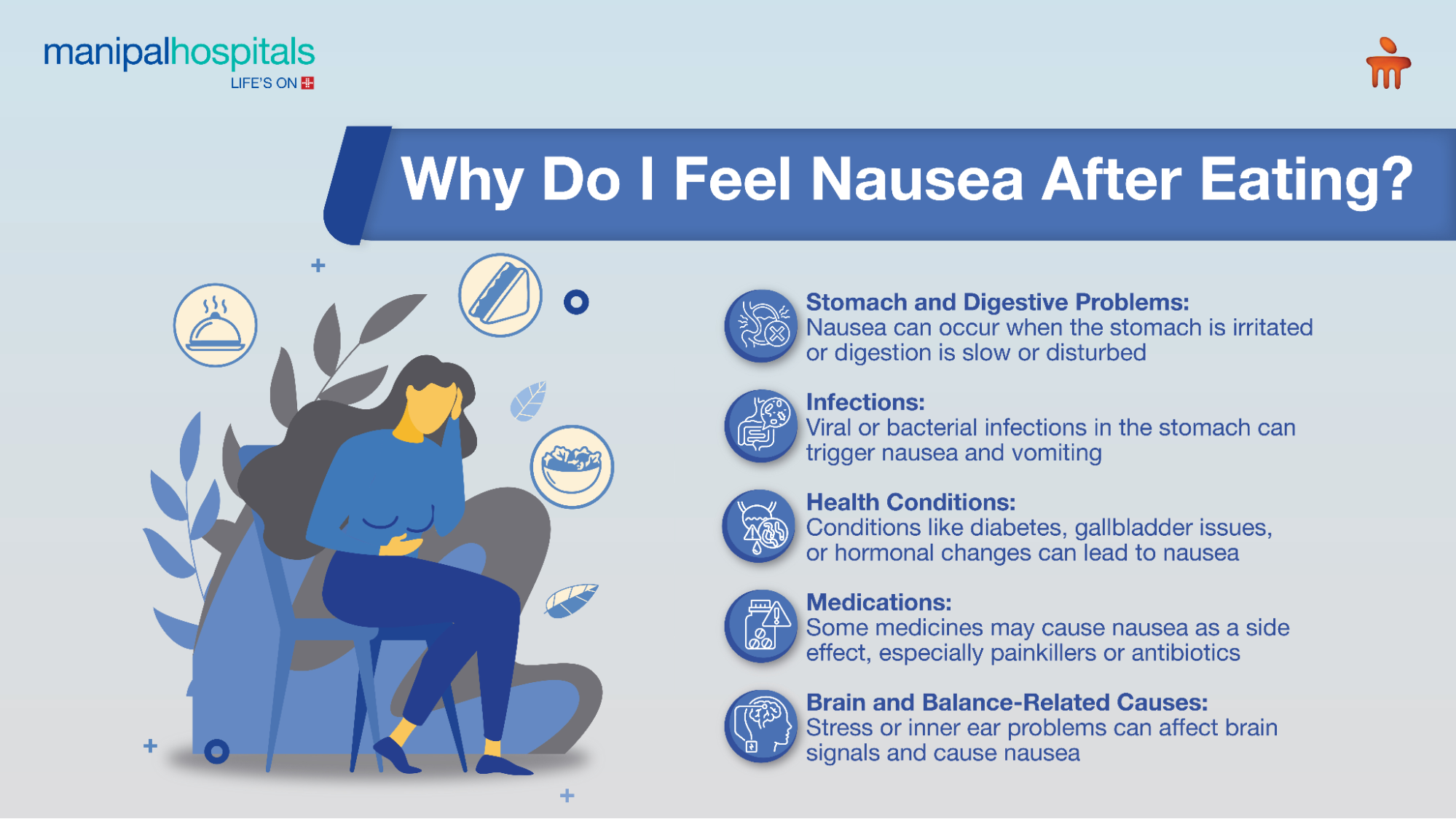
Stomach and Digestive Problems
-
Gastritis – irritation or inflammation of the stomach lining
-
Acid reflux (GERD) – when stomach acid moves up into the food pipe
-
Slow digestion (gastroparesis) – when the stomach takes longer than normal to empty
Stomach and Digestive Problems
-
Eating too much at once
-
Eating heavy, oily, or fatty foods
-
Food intolerance (for example, difficulty digesting milk in lactose intolerance)
-
Irritable bowel syndrome (a condition where the gut is more sensitive than usual)
Infections
- Stomach infections caused by viruses or bacteria (food poisoning or gastroenteritis)
Health Conditions
-
Low blood sugar
-
Hormonal changes during pregnancy
-
Liver or gallbladder problems (like gallstones)
Medications
Some medicines can cause nausea, such as:
-
Painkillers
-
Antibiotics
-
Iron tablets
-
Strong pain medications
Brain and Balance-Related Causes
-
Stress or problems in how the brain and gut communicate
-
Inner ear (balance) issues in some cases
In simple terms, nausea after eating can be caused by what you eat, how your stomach processes food, or other health conditions affecting your body.
Common Symptoms for Nausea
Upper stomach discomfort or heaviness
-
A feeling of pressure or fullness in the upper abdomen after meals.
-
This can happen when the stomach empties slowly or stretches too much.
Feeling full too quickly (early satiety)
-
You may feel full after eating only a small amount of food.
-
This is often due to slow digestion or the stomach not relaxing properly.
Bloating or stomach swelling
-
A tight or swollen feeling in the abdomen, sometimes visibly enlarged.
-
It is usually caused by gas buildup or slow movement of food in the gut.
Excess saliva (hypersalivation)
-
You may notice increased saliva in your mouth.
-
This is a natural response when your body feels like it might vomit.
Acid reflux or heartburn
-
A burning sensation in the chest or throat after eating.
-
It occurs when stomach acid flows back into the food pipe.
Vomiting (in severe cases)
-
Strong nausea may lead to vomiting.
-
This is the body’s way of removing irritating contents from the stomach.
Loss of appetite after eating
-
You may not feel like eating due to ongoing nausea or discomfort.
-
This can lead to reduced food intake over time.
Medical Treatment for Nausea
Treatment depends on the cause, so a doctor usually checks what is triggering the nausea before starting any care.
Diet Changes (First Step)
-
Doctors often suggest eating small, frequent meals instead of large ones.
-
Foods that are oily, spicy, or heavy should be avoided, and enough water should be taken.
Medicines (Only if Prescribed)
-
Acid-reducing medicines help if nausea is due to acidity or gastritis.
-
Other medicines may help improve digestion or control nausea when needed.
Treating The Root Cause
-
Antibiotics are used only if there is a confirmed infection.
-
Blood sugar control is important for people with diabetes-related stomach issues.
Lifestyle Changes
-
Avoid lying down immediately after eating to prevent reflux and discomfort.
-
Stress management may also help, as stress can affect digestion.
Medical Care is Important
-
Proper diagnosis is needed before starting any treatment.
-
Self-medication should be avoided, especially if symptoms keep coming back.
When to See A Doctor
You should consult a doctor if nausea after eating is frequent, long-lasting, or comes with warning signs.
Nausea that Keeps Coming Back
-
If you feel nauseous after most meals or it happens regularly.
-
This may point to ongoing stomach issues that need medical evaluation.
Unexplained Weight Loss or Loss of Appetite
-
Losing weight without trying or not feeling like eating is a concern.
-
It may indicate an underlying health problem that needs investigation.
Frequent or Severe Vomiting
-
Vomiting often or in large amounts can lead to dehydration.
-
It may also suggest a more serious digestive issue that needs treatment.
Blood in Vomit or Stool
-
Vomiting blood or passing black or bloody stools is a warning sign.
-
This can indicate internal bleeding and needs urgent medical attention.
Severe Pain, Fever, or Yellowing of Skin
-
Strong abdominal pain, fever, or jaundice (yellow skin/eyes) are serious symptoms.
-
These may be linked to infections or liver and gallbladder problems.
Trouble Eating or Drinking
-
If nausea makes it hard to eat or drink properly, it can affect nutrition and hydration.
-
This can weaken the body and should be checked by a doctor.
In simple terms, if nausea is frequent, severe, or comes with any unusual symptoms, it’s important to get medical help early.
Conclusion
Nausea after eating is a common symptom that can happen for many reasons related to digestion, metabolism, or the way the brain and gut work together. In many cases, it is caused by simple and harmless factors like certain foods or mild digestive issues. However, if it continues for a long time, becomes severe, or keeps coming back, it may indicate an underlying health condition that needs medical attention. A proper medical evaluation helps identify the exact cause and ensures the right treatment, which can improve symptoms, support healthy digestion, and prevent further complications.
At Manipal Hospitals, experienced gastroenterology specialists provide comprehensive evaluation, accurate diagnosis, and evidence-based management of postprandial nausea and other gastrointestinal disorders to identify underlying causes and deliver effective treatment, ensuring improved digestive health, symptom relief, and long-term patient well-being.
FAQ's
This can happen due to indigestion, acid reflux, food intolerance, overeating, or sometimes stress. It may also be linked to stomach infections or other digestive issues.
Sit upright and avoid lying down immediately after meals. Sip water slowly and rest, and avoid eating heavy or oily foods until you feel better.
Occasionally, it is usually not serious and may be due to food or digestion issues. If it happens often or is severe, it should be checked by a doctor.
Eat smaller meals, avoid greasy or spicy foods, chew slowly, and identify any foods that trigger your symptoms.
Share this article on: