


 5 Min Read
Summer brings sunshine and outdoor fun, but for many, it also brings the itchy, stinging discomfort of prickly heat. If you’ve ever looked down to find clusters of tiny red bumps after a workout or a day in the sun, you know exactly how frustrating it can be. The good news is that you don't have to suffer in silence. Learning how to get rid of heat rash quickly is often a matter of cooling down the skin and using simple, soothing remedies that you likely already have at home. In this guide, we will break down everything you need to know to soothe your skin and keep the itches away for good.
Synopsis
What is Heat Rash?
Heat rash, medically known as miliaria, is a common skin condition that occurs when your sweat ducts become blocked. When sweat cannot reach the surface of the skin to evaporate, it gets trapped beneath the layers of the epidermis. This trapped sweat causes inflammation, leading to the characteristic red bumps and itchy sensation. While it is most common in infants because their sweat glands are still developing, adults frequently experience it in hot, humid climates or during intense physical activity.
Common Heat Rash Symptoms
Recognising heat rash symptoms early is key to starting treatment before the irritation worsens. Some of them include:
-
Small Red Bumps: Usually appearing in clusters where skin rubs together (armpits, neck, groin).
-
Prickling Sensation: An intense pins and needles itch that gets worse when you sweat more.
-
Clear Blisters: In mild cases (miliaria crystalline), you might see tiny, clear fluid-filled sacs that break easily.
-
Swelling and Redness: The affected area often looks inflamed and feels warm to the touch.
What Causes Heat Rash?
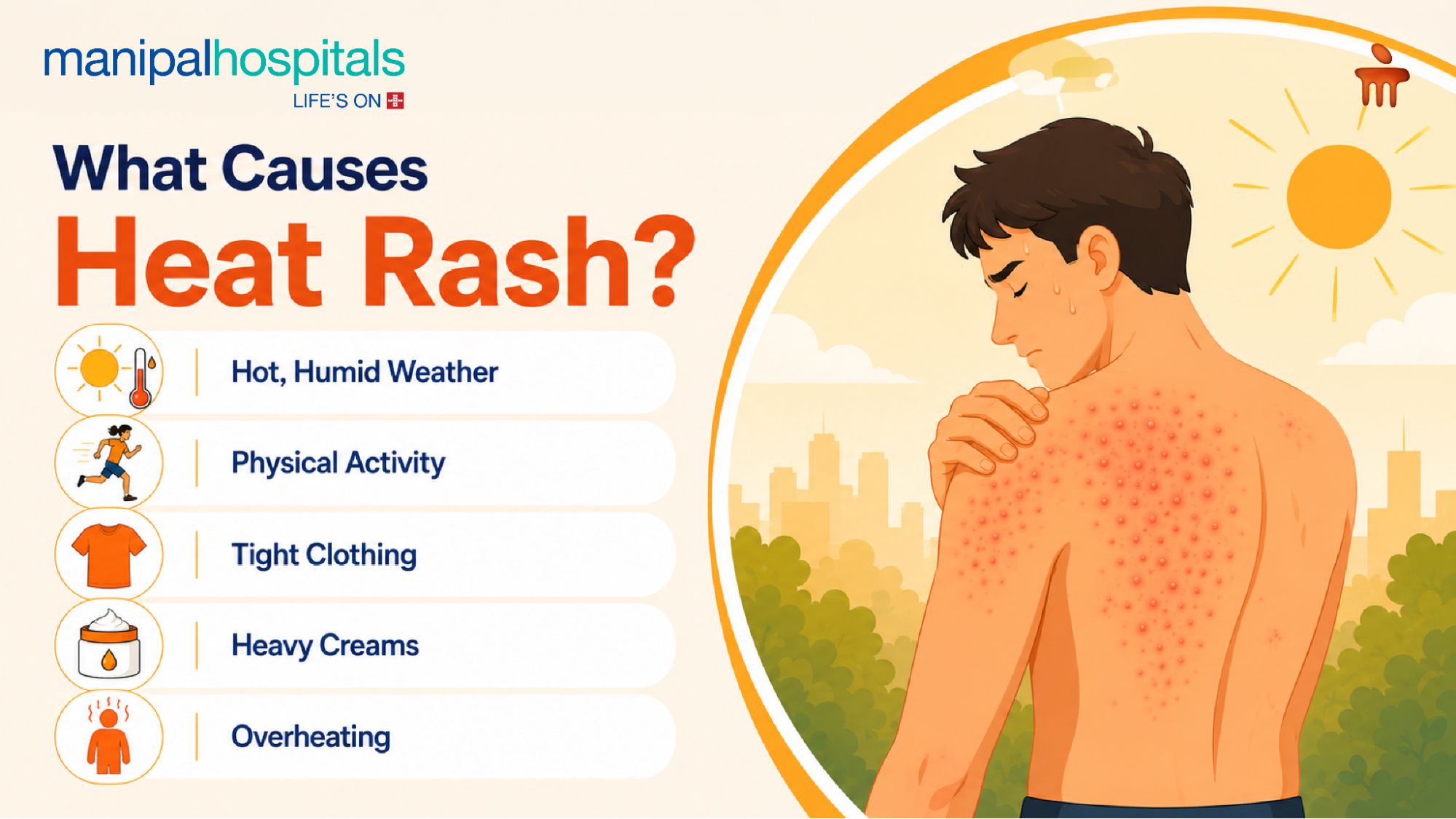
The primary trigger is excessive sweating. However, several factors contribute to the blockage of sweat ducts:
-
Hot, Humid Weather: High humidity prevents sweat from evaporating efficiently.
-
Physical Activity: Intense exercise leads to heavy sweating that can overwhelm the ducts.
-
Tight Clothing: Fabrics like nylon or polyester trap heat and moisture against the skin.
-
Heavy Creams: Thick lotions or oil-based ointments can physically block the pores.
-
Overheating: Using electric blankets or dressing too warmly during sleep.
Effective Heat Rash Treatment
The goal of heat rash treatment is to cool the skin and reduce itching. Here are the most effective ways to treat the condition at home:
1. Cool Compresses and Baths
Apply a cold, damp cloth to the affected area for 10-15 minutes several times a day. Alternatively, take a cool bath or shower. Avoid using harsh soaps; instead, use a mild, fragrance-free cleanser or just plain water to avoid further irritating the skin.
2. Calamine Lotion and Hydrocortisone
Over-the-counter calamine lotion is a classic remedy that helps soothe the prickly feeling. For more intense itching and inflammation, a mild (1%) hydrocortisone cream can be applied thinly to the rash. This is a vital part of how to get rid of heat rash quickly when the itching becomes unbearable.
3. Using Home Remedies
Traditional Indian remedies like multani mitti, sandalwood, and aloe vera effectively soothe heat rash by naturally cooling the skin and reducing inflammation. To heal quickly, keep the affected area clean and dry, wear breathable cotton clothing, and avoid heavy creams that block pores.
4. Avoid Synthetic Fabrics
While you might think any thin fabric is fine, ensure you are wearing 100% cotton or moisture-wicking athletic gear. Avoid silky thin synthetics, which might feel cool but actually trap heat.
When to See a Doctor
While most cases of prickly heat resolve on their own, you should seek medical attention if you notice signs of infection or if the rash persists. In such cases, consultation with the Department of Dermatology is recommended for proper evaluation and treatment. See a doctor if:
-
The pain or swelling increases.
-
Pus starts draining from the bumps.
-
You develop a fever or chills.
-
The rash does not improve after 3-4 days of home treatment.
-
Lymph nodes in the neck, armpit, or groin become swollen.
Prevention: Keeping Your Skin Cool
Prevention is the best heat rash treatment. To keep the rash from returning, stay hydrated to help regulate your body temperature. In the summer, opt for loose-fitting, light-coloured cotton clothing. If you exercise, shower immediately afterwards and dry your skin thoroughly, especially in skin folds. Use "non-comedogenic" moisturisers that won't clog your pores.
Conclusion
Understanding how to get rid of heat rash quickly doesn't require expensive medical procedures. By prioritising cooling, using soothing topical treatments, and allowing your skin to breathe, you can find relief in a matter of days. Remember to monitor your heat rash symptoms closely and consult with our experts from the Department of Dermatology if things don't look right. They will provide the necessary treatments so that you can get relief from heat rash.
FAQ's
Typically, a mild case will disappear within 2 to 3 days once the skin is kept cool and dry. If the environment remains hot and humid, it may persist longer.
It is generally better to use corn-starch-based powders rather than talcum-based ones, but use them sparingly. Excessive powder can actually clump together with sweat and further block the pores.
If you are stuck at work, try to find an air-conditioned space. You can use a cold-water bottle wrapped in a paper towel as a makeshift cold compress on the back of your neck or the affected area to bring down the skin temperature fast.
No, heat rash is not caused by a virus or bacteria, so you cannot catch it from someone else. It is purely a physical reaction to trapped sweat.
Share this article on:






