


 6 Min Read
A sudden, strange tapping, flipping or thumping inside your chest can be highly unsettling. This feeling can match the sensation of a brief skipped beat or a sudden twitch. This sensation is commonly known as a fluttering chest.
While a fluttering feeling in the chest can be alarming and cause your anxiety to spike, it is actually a very common experience. In many cases, it is harmless. However, in some cases, it points to an underlying medical issue that needs attention.
Synopsis
What a Fluttering in the Chest feels like
People describe this sensation in several different ways, depending on the exact cause. You might feel:
-
A quick thump or flip-flop in the middle of your chest.
-
A rapid, racing heartbeat that starts and stops suddenly.
-
A gentle bubbling, twitching or vibrating feeling.
-
A sensation that your heart skipped a single beat.
You might feel it just in your chest, or the feeling might travel up into your throat or neck. It can last for just a second or two, or it can continue for several minutes.
Common Causes of Chest Fluttering
When you feel a flutter, your mind might instantly think about heart disease. While the heart is often the source, there are many reasons for this sensation. These reasons can be broken down into two main categories: heart-related causes and non-heart-related causes.
1. Heart-Related causes
Palpitations cause most heart-related flutters. This happens when the heart’s electrical system sends a misplaced signal, causing a temporary change in your heart rhythm.
-
Premature beats: these are extra, early heartbeats. After the extra beat, the heart pauses for a split second to reset, which creates that classic “thump” or “flipped” feeling.
-
Arrhythmias: This is the medical term for an irregular heartbeat. The most common type is Atrial Fibrillation (AFib), where the upper chambers of the heart quiver instead of beating properly.
-
Heart valve problems: if the valves that control blood flow in your heart do not close perfectly, it can cause the heart to work harder and flutter.
2. Not Heart-Related Causes
It surprises many people to learn that fluttering in the chest, unrelated to the heart, is incredibly common. Your chest houses your lungs, stomach, oesophagus, muscles, and nerves, all of which can cause a fluttering sensation.
-
Anxiety and stress: when you are stressed or panicked, your body releases hormones like adrenaline. This naturally speeds up your heart and makes you highly aware of your heartbeat.
-
Muscle spasm: the muscles between your ribs or your diaphragm (the breathing muscle under your lungs) can twitch, just like an eyelid twitch. This feels exactly like a flutter, but has nothing to do with your heart.
-
Gas and Digestive issues: excess gas trapped in your stomach or oesophagus can press against the chest area. Acid reflux (GERD) can also irritate the nerves in your chest, causing a fluttering or bubbling sensation.
-
Caffeine and Nicotine: strong stimulants like coffee, energy drinks, sodas, and cigarettes can overstimulate your nervous system and trigger flutters.
-
Medications: certain over-the-counter cold medicines, allergy pills, and asthma inhalers contain ingredients that trigger chest flutter.
-
Dehydration and electrolyte imbalance: if you do not drink enough water, or if your body lacks minerals such as potassium and magnesium, your muscles and nerves cannot function properly, leading to spasms or heart pauses.
Why do you feel chest flutters when lying down?
A very specific complaint many people have is experiencing a chest flutter when lying down. You might feel perfectly fine all day while walking around, but the moment your head hits the pillow, the fluttering starts.
There are simple reasons for this:
-
Body position: lying on your side or your back shifts the position of your internal organs slightly. This can place your heart closer to your chest wall, making you much more aware of every single beat.
-
Increased pressure: lying down flat can increase pressure inside your stomach and abdomen. If you have gas or acid reflux, this pressure pushes upward and triggers the nerves that cause fluttering.
-
Fewer distractions: during the day, your mind is busy with work, chores and conversations. At night, the room is quiet, and your mind slows down. You simply notice internal body sensations much more clearly.
When to See a Doctor
Because a fluttering chest can stem from something as simple as a cup of coffee or something as serious as a heart condition, it is important to know when to seek medical help. The specialists at the Department of Cardiology can evaluate your symptoms, identify the underlying cause, and recommend the most appropriate treatment plan. You should make an appointment to see your doctor if your chest flutters are:
-
Happening frequently (multiple times a day or every day).
-
Lasting for longer than a few minutes at a time.
-
Getting worse over weeks or months.
-
Triggered by minimal physical activity.
Your doctor can run simple, painless tests like an EKG (electrocardiogram) to check your heart’s electrical activity and rule out serious conditions.
When to Seek Immediate Emergency Care
Sometimes, a fluttering chest is a sign of a medical emergency. Call emergency services or go to the nearest emergency room immediately if the fluttering is accompanied by any of the following red-flag symptoms:
|
Emergency Symptom |
What It Means |
|
Chest Pain or Pressure |
Could indicate a heart attack or severe heart strain. |
|
Shortness of Breath |
Means your body is not getting enough oxygen. |
|
Dizziness or Lightheadedness |
Suggests your brain is temporarily lacking adequate blood flow. |
|
Fainting (Syncope) |
A clear sign that the heart rhythm issue is affecting blood pressure. |
|
Pain in Arm, Neck, or Jaw |
Classic warning signs of a serious cardiac event. |
Simple Ways to Manage and Prevent Flutters
If your doctor has checked your heart and confirmed that your chest fluttering is harmless, you can reduce how often it happens by making a few simple lifestyle adjustments:
-
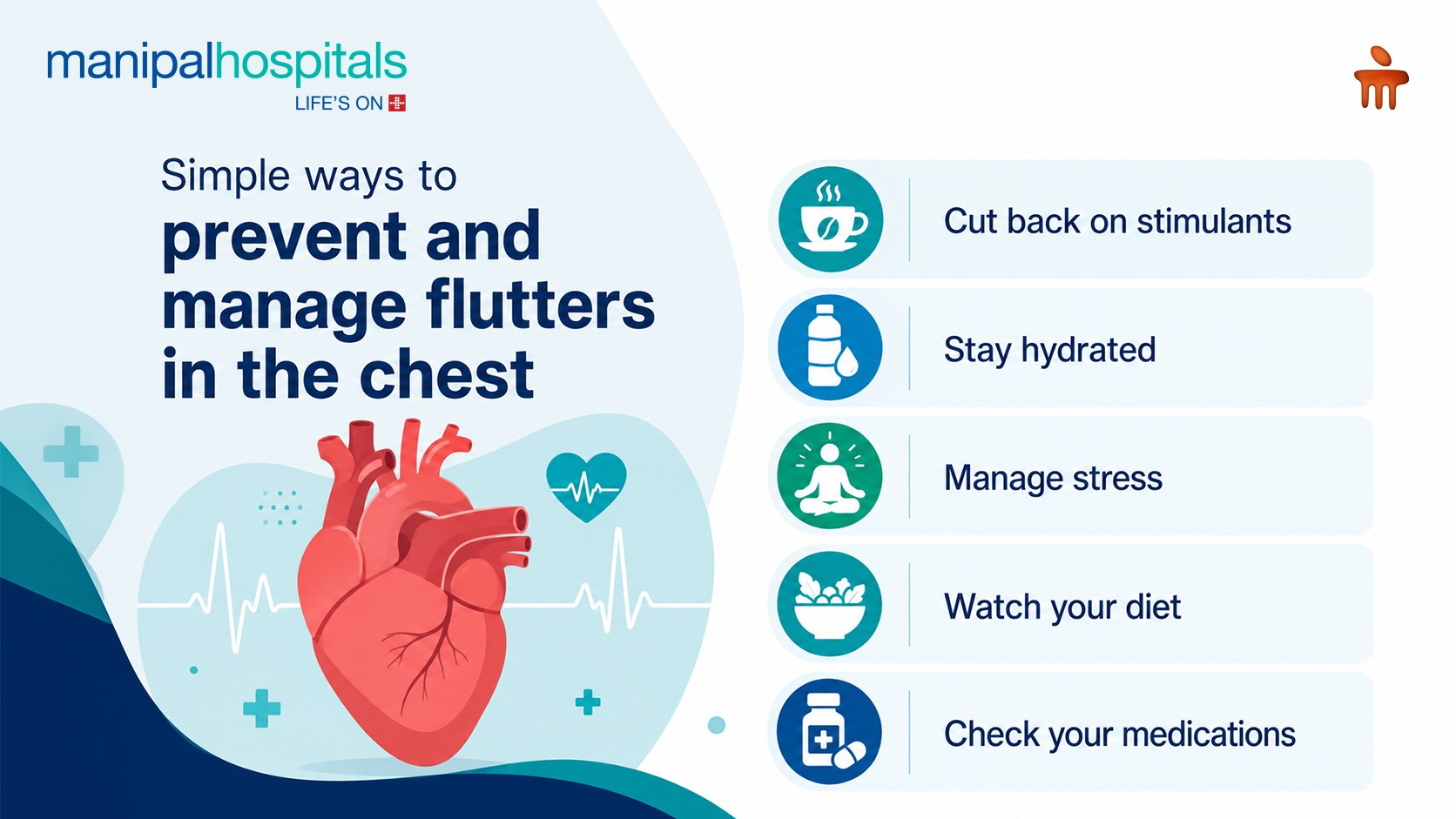
Cut Back on Stimulants: Slowly reduce your intake of coffee, energy drinks, and sodas. Avoid using tobacco products.
-
Stay Hydrated: Drink plenty of water throughout the day to keep your fluid and mineral levels balanced.
-
Manage Stress: Practice deep breathing exercises, spend a few minutes walking outside, or find quiet ways to calm your nervous system.
-
Watch Your Diet: Avoid eating large, heavy meals right before bed to prevent gas and acid reflux that trigger chest flutters when lying down.
-
Check Your Medications: Read the labels on your over-the-counter medicines. Talk to your doctor or pharmacist about alternatives if a medicine makes your chest flutter.
Regular heart health check-ups, including blood pressure monitoring, ECG, and other tests recommended by your doctor, can help detect any underlying issues and ensure chest flutters are properly evaluated.
Conclusion
A fluttering sensation in the chest is an incredibly common experience that is frequently harmless. Often, it is simply your body’s reaction to daily triggers like stress, caffeine, dehydration or minor muscle spasms.
However, because cardiovascular health is vital, persistent or worsening flutters should always be evaluated by a medical professional. If your symptoms are frequent, schedule a routine doctor’s appointment. Most importantly, if a chest flutter is accompanied by warning signs like chest pain, severe shortness of breath, dizziness or fainting, seek emergency medical care immediately. Prioritising healthy habits and consulting a doctor when necessary will help ensure both your physical well-being and your peace of mind. Our experts at the Department of Cardiology will help you understand the causes of the fluttering sensation in your chest and even give management strategies for it.
FAQ's
A chest flutter is usually just a harmless heart twitch or a minor muscle spasm. It is most commonly triggered by stress, caffeine, dehydration or gas.
In most cases, no. Chest fluttering is very common and usually harmless, typically triggered by stress, caffeine or dehydration. However, you should see a doctor if it happens frequently and seek immediate emergency care if it is accompanied by chest pain, dizziness or shortness of breath.
Heart flutters are often mistaken for a simple muscle twitch in your chest wall, a trapped gas bubble in your stomach or a shaky feeling caused by stress. Because your muscles, stomach and heart are all packed closely together, a harmless muscle spasm or a stomach burp can easily feel like your heart is flipping over.
A cardiac flutter feels like a rapid, steady and continuous drumming or racing sensation in your chest, often described as a flapping “butterfly” feeling that does not go away quickly. Unlike a simple skipped beat, it is a sustained, fast rhythm that often makes you feel winded, dizzy or unusually tired.
The standard first-line treatment for a true cardiac flutter (like atrial flutter) is catheter ablation, a minor procedure that uses heat or cold to scar the tiny area of heart tissue causing the bad signal, fixing the rhythm permanently. If that is not done right away, doctors will use medications like beta-blockers to slow down the fast heart rate, along with blood thinners to prevent blood clots.
Share this article on:






