


 5 Min Read
Your heart beats over 100,000 times a day quietly, reliably, and without asking for attention. But what if that steady rhythm suddenly lost its coordination? What if the signals that keep your heart in sync simply stopped communicating? Conditions like Third Degree Heart Block (complete heart block) may sound rare, but they can have serious consequences if ignored. Understanding how your heart works, and what happens when it doesn’t can make all the difference.
Synopsis
What is Third Degree Heart Block?
Third Degree Heart Block (complete heart block) happens when the electrical signals that control your heartbeat stop traveling from the upper chambers (atria) to the lower chambers (ventricles).
Because of this:
-
The atria and ventricles beat independently instead of in sync
-
The heart beats very slowly and irregularly
-
Less blood is pumped to the brain and body
In simple terms, the heart loses its coordination, making it difficult to maintain a steady and effective heartbeat.
Causes of Third-Degree Heart Block
Understanding the causes of third-degree heart block is key to early detection and prevention. Common causes include:
-
Previous heart attack damage: A heart attack can injure the heart’s electrical pathways, making it difficult for signals to pass normally.
-
Age-related changes: As people get older, the heart’s electrical system can naturally wear out or weaken, leading to signal disruption.
-
Coronary artery disease: Narrowed or blocked blood vessels reduce blood supply to the heart, which can damage the electrical system.
-
Congenital heart conditions: Some people are born with heart defects that affect how electrical signals travel in the heart.
-
Certain medications: Drugs like beta-blockers or calcium channel blockers can sometimes slow down or block electrical signals too much.
-
Heart infections: Infections that affect the heart tissue can interfere with its electrical activity.
-
Electrolyte imbalance: Abnormal levels of minerals like potassium or sodium can disturb the heart’s normal rhythm and signal flow.
Third Degree Heart Block Symptoms
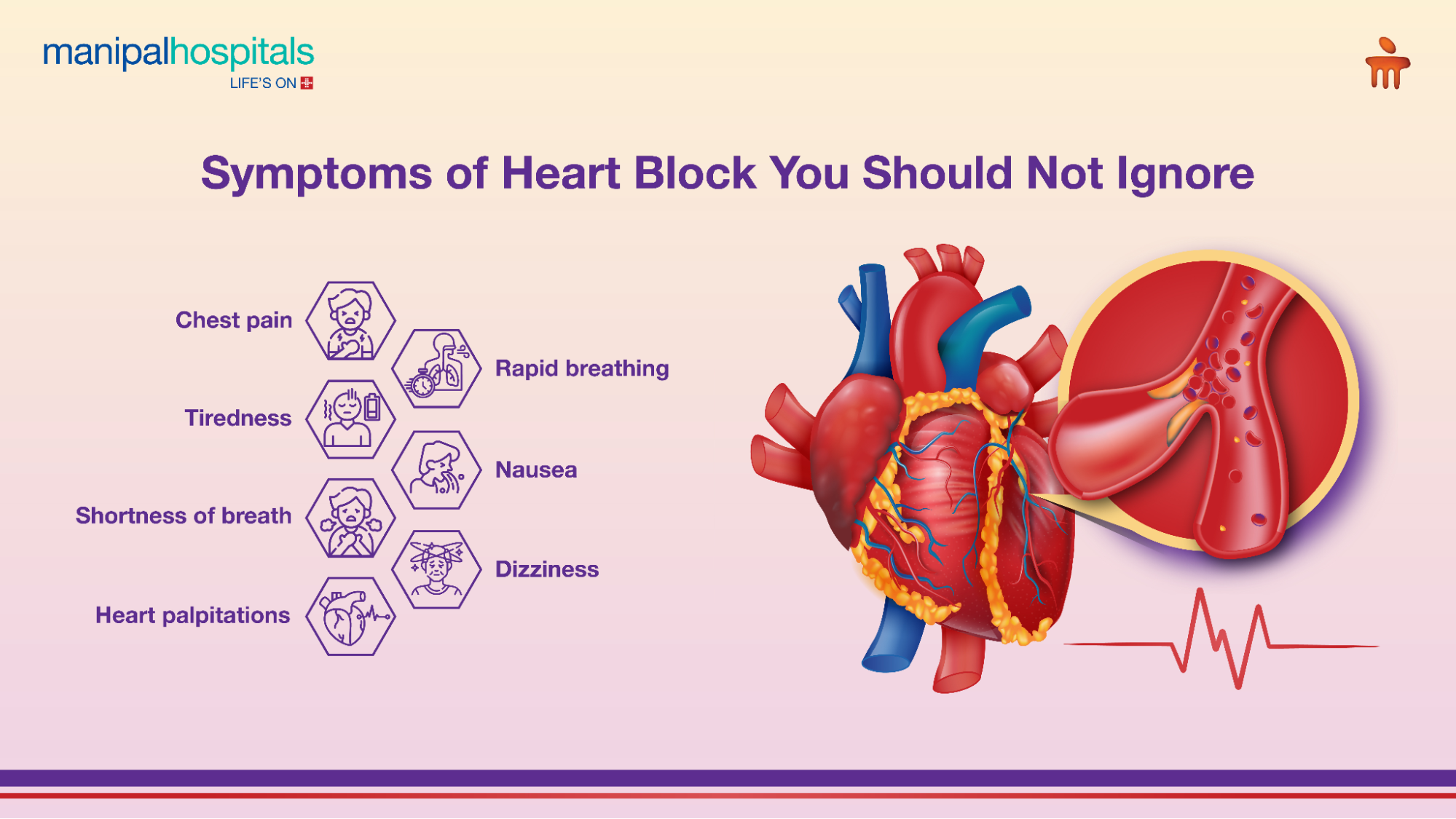
Symptoms of heart block can differ from person to person, depending on how much the heart’s rhythm is affected. These symptoms mainly occur because the heart is not pumping blood efficiently.
Here’s what each symptom means in simple terms:
-
Chest pain: You may feel discomfort or tightness in the chest due to reduced blood flow to the heart.
-
Tiredness: A slow or irregular heartbeat can make you feel unusually weak or low on energy.
-
Shortness of breath: When the heart can’t pump properly, your body may not get enough oxygen, making breathing feel difficult.
-
Heart palpitations: You might feel like your heart is skipping beats, fluttering, or beating irregularly.
-
Rapid breathing: Your body may try to compensate for low oxygen levels by increasing your breathing rate.
-
Nausea: Poor blood circulation can sometimes cause a feeling of sickness or discomfort in the stomach.
-
Dizziness: Reduced blood flow to the brain can make you feel lightheaded or unsteady.
How is It Diagnosed?
Doctors use a few simple but important tests to understand how well your heart’s electrical system is working and to confirm heart block.
Electrocardiogram (ECG):
This is the main test. It records the heart’s electrical activity and helps detect any abnormal rhythm or delay in signals.
Holter monitoring:
A small portable device is worn for 24–48 hours (or longer) to continuously track your heart rhythm during daily activities. This helps catch irregularities that may not appear during a short ECG.
Blood tests:
These are done to check for underlying problems like infections, electrolyte imbalance, or other conditions that may be affecting the heart.
Electrophysiology study:
A more detailed test where doctors study the heart’s electrical pathways closely to find exactly where the signal blockage is occurring.
When Should You See a Doctor?
You should not ignore certain warning signs that may suggest a serious problem with your heart’s rhythm. These symptoms often mean the heart is not pumping blood properly and needs urgent attention.
Sudden fainting:
If you suddenly lose consciousness, it may be because your heart is not sending enough blood to the brain.
Persistent dizziness:
Ongoing light-headedness or feeling unsteady can indicate poor blood flow due to an irregular heartbeat.
Severe fatigue with a slow heartbeat:
Extreme tiredness along with a noticeably slow pulse may suggest that the heart is not pumping efficiently.
Third Degree Heart Block Treatment
Third degree heart block treatment focusses on restoring a normal and steady heart rhythm as quickly as possible. Since this condition can seriously affect blood flow, immediate medical care is very important.
Pacemaker implantation:
This is the most common and effective treatment. A small device called a pacemaker is placed under the skin, usually near the chest. It sends regular electrical signals to the heart to help maintain a proper heartbeat.
Emergency temporary treatment:
In urgent situations, doctors may use temporary pacing to support the heart until a permanent solution is done. Sometimes medications are also given for short-term stabilisation of heart rate.
Treating underlying causes:
Doctors also address the root problem by treating heart disease, adjusting medicines that may be affecting the heart, or correcting issues like infections and electrolyte imbalances.
Conclusion
Third Degree Heart Block is a serious heart condition, but with early detection and proper care, it can be effectively managed. Understanding the causes of third-degree heart block, identifying third-degree heart block symptoms at the right time, and seeking timely third-degree heart block treatment are crucial steps in preventing complications. With modern treatments like pacemaker implantation, many patients are able to regain a stable heart rhythm and continue living active, healthy lives.
At Manipal Hospitals, our specialists at the Department of Cardiology provide comprehensive evaluation, accurate diagnosis, and advanced treatment for heart rhythm disorders such as third-degree heart block, helping restore stable heart function, improve circulation, and support long-term heart health and overall well-being.
FAQ's
The most common causes of third-degree heart block include heart attack damage, aging-related degeneration of the heart’s electrical system, coronary artery disease, certain medications, infections, and congenital heart defects.
Yes, third degree heart block can occur suddenly, especially after a heart attack or due to severe disruption in the heart’s electrical signals.
Early third-degree heart block symptoms may include fatigue, dizziness, light-headedness, and a slow heartbeat. These symptoms can worsen over time if untreated.
Not always. Some people may initially experience mild symptoms, but the condition can quickly become serious, leading to fainting or even cardiac arrest.
The most effective third-degree heart block treatment is pacemaker implantation, which helps regulate the heart’s rhythm. Emergency treatments may be required in critical cases.
No, medications alone are usually not sufficient. They may be used temporarily, but a pacemaker is typically required for effective long-term treatment.
Share this article on:






