5 Min Read
Does the summer heat make you feel like you're melting before you even reach your desk? You aren’t alone. When the temperature soars, the heat becomes more than just an annoyance; it can actually be dangerous for your health. Heat stroke is what happens when your body "overheats" like a car engine. Normally, your body cools itself down by sweating. But during a heat stroke, your internal temperature rises so fast that your natural cooling system just gives up.
If this happens, your body can't cool down on its own. Without quick heat stroke treatment, it can cause serious damage to your brain and heart. It is a medical emergency, but the good news is that it is almost always preventable.
Synopsis
Common Heat Stroke Causes
Understanding heat stroke causes helps you avoid them:
-
Too much sun: Spending too long in high temperatures.
-
Hard work: Doing heavy lifting or intense exercise in the heat.
-
Dehydration: Not drinking enough water to produce sweat.
-
Humid weather: When it’s humid out, your sweat can’t evaporate, so your body stays hot.
-
The wrong clothes: Tight or heavy fabrics trap heat against your skin.
Important Heat Stroke Symptoms
Early heat stroke prevention starts with knowing the red flags. Watch out for:
-
Extreme Heat: Body Temperature rises high
-
Confusion: Feeling dizzy, slurred speech, or delirious
-
Dry or Clammy Skin: Your skin might feel very hot and red, and you might stop sweating.
-
Sick to your stomach: Feeling nauseous or throwing up.
-
Fast Pulse: Your heart feels like it’s racing.
Easy Tips for Heat Stroke Prevention
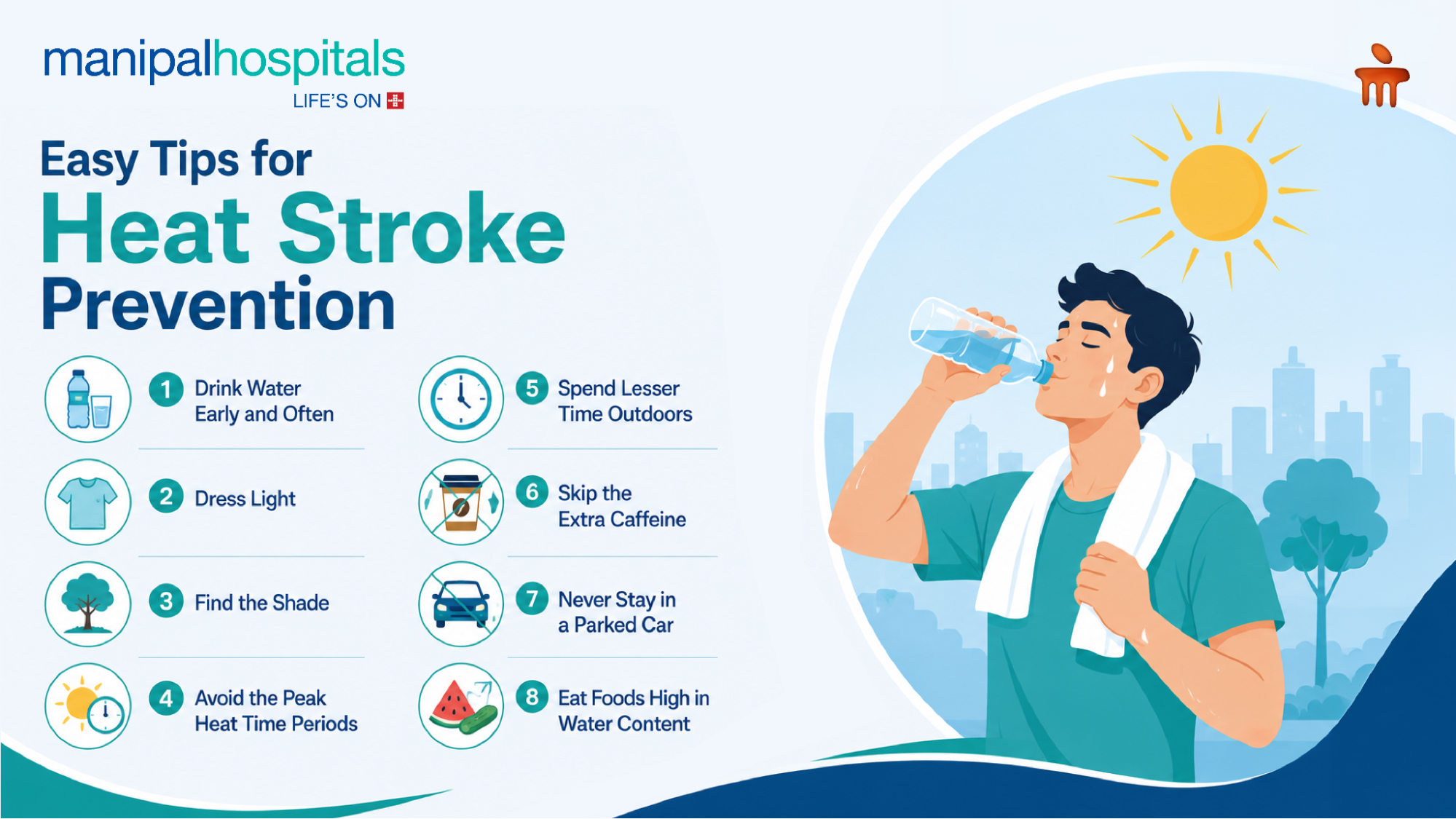
Follow these preventive measures of heat stroke to keep yourself protected from heat stroke:
-
Drink Water Early and Often: Don't wait until you're thirsty. Sip water all day long, every 20 minutes
-
Dress Light: Wear loose, light-coloured clothes. Cotton is your best friend in the summer
-
Find the Shade: If you work outdoors, take your breaks in the shade or an air-conditioned spot.
-
Avoid the Peak Heat Time Periods: Try to get your hardest tasks done early in the morning before the sun is at its strongest.
-
Spend Less Time Outdoors: Give your body a week or two to get adjusted by spending shorter times outside, but don't stay in the scorching sun for too long.
-
Skip the Extra Caffeine: Too much coffee or soda can actually dehydrate you. Stick to water or electrolyte drinks.
-
Never Stay in a Parked Car: Even with the windows cracked, the temperatures can rise in a car quickly.
-
Eat Foods High in Water Content: Snacks like watermelon, cucumbers, and oranges help keep you hydrated.
When to See a Doctor
If you see someone who is fainting, confused, or has stopped sweating despite the heat, call for an ambulance right away. While waiting for the doctor, move them to a cool place and put a damp cloth on their skin.
Medical Treatment for Heat Stroke
Once the person gets to the hospital, the goal for heat stroke treatment is to cool the body down fast. Doctors might use:
-
Ice Baths: Carefully dipping the person in cool water.
-
Mist and Fans: Using cool mist and air to lower the skin temperature.
-
Cooling Blankets: Special blankets that help pull heat away from the body.
-
IV Fluids: Giving cool liquids directly into the vein to help with dehydration.
Conclusion
When temperatures rise, you cannot simply force your way through the physical toll that extreme heat takes on your body. Heat stroke is a serious medical emergency, but it is also entirely preventable if you take the right precautions before you or others start to feel unwell. By taking preventive measures seriously and understanding how to protect yourself before the heat becomes overwhelming, you can safeguard your health and avoid dangerous complications.
If you feel like you are experiencing heat exhaustion or heat stroke, do visit our experts at the Department of Accident and Emergency Medicine at Manipal Hospital. Our experts will help you find relief from heatstroke before it worsens.
FAQ's
The fastest way is immersion in a cold-water bath. If that is not available, apply ice packs to the armpits, groin, and neck, and spray the person with cool water while using a fan.
Yes. If the air conditioning fails and the environment becomes stagnant and hot (especially with high humidity), you can experience classic heat stroke, particularly if you aren't drinking enough water.
No, but it is a precursor. Heat exhaustion involves heavy sweating and a rapid pulse. If not addressed by moving to a cool place and hydrating, it can quickly escalate into heat stroke.
The best way to prevent heat stroke outdoors is to take frequent breaks in the shade, wear a wide-brimmed hat, and drink more water than you think you need.
Yes. Infants, the elderly (over 65), and people with chronic conditions like heart disease or obesity are at a much higher risk.
Share this article on: