6 Min Read
Your gut does much more than digest food. It plays a key role in your energy levels, immune system, mood, and overall well-being. When your gut is healthy, your body works smoothly. But when something is wrong, your body often sends warning signals.
Unfortunately, many people ignore these signs or assume they are caused by stress, lack of sleep, or a busy lifestyle. Recognising the early signs of poor gut health can help you make changes before the problem becomes worse.
Here are 10 signs of an unhealthy gut that you should never ignore.
Synopsis
- What is an Unhealthy Gut?
- 1. Frequent Bloating
- 2. Constipation or Diarrhoea
- 3. Excessive Gas
- 4. Constant Fatigue
- 5. Frequent Food Sensitivities
- 6. Skin Problems
- 7. Weakened Immunity
- 8. Bad Breath
- 9. Mood Changes
- 10. Unexplained Weight Changes
- How To Improve Gut Health
- When Should You See a Doctor
- Conclusion
What is an Unhealthy Gut?
Your gut contains trillions of bacteria and other tiny organisms that help with digestion and support your health. When the balance of these organisms is disturbed, it can affect many parts of your body. This imbalance can lead to various unhealthy gut symptoms, ranging from digestive issues to skin problems and fatigue.
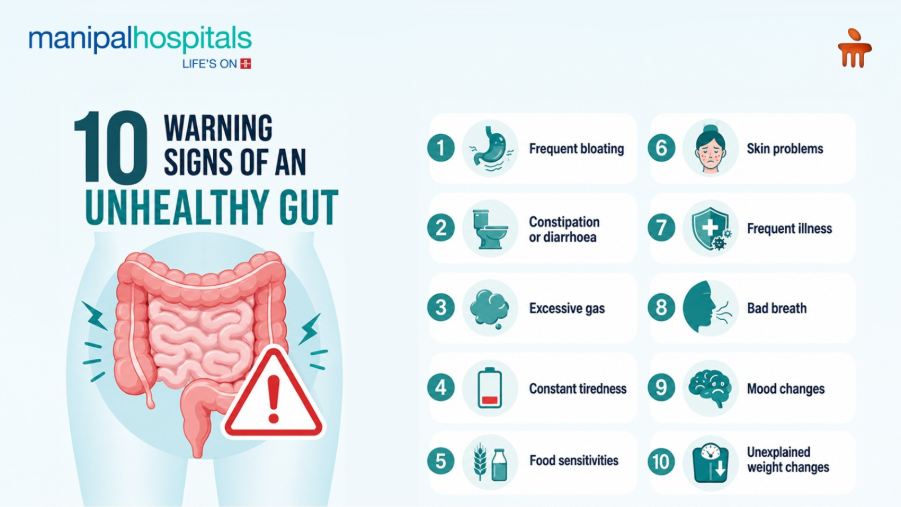
1. Frequent Bloating
An unhealthy gut can disrupt digestion and alter the balance of gut bacteria, causing food to ferment excessively. A troubled gut may struggle to break down food properly. This produces extra gas, leading to frequent bloating and abdominal discomfort.
2. Constipation or Diarrhoea
Poor gut health can affect how quickly food moves through the digestive tract and disrupt the balance of beneficial bacteria. This may result in constipation or irregular bowel movements. Changes in bowel habits are often among the first symptoms of poor gut health. If you frequently experience:
-
Diarrhoea
-
Irregular bowel movements
Your gut may not be functioning as it should. Persistent digestive issues should not be ignored, especially if they continue for several weeks.
3. Excessive Gas
Everyone passes gas from time to time. However, excessive gas, burping, or stomach discomfort may suggest that your digestive system is having difficulty processing certain foods. This can be one of the early warning signs of an unhealthy gut, particularly when combined with bloating or abdominal discomfort. An imbalance in gut bacteria can cause food to ferment excessively in the intestines, producing more gas than usual. Frequent gas or burping may therefore be a sign that the gut is not digesting food efficiently.
4. Constant Fatigue
Do you feel tired even after getting enough sleep? Poor gut health can affect how your body absorbs nutrients from food. When your body does not get the nutrients it needs, you may feel tired, sluggish, and low on energy throughout the day. Poor gut health can impair the absorption of essential nutrients such as iron, vitamin B12, and magnesium, which are needed for energy production. An unhealthy gut may also contribute to inflammation and affect sleep, causing persistent tiredness and low energy levels.
5. Frequent Food Sensitivities
If you suddenly find that certain foods cause discomfort, bloating, headaches, or stomach upset, your gut could be involved. An unhealthy gut can weaken the intestinal barrier and disrupt the balance of gut microbes, making the digestive system more sensitive to certain foods. As a result, some foods may trigger symptoms such as bloating, stomach pain, headaches, or discomfort. Common triggers include dairy products, spicy foods, fried foods, and processed snacks.
6. Skin Problems
Your skin often reflects what is happening inside your body. Issues such as:
-
Acne
-
Redness
-
Dry skin
-
Eczema flare-ups (Skin irritation caused by Eczema)
-
Can sometimes be linked to poor gut health.
The gut and skin are connected through what is often called the gut-skin axis. When the balance of good and bad bacteria in the gut is disrupted, it may increase inflammation in the body. While skin conditions have many causes, ongoing skin problems may be worth discussing with a healthcare professional if digestive symptoms are also present.
7. Weakened Immunity
A large part of your immune system is connected to your gut. Nearly 70% of the body's immune cells are in the gut. A healthy gut microbiome helps support the immune system by maintaining the gut barrier and helping the body respond appropriately to harmful germs. If you seem to catch colds frequently, take longer to recover from infections, or often feel run-down, your gut health may need attention. Repeated illness can be one of the signs of an unhealthy gut affecting your body's natural defences.
8. Bad Breath
Bad breath is not always caused by poor oral hygiene. In some cases, digestive problems can contribute to unpleasant breath. Digestive problems such as acid reflux, poor digestion, or an imbalance of gut bacteria can sometimes contribute to bad breath. In these cases, gases produced in the digestive tract may travel upward and affect breath odour. If brushing and dental care do not improve the issue, your gut health may be playing a role.
9. Mood Changes
Many people are surprised to learn that the gut and brain are closely connected. When your gut is not functioning well, it can sometimes affect your mood. The gut and brain communicate through a network known as the gut-brain axis. Gut bacteria help produce and regulate chemicals such as serotonin, which plays a role in mood. You may notice:
-
Increased stress
-
Irritability
-
Difficulty concentrating
-
Low mood
Although many factors influence mental health, gut health can be an important piece of the puzzle.
10. Unexplained Weight Changes
Sudden weight gain or weight loss without major changes to your diet or activity levels can sometimes point to digestive issues. An unhealthy gut may affect how your body absorbs nutrients, stores energy, and regulates appetite. If weight changes occur without a clear reason, it is important to investigate the cause. Your gut plays an important role in digestion, nutrient absorption, appetite regulation, and metabolism. An imbalance in gut bacteria may affect how efficiently your body extracts energy from food and stores fat.
How To Improve Gut Health
The good news is that small lifestyle changes can often support a healthier gut. Try these simple habits:
-
Eat more fruits and vegetables
-
Include fibre-rich foods in your meals
-
Drink plenty of water
-
Limit highly processed foods
-
Get regular exercise
-
Manage stress level
-
Aim for quality sleep every night
-
Include fermented foods such as yoghurt and kefir if suitable for you
Consistency is more important than perfection when it comes to supporting gut health.
When Should You See a Doctor
While occasional digestive discomfort is common, you should seek medical advice if you experience:
-
Ongoing bloating
-
Persistent diarrhoea or constipation
-
Unexplained weight loss
-
Severe stomach pain
-
Blood in your stool
-
Symptoms that interfere with daily life
The specialists at the Department of Gastroenterology can help identify the underlying cause and recommend appropriate treatment to support your digestive health. Early diagnosis can help identify the underlying cause and prevent complications.If you're experiencing these symptoms or are unsure whether your bleeding needs medical attention, take our health test to assess your symptoms and understand whether you should consult a gastroenterologist.
Conclusion
Your body often provides clues when something is not right. Frequent bloating, digestive problems, fatigue, skin issues, and mood changes can all be signs of poor gut health. Paying attention to these warning signs and making healthy lifestyle choices can help improve your digestive health and overall well-being.
If these unhealthy gut symptoms persist, it is always best to consult a healthcare professional for proper evaluation and guidance. Our experts at the Department of Gastroenterology at Manipal Hospitals, will provide the necessary guidance to ensure that your gut functions properly.
FAQ's
The most common signs include bloating, gas, constipation, diarrhoea, fatigue, food sensitives, skin problems, and guidance.
Yes. Poor gut health may affect nutrient absorption, which can contribute to low energy levels and ongoing fatigue.
The timeline varies from person to person. Some people notice improvements within a few weeks of making healthy dietary and lifestyle changes.
Yes. Stress can influence digestion and may worsen symptoms such as bloating, stomach discomfort, and changes in bowel habits.
Fruits, vegetables, whole grains, yoghurt, and other fibre-rich or fermented foods can help support a healthy gut.
Share this article on: