6 Min Read
Nerve injuries happen when a nerve is pinched, stretched, cut or damaged. These injuries can cause numbness, tingling, or sharp pain.
Nerves are cords that carry electrical signals from your brain and spinal cord (central nervous system) to the rest of your body and vice versa. These signals allow you to move your muscles and feel sensations like touch and temperature. When a nerve is damaged, these signals are disrupted.
Synopsis
What is a Nerve Injury?
A nerve consists of inner fibres that carry signals, and outer tissue layers that protect those fibres.
Nerves outside of the brain and spinal cord are called peripheral nerves. Damage to these specific cords results in peripheral nerve injury. When this damage happens, signals cannot pass through smoothly, which leads to types of nerve damage like loss of feeling or muscle weakness.
Types of Nerve Injury
Doctors divide nerve damage into three categories based on how severely the nerve is damaged. Knowing these 3 types of nerve injury determines the correct treatment.
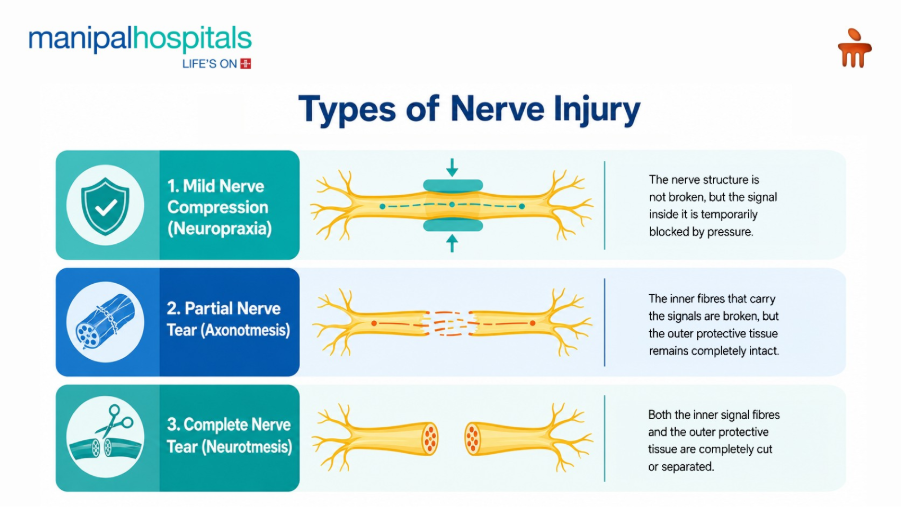
1. Mild Nerve Compression (Neuropraxia)
This is the mildest form of nerve injury as the structure of the nerve is not broken, but the signal inside it is temporarily blocked by pressure. If you are sitting awkwardly or standing for too long, there is direct pressure on the nerves, which squeezes the outer covering of the nerve and slows down the electrical signals. However, this injury is temporary, and the nerve heals on its own within days or weeks once the pressure stops.
2. Partial Nerve Tear (Axonotmesis)
This is a moderate nerve injury. The inner fibres that carry the signals are broken, but the outer protective tissue remains completely intact. This kind of injury occurs when there is severe crushing or stretching of the nerve, causing it to stop working from the point of injury and beyond. The intact outer tube acts as a physical path allowing the inner fibres to slowly grow back through to heal.
3. Complete Nerve Tear (Neurotmesis)
This is the most severe form of nerve injury. Both the inner signal fibres and the outer protective tissue are completely cut or separated. This occurs due to severe accidents, deep cuts, or major physical trauma, causing the nerve to split into two pieces. Signals cannot cross the gap, causing permanent loss of feeling and movement. This injury cannot heal on its own. A surgeon must sew the two ends back together so the fibres can grow again.
Common Causes of Nerve Damage
Nerves can be injured by physical pressure, sudden accidents, or medical conditions. The primary causes of nerve injuries include:
-
Constant Pressure: Leaning on elbows, crossing legs for too long, or repetitive motions. For example, carpal tunnel syndrome occurs when wrist tissue swells and pinches the nerve.
-
Physical Trauma: Car crashes, falls, sports injuries, and broken bones that stretch or slice nerves.
-
Medical Issues: In diseases like diabetes, high blood sugar levels damage the tiny blood vessels that provide oxygen to the nerves.
-
Repetitive Strain: Doing the exact same movement daily, which inflames the tissue surrounding the nerve.
Symptoms of Nerve Injury
Symptoms depend on the specific nerve injured and the severity of the damage. The body uses sensory nerves for feeling, motor nerves for movement, and autonomic nerves for automatic functions like sweating.
Common signs of nerve damage include:
-
Numbness: A total loss of feeling in a specific area of skin.
-
Tingling: A prickly, "pins and needles" sensation.
-
Sharp Pain: A burning or electric shock sensation travelling down a limb.
-
Muscle Weakness: Inability to move a body part, dropping objects, or tripping.
-
Extreme Sensitivity: Severe pain from a light touch or a draft of air.
Recovery Guide: How Nerves Heal
Nerves heal at a very slow rate. On average, a damaged peripheral nerve grows about 1millimeter per day. Recovery methods depend on the specific type of damage.
1. Rest and Bracing
For mild compression injuries, the nerve needs rest to heal.
-
Stop the Activity: Avoid the movement that caused the injury.
-
Use Ice or Heat: Apply to the area to reduce swelling around the nerve.
-
Wear a Splint: A brace keeps the joint straight and removes pressure from the nerve.
2. Physical Therapy
Physiotherapists use specific exercises to keep your joints flexible and your muscles strong while the nerve regrows. They also use gentle stretching exercises to prevent the nerve from getting stuck in scar tissue.
3. Medication
Doctors may also prescribe medications to calm irritated nerve fibres and reduce pain. They may also use steroid injections to quickly lower inflammation around a pinched nerve root in the back or neck.
4. Surgery
For complete tears, surgery is necessary. The surgeon cleans the damaged ends and stitches them together. If a segment of the nerve is completely missing, they take a small piece of healthy nerve from another part of the body to bridge the gap.
Conclusion
Nerve injuries inherently heal at a very slow pace, which demands a high degree of patience throughout the recovery process. However, the human body possesses a remarkable natural ability to repair and regenerate nerve tissue, provided it receives the appropriate medical treatment and support. Developing a clear understanding of the different types of nerve injuries, ranging from mild compression to complete physical tears, is a crucial first step, as it allows you to identify potential problems early on before long-term damage occurs.
Because symptoms can worsen without intervention, paying close attention to your body's warning signs is essential. If you experience persistent numbness, muscle weakness, or shooting, electric pain, you should not ignore these red flags. Visit our experts at the Department of Neurology at Manipal Hospitals, who will help identify the specific types of nerve damage you are facing. They will also establish a targeted treatment plan to restore your mobility and feeling.
FAQ's
You know you have injured a nerve if you experience a total loss of feeling (numbness), a persistent "pins and needles" tingling sensation, or a sharp, burning, electric-shock pain travelling down a limb. Another major indicator is sudden muscle weakness, such as frequently dropping objects, tripping over your feet, or being unable to move a specific body part normally.
The most common nerve injuries are carpal tunnel syndrome (a pinched nerve in the wrist), sciatica (a squeezed nerve in the lower back causing leg pain), a pinched nerve in the neck, and cubital tunnel syndrome (a pinched nerve at the elbow). Other frequent injuries include foot drop from pressure on a knee nerve and sports-related shoulder "stingers."
The first signs of nerve damage are a "pins and needles" tingling or a loss of feeling (numbness) in your hands or feet. You might also feel a sudden sharp or burning pain that shoots down an arm or leg, or notice muscle clumsiness, such as dropping items or tripping.
Yes, nerve pain is a neurological issue. Because nerves make up the peripheral nervous system, any pain caused by nerve damage, compression, or irritation is directly related to the nervous system and falls under neurological health.
Share this article on: