


 6 Min Read
Creatinine is a waste product produced by your muscles every day. Healthy kidneys remove it from the blood and pass it out through urine. When the kidneys are not working properly, creatinine can build up in the bloodstream.
Seeing a high creatinine level in your blood test report can be working. Many people immediately think it's kidney failure. However, creatinine levels alone do not tell the whole story. Doctors look at several factors, including your age, overall health, and kidney function tests, before determining how well your kidneys are working.
Synopsis
- What is Creatinine?
- How Much Creatinine is Bad for Your Kidney?
- Conditions That Can Cause High Creatinine Levels
- Symptoms That May Occur When Creatinine Levels Rise
- What Is The Creatinine Level For Stage 3 Kidney Disease?
- What Is The Creatinine Level For Kidney Failure?
- Why Creatinine Alone Does Not Tell The Whole Story
- Can High Creatinine Levels Be Reduced?
- Conclusion
What is Creatinine?
Creatinine is a waste product that is produced in your muscles every day. When your body uses energy, muscles break down a substance called creatine, and this creates creatinine. Your kidneys act like filters. They remove creatine from the blood and pass it out through urine.
How Much Creatinine is Bad for Your Kidney?
Low amounts of creatinine can be caused by poor muscle mass, whereas high levels in the blood may be a sign of renal dysfunction or kidney failure. The average creatinine levels in people can differ according to an individual's muscular mass, age, and sex. However, the average ranges for males are 0.7 to 1.2 milligrams per decilitre (mg/dL). The normal range of creatinine levels for females is also between 0.5 and 1.0. You can see the average normal range of creatinine in the table below:
|
Levels |
Adult males (mg/dL) |
Adult females (mg/dL) |
|
Low |
0.5 to 0.8 |
0.4 to 0.7 |
|
Average |
0.7 to 1.2 |
0.5 to 1.0 |
|
High |
Above 1.4 |
Above 1.2 |
If the normal level of creatinine exceeds 1.4 in males and 1.2 in females in the test, it may indicate impaired kidney function. Similarly, if it goes below 0.8 and 0.7 in males and females, respectively, it is considered a low level, and the person is dealing with low muscle mass, liver disease and pregnancy.
Conditions That Can Cause High Creatinine Levels
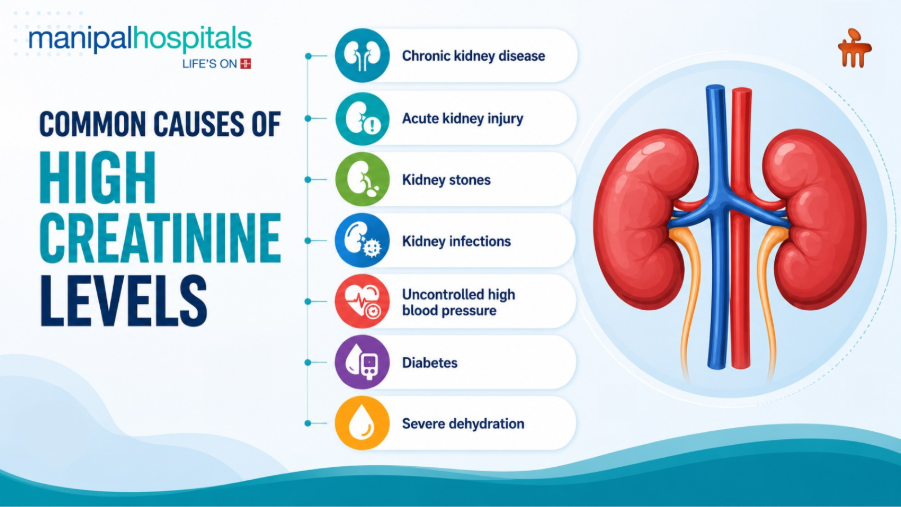
High creatinine levels do not always indicate kidney failure. They may be seen in several conditions, including:
-
Chronic kidney disease (CKD): Gradual loss of kidney function over time.
-
Acute kidney injury (AKI): Sudden damage to the kidneys due to illness, dehydration, or certain medications.
-
Kidney stones: Can block urine flow, cause pain during urination, and affect kidney function.
-
Kidney infections: May interfere with normal kidney function.
-
Uncontrolled high blood pressure: Uncontrolled blood pressure can place extra strain on the kidneys.
-
Diabetes: Over time, high blood sugar can damage the kidneys and reduce their ability to filter waste.
-
Severe dehydration: Not drinking enough fluids can temporarily raise creatinine levels.
Symptoms That May Occur When Creatinine Levels Rise
A slightly raised creatinine level may not cause any symptoms at all. As kidney function declines, some people may experience:
-
Feeling tired more often
-
Swelling in the feet, ankles, or face
-
Changes in urination
-
Poor appetite
-
Nausea
-
Difficulty concentrating
-
Shortness of breath
These symptoms do not always mean kidney failure, but they should be discussed with a healthcare professional.
What Is The Creatinine Level For Stage 3 Kidney Disease?
Stage 3 kidney disease means the kidneys are not filtering waste from the blood as effectively as they should. At this stage, kidney function is moderately reduced, but many people may not notice obvious symptoms.
When it comes to creatinine levels, there is no single number that defines stage 3 kidney disease. This is because creatinine levels can vary depending on factors such as age, sex, body size, and muscle mass.
In general, people with stage 3 kidney disease often have a creatinine level that is higher than the normal range, commonly around 1.5 to 3.0 mg/dL. However, some individuals may have stage 3 kidney disease with creatinine levels outside this range.
What Is The Creatinine Level For Kidney Failure?
Many people wonder whether there is a specific creatinine level that means kidney failure. The answer is that there is no single creatinine number that automatically indicates kidney failure. Doctors use creatinine as one of several tools to assess kidney function.
In general, as kidney function declines, creatinine levels rise because the kidneys are no longer able to remove this waste product efficiently from the blood. In advanced kidney failure, creatinine levels are often significantly elevated, sometimes reaching 5 mg/Dl or higher. In severe cases, levels may rise much further.
However, a creatinine level alone cannot determine whether someone has kidney failure. Factors such as age, muscle mass, hydration status, and underlying health conditions can affect creatine levels. For this reason, doctors also consider tests such as the estimated glomerular filtration rate (eGFR), urine tests, symptoms, and medical history.
Why Creatinine Alone Does Not Tell The Whole Story
A common misunderstanding is that a high creatinine level automatically means the kidneys are failing.
Several factors can affect creatinine levels, including:
-
Dehydration
-
Certain medications
-
High muscle mass
-
Recent intense exercise
-
Temporary illnesses
For example, someone who is dehydrated may have a higher creatinine level that improves after proper hydration.
Can High Creatinine Levels Be Reduced?
Whether creatinine levels can be lowered depends on the cause.
If the rise is due to dehydration, infection, or a temporary illness, the level may improve once the underlying problem is treated.
If kidney damage has already occurred, creatinine may not return completely to normal. However, treatment and lifestyle changes can often help slow further damage and keep kidney function stable for longer. This is why early detection is so important. Early consultation with specialists in the Department of Renal Sciences can help identify the cause of elevated creatinine and protect long-term kidney function.
Conclusion
While high creatinine levels can be a sign of serious kidney problems, there is no single number that confirms kidney failure. In general, advanced kidney failure is often associated with significantly elevated creatinine levels, sometimes above 5mg/Dl. However, doctors always assess kidney health using multiple tests rather than relying on creatinine alone.
If you are wondering what creatinine level for kidney failure is, what is the creatinine level in kidney failure, or what is the creatinine level for stage 3 kidney disease, remember that the result must always be interpreted in the context of your overall health.
The most important step is not focusing on single numbers but discussing your results with your healthcare professional, who can explain what they mean to you and recommend the next steps if needed. Do consult with our experts at the Department of Renal Sciences at Manipal Hospitals if you have any concerns.
FAQ's
There is no fixed creatinine level that means kidney failure. Doctors look at creatinine along with other kidney tests and symptoms.
A normal creatinine level is usually around 0.6-1.1 mg/dL for women and 0.7-1.3 mg/dL for men.
Many people with stage 3 kidney disease have creatinine levels between 1.5 and 3.0 mg/Dl, but this varies from person to person.
Yes. If the cause is dehydration or an infection, creatinine levels may improve after treatment. Long-term kidney damage may require ongoing management.
No. High creatinine can happen for several reasons and does not always mean kidney failure.
Share this article on:






