6 Min Read
Your kidneys work like natural filters for your body. They remove waste, extra fluids, and toxins through urine. But when the kidneys stop working properly, these waste products start building up in the blood. This condition is called uremia. It is usually a sign of advanced kidney disease and needs medical attention immediately. Early diagnosis and proper treatment can help prevent serious complications and improve quality of life.
Synopsis
What Is Uremia?
Uremia is a condition that happens when the kidneys are unable to filter waste and extra fluids from the blood properly. Healthy kidneys remove harmful substances through urine, but when the kidneys become damaged, these toxins start building up in the bloodstream. This build-up can affect the normal functioning of the body and lead to serious health problems if not treated on time.
Uremia is usually seen in people with chronic kidney disease (CKD) or kidney failure. Common symptoms may include tiredness, nausea, swelling, loss of appetite, and difficulty breathing. In severe cases, the condition can affect organs such as the heart and brain. Early diagnosis and proper treatment can help manage the condition and prevent complications.
Causes of Uremia
Uremia usually develops when the kidneys become severely damaged and can no longer remove waste from the blood properly. This damage may happen slowly over time or suddenly due to certain medical conditions. Several health problems can increase the risk of kidney failure and lead to uremia.
Common causes of uremia include:
-
Chronic Kidney Disease (CKD): A long-term condition in which the kidneys gradually lose their ability to function properly.
-
Diabetes: High blood sugar levels can damage the tiny blood vessels in the kidneys, affecting their filtering ability.
-
High Blood Pressure: Constantly high blood pressure can put extra strain on the kidneys and weaken them over time.
-
Kidney Infections or Inflammation: Repeated infections or swelling in the kidneys can damage kidney tissues and reduce their function.
-
Polycystic Kidney Disease: A genetic condition where fluid-filled cysts grow inside the kidneys and affect their normal working.
-
Kidney Stones or Urinary Blockage: Blockages in the urinary tract can stop urine from flowing properly and may damage the kidneys.
-
Acute Kidney Injury: Sudden kidney damage caused by severe dehydration, infections, certain medicines, or major illnesses can also lead to uremia.
Symptoms of Uremia
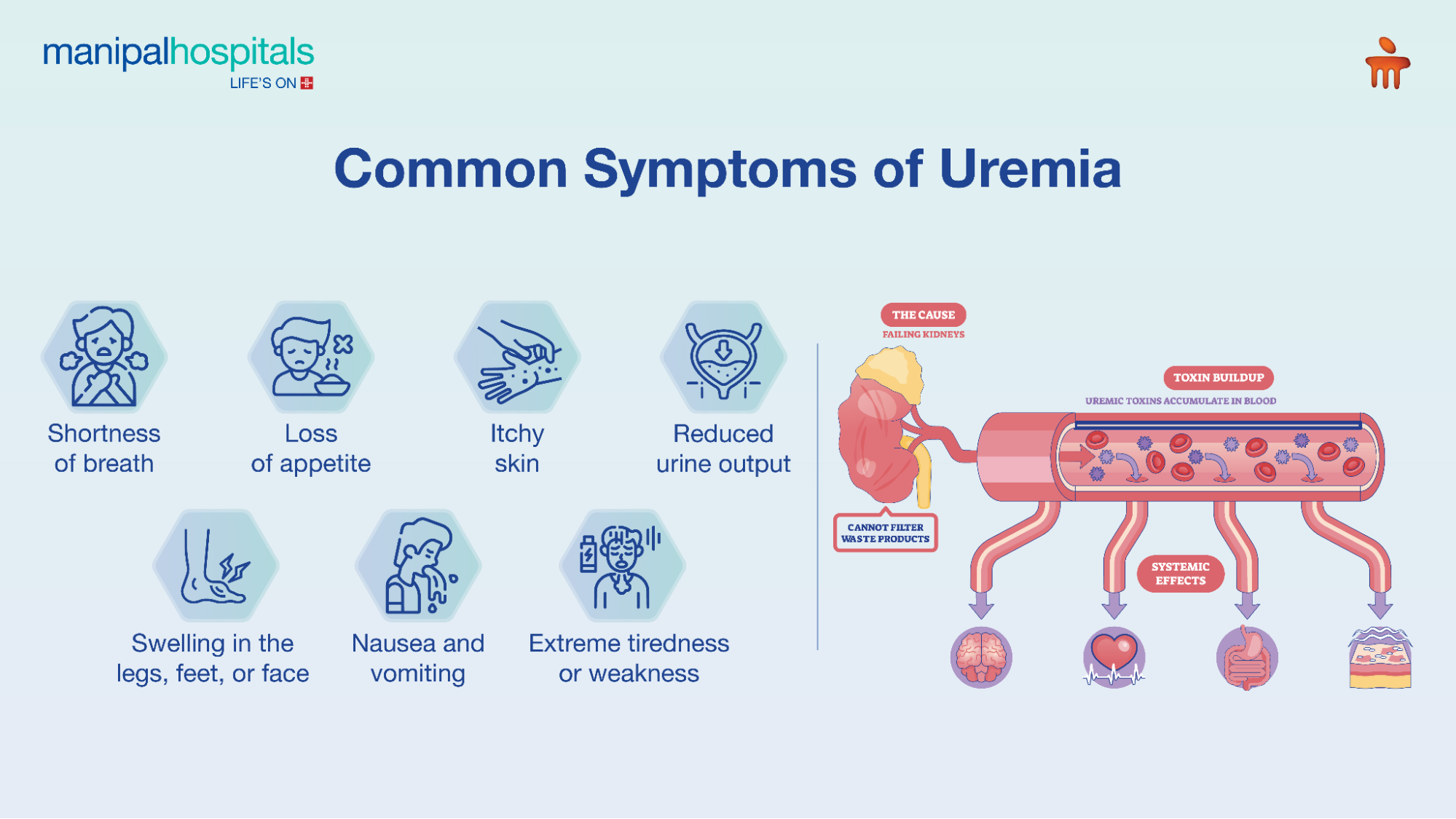
The symptoms of uremia usually appear gradually and may become worse as kidney function declines. Since the kidneys are unable to remove waste and extra fluids properly, toxins begin to build up in the body and affect different organs.
-
Extreme tiredness or weakness: The buildup of waste products in the blood can make the body feel weak and low on energy.
-
Nausea and vomiting: Toxins in the body may affect the stomach and digestive system.
-
Swelling in the legs, feet, or face: Poor kidney function can cause extra fluid to collect in the body.
-
Shortness of breath: Fluid build-up in the lungs may make breathing difficult.
-
Loss of appetite: People with uremia may feel less hungry or lose interest in food.
-
Itchy skin: Waste accumulation in the blood can lead to skin dryness and itching.
-
Reduced urine output: Damaged kidneys may not produce enough urine to remove waste properly.
When Should You See a Doctor?
You should consult a doctor if you notice symptoms of uremia or any unusual changes related to kidney function. Early medical attention is important because untreated uremia can lead to serious complications such as severe fluid build-up, heart problems, breathing difficulties, or damage to the brain and other organs. In advanced cases, it may even become life-threatening. Regular health check-ups and kidney function tests can help detect problems early and prevent further kidney damage.
Medical Treatment for Uremia
Treatment mainly focuses on reducing waste buildup in the blood and managing the underlying kidney problem.
Common treatment options include:
1. Dialysis
Dialysis is the most common treatment for advanced uremia. It uses a machine to remove waste products and excess fluids from the blood when the kidneys cannot do so naturally.
2. Kidney Transplant
In severe kidney failure, a kidney transplant may be recommended. A healthy donor kidney replaces the damaged kidney.
3. Medicines
Doctors may prescribe medications to:
-
Control blood pressure
-
Manage diabetes
-
Reduce swelling
-
Correct mineral imbalances
-
Treat anemia
4. Lifestyle and Dietary Changes
Patients are often advised to:
-
Limit salt and potassium intake
-
Drink fluids as recommended
-
Avoid smoking and alcohol
-
Follow a kidney-friendly diet
-
Exercise regularly under medical supervision
Conclusion
Uremia is a serious condition that happens when the kidneys are unable to remove waste and toxins from the body properly. As these harmful substances build up in the blood, they can affect different parts of the body and lead to serious health problems. Identifying the symptoms early and getting proper medical treatment on time can help prevent complications and protect kidney health. People with conditions such as diabetes or high blood pressure should have regular health check-ups to reduce the risk of kidney damage and uremia.
At Manipal Hospitals, our specialists in the Department of Renal Sciences provide comprehensive evaluation, accurate diagnosis, and advanced treatment for uremia and other kidney-related conditions. With expert care for chronic kidney disease, kidney failure, and associated complications, our team focuses on early detection, effective management, dialysis support, and personalised treatment plans to help protect kidney function and improve overall health and quality of life.
FAQ's
Uremia is a medical condition that occurs when the kidneys are not able to remove waste and toxins from the blood properly, leading to their build-up in the body. It usually happens in advanced kidney disease or kidney failure.
Uremia is mainly caused by severe kidney damage. Common reasons include chronic kidney disease, diabetes, high blood pressure, kidney infections, urinary blockage, and sudden kidney injury.
Treatment depends on the severity of kidney damage. It may include dialysis to remove waste from the blood, medicines to manage symptoms and underlying conditions, dietary changes, and, in severe cases, a kidney transplant.
Yes, uremia is a serious condition. If not treated on time, it can affect the brain, heart, lungs, and other organs and may become life-threatening.
Uremia itself is not a separate disease but a result of kidney failure. It can be managed with proper treatment, such as dialysis or a kidney transplant.
Share this article on: