


Appointment Helpline


Xerosis, commonly known as dry skin, or xerosis cutis, is a condition characterised by reduced skin moisture and impaired skin-barrier function. Xerosis symptoms can range from mild dryness, roughness, and tightness to intense itching, flaking, cracking, and discomfort that interferes with daily activities. The condition affects people of all ages and is particularly common during cold weather, low humidity, frequent bathing, and excessive use of soap.
In many individuals, xerosis may be associated with nutritional deficiencies, ageing-related changes in skin oils, or long-term medication use. Certain systemic conditions can contribute to specific patterns of dryness. For example, liver xerosis may develop due to altered fat metabolism and bile production, leading to widespread itching and dryness. Conjunctival xerosis involves dryness and irritation of the eye surface, affecting comfort and vision. Corynebacterium xerosis may be seen in individuals with compromised skin barriers or immune defences.
If dry skin persists, recurs, becomes painful, or is prone to cracking and infection, early medical evaluation is essential. At Manipal Hospitals, xerosis is evaluated by considering environmental exposure, lifestyle habits, skincare routines, and other causes. Timely diagnosis and treatment help restore skin hydration, strengthen the protective barrier, relieve symptoms, and support long-term skin health and overall comfort.

Consult a doctor online in just 10 minutes – anytime, anywhere!
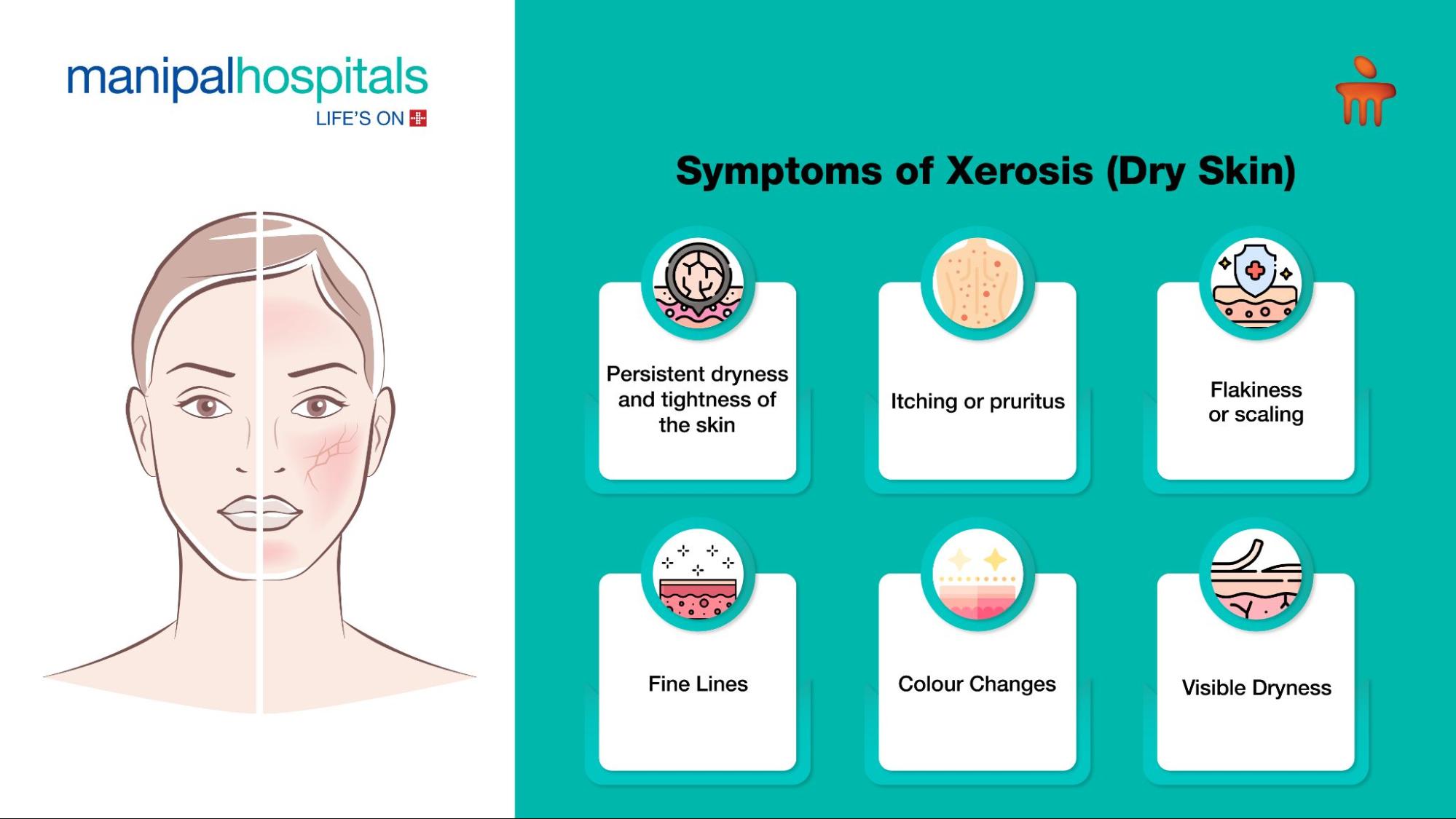
Xerosis symptoms vary depending on severity, duration, and causes. Symptoms often worsen with frequent washing, use of harsh soaps or skincare products, cold or dry climates, prolonged air-conditioning exposure, and dehydration. The most common symptoms include:
Persistent skin dryness and a tight, uncomfortable feeling
Itching (pruritus), which may become more intense at night
Flaking, scaling, or peeling of the skin
Rough, uneven, or cracked skin texture
Fine lines and a dull or lifeless appearance
Changes in skin colour, including an ashy or greyish tone
In moderate to severe cases, xerosis may present with:
Redness, irritation, or visible inflammation
Painful fissures or deep cracks in the skin
Bleeding from severely cracked or damaged areas
Increased skin sensitivity, stinging, or burning sensations
Certain specialised forms of xerosis may show additional features. These include liver xerosis, which causes generalised dryness and itching, and conjunctival xerosis, leading to dry, irritated eyes. Corynebacterium xerosis is linked to bacterial skin colonisation in susceptible individuals.
Xerosis develops when the skin loses its ability to retain moisture and natural oils, leading to dryness and disruption of the skin barrier. Several environmental, lifestyle, and medical factors can contribute to this condition. Common causes include:
Cold or dry weather and low humidity, which reduce skin moisture
Excessive bathing, frequent hot showers, or the use of harsh soaps and cleansers
Prolonged exposure to air-conditioning or indoor heating that dries the skin
Inadequate fluid intake or nutritional deficiencies affecting skin health
Chronic skin conditions such as eczema or psoriasis
Endocrine disorders, including hypothyroidism or diabetes, that alter skin function
Liver disease, which may contribute to liver xerosis symptoms due to metabolic changes
Age-related decline in natural skin oils and barrier strength
Certain medications, such as diuretics or retinoids, that reduce skin hydration
Identifying the cause of xerosis is essential for selecting appropriate treatment, preventing recurrence, and achieving effective, long-term relief from dry skin symptoms.
Diagnosis of xerosis involves a clinical evaluation aimed at identifying contributing factors, assessing severity, and ruling out associated local or systemic conditions. The assessment helps determine whether dry skin is primarily environmental, lifestyle-related, or linked to a medical disorder. The diagnostic process typically includes:
Review of symptom onset, duration, and severity, including patterns of worsening, seasonal variation, and impact on daily activities
Evaluation of skincare habits, such as frequency of bathing, water temperature, soap or cleanser use, and moisturising practices
Assessment of hydration status and environmental exposure, including climate, air-conditioning, heating, and occupational factors
Comprehensive medical history review, covering chronic illnesses, nutritional status, hormonal conditions, liver disease, and current or long-term medication use
Detailed skin examination to assess the extent of dryness, scaling, roughness, cracks, redness, or signs of secondary infection
When systemic causes are suspected, additional investigations may be recommended. These may include blood tests to evaluate metabolic status, blood glucose levels, thyroid function, or liver function abnormalities. In selected cases, further dermatological evaluation may be advised to differentiate xerosis from inflammatory skin conditions such as eczema or psoriasis. This thorough diagnostic approach supports accurate identification of the cause and guides personalised treatment planning.
Treatment for xerosis cutis symptoms depends on its severity, cause, and impact on daily comfort. At Manipal Hospitals, management is individualised to address both symptom relief and long-term skin-barrier restoration. Common treatment measures include:
Regular use of emollient-rich moisturisers to replenish lost moisture and soften dry, rough skin
Barrier-repair creams containing ceramides, glycerin, or other humectants to strengthen the skin’s protective layer
Prescription topical treatments to reduce inflammation, itching, or irritation in moderate to severe cases
Management of medical conditions, such as eczema, diabetes, thyroid disorders, or liver disease, contributing to xerosis
Guidance on bathing and skincare routines, including limiting hot showers, using gentle cleansers, and moisturising immediately after bathing
The primary goal of treatment is to restore skin hydration, relieve discomfort, reduce itching and cracking, and prevent recurrence. With consistent care and appropriate medical guidance, most individuals experience significant improvement in skin comfort and overall quality of life.
Mild xerosis often responds well to consistent and supportive home-care measures aimed at improving skin hydration and protecting the skin barrier. When practised regularly, these steps can significantly reduce dryness and discomfort. Recommended measures include:
Moisturise immediately after bathing to lock in moisture while the skin remains slightly damp
Use lukewarm water instead of hot showers to prevent stripping natural skin oils
Choose gentle, fragrance-free cleansers that clean without irritating or drying the skin
Maintain adequate hydration by drinking enough fluids throughout the day
Use humidifiers in dry indoor environments to add moisture to the air and prevent skin dehydration
Avoid harsh detergents, soaps, and skincare products containing alcohol or strong fragrances
These home-care measures help restore skin comfort and prevent symptoms from worsening. If dryness persists, becomes painful, causes cracking or bleeding, or interferes with daily activities, seek medical evaluation.
Common symptoms of xerosis include dry, tight skin, itching, flaking, rough texture, and occasional cracking or redness. Symptom severity varies depending on environmental exposure, individual skin type, age-related changes, lifestyle habits, and the presence of medical or systemic health conditions.
Yes. Medical conditions such as liver disease, diabetes, and thyroid disorders can contribute to xerosis. Symptoms include generalised skin dryness, persistent itching, and reduced skin hydration due to metabolic and bile-related abnormalities affecting skin moisture balance.
No. Xerosis refers to dry skin caused by loss of moisture and natural oils, whereas eczema is an inflammatory skin condition. However, untreated xerosis can weaken the skin barrier, increase irritation, and significantly worsen eczema symptoms and flare-ups over time.
Medical evaluation is advised if skin dryness persists despite regular moisturiser use, becomes painful, and leads to cracking or bleeding. When symptoms interfere with daily comfort, sleep, or quality of life, these signs may indicate conditions requiring professional treatment.
Untreated xerosis symptoms can lead to painful skin cracks, increased risk of infections, and worsening of skin conditions such as eczema. Early medical care and proper skin hydration help maintain skin integrity, prevent complications, and improve overall comfort and quality of life.



Visit the Global site for International patient services


