8 Min Read
Stress often induces symptoms such as fatigue, anxiety, poor concentration, sleep disturbances, and heightened sensitivity in people. These issues are often associated with what is commonly referred to as a weak nervous system, a condition where the body’s network of nerves struggles to cope with physical, emotional, or mental demands.
When the nerves are constantly misfiring or overwhelmed, it affects almost every bodily function. Managing it is about restoring balance (homeostasis) so your body can function efficiently rather than operate in a permanent state of emergency.
Synopsis
What is the nervous system?
Your nervous system is your body’s command centre. It is made up of your brain, spinal cord, and nerves. Your nervous system works by sending messages or electrical signals between your brain and all the other parts of your body. These signals tell you to breathe, move, speak, and see. Your nervous system keeps track of what is going on inside and outside of your body and decides how to respond to any situation you are in.
Your nervous system regulates complicated processes like thoughts and memory. It also plays an essential role in the things your body does without thinking, like blushing, sweating, and blinking.
Your nervous system’s main function is to send messages from various parts of the body to your brain and from your brain back to your body to tell your body what to do.
These messages regulate your:
-
Thoughts, memory, learning, and feelings.
-
Movements (balance and coordination)
-
Senses (how your brain interprets what you see, hear, taste, touch and feel).
-
Wound healing
-
Sleep
-
Heartbeat and breathing patterns
-
Body processes such as puberty and ageing
What Do You Mean by a Weak Nervous System?
A weak nervous system is a term often used to describe a condition where the body's nerves are unable to function at their best due to stress, fatigue, poor lifestyle habits, or underlying health issues. It may lead to symptoms such as tiredness, difficulty concentrating, anxiety, poor sleep, irritability, and reduced ability to handle daily stress.
Leaving a stressed, nervous system untreated wears your body down over time. It can cause ongoing physical problems like constant tiredness, stomach issues, and a weaker immune system. Mentally, it keeps you feeling stuck in an anxious, overwhelmed state that can lead to total burnout. Essentially, ignoring the problem makes it harder to handle normal, everyday stress without feeling completely exhausted. Although it is not a medical diagnosis, maintaining a healthy lifestyle with proper nutrition, exercise, rest, and stress management can help support nervous system health and overall well-being.
Causes of Weak Nervous System
Understanding the causes of a weak nervous system can help in maintaining better nerve health and overall wellness.
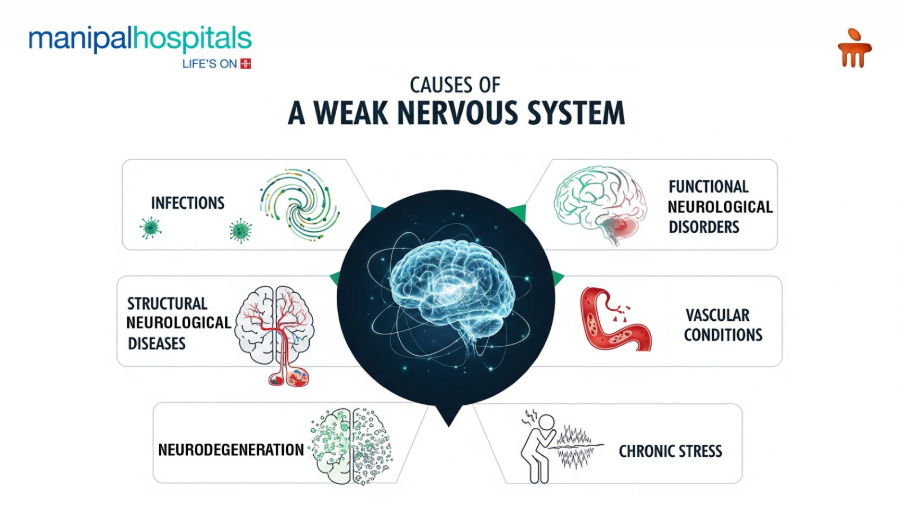
The following are some causes of a weak nervous system:
-
Infections such as polio, meningitis, epidural abscess, and encephalitis can all occur if your nervous system is weak.
-
Functional disorder: Epilepsy, headache, dizziness, and neuralgia are examples of conditions in which patients have functional issues.
-
Structural diseases: People with poor neural systems might suffer from structural disorders in addition to functional illnesses. Cervical spondylosis, Belly’s palsy, brain, and spinal cord problems are among them.
-
Vascular conditions: Transient ischemic attack, stroke and subdural, subarachnoid and extradural haemorrhages are all common causes of vascular problems, which can weaken the nervous system
-
Degeneration: The neurological system can also affect your body by causing degenerative disorders. Multiple sclerosis, Parkinson’s disease and Huntington’s disease are among them.
-
Chronic Stress: Being overstimulated and stressed out all the time can cause your neurons to be in constant fight and flight mode. This can result in inflammation impairing neural function and can end up causing fatigue, mood disturbances, and mental health conditions.
Symptoms of a Weak Nervous System
A weak nervous system can show up through various physical and emotional symptoms. These signs may develop gradually, affecting daily activities, energy levels, and overall well-being. Recognising them early can help in taking steps to improve nervous system health.
Here are the possible symptoms of a weak nervous system:
-
A headache that lasts for a long time
-
Tingling or a loss of sensation
-
Muscle weakness or lack of strength
-
Double vision or blindness
-
Inability to think clearly
-
Brain fog and confusion
-
Extreme sensitivity to the slightest touch or temperature changes
-
Uncontrollable muscle cramps or twitches
Treatments for Weak Nervous System
Treatment for a weak nervous system focuses on management, mainly which involves improving overall nerve health and addressing the underlying causes. If symptoms such as persistent headaches, dizziness, numbness, or muscle weakness continue despite lifestyle changes, consult the Neurology Department for a comprehensive evaluation and personalised treatment plan
Some of the methods that can help with managing a weak nervous system include:
-
Daily exercise: it simply does not refer to physical activity; it also includes mental pursuits. For example, you can complete crossword puzzles. Studies have proven that solving puzzles can delay memory loss and other mental problems caused by ageing. They do this by keeping brain cells connected, building a stronger mind and rejuvenating your nervous system.
-
Sunlight exposure: Daily 10-minute exposure to sunlight can dramatically strengthen your neurological system. Sunlight triggers a rapid biochemical process in your skin that produces vitamin D3, a neurohormone that directly regulates brain health, reduces neuroinflammation, and maintains nervous system function.
-
Walk barefoot on the ground: Walking barefoot on the grass improves sleep and strengthens the immune system by transferring the Earth's natural electrons directly into your body. This electrical connection lowers night-time stress hormones and shifts your nervous system into a calm state, resulting in deeper, more restorative rest. Simultaneously, these absorbed electrons act as natural antioxidants that neutralise harmful free radicals and reduce internal inflammation.
-
Right sleep cycle: Your sleep cycle is critical for enhancing your physical and mental health. You should obtain at least eight hours of sleep every night to help your nervous system function correctly.
-
Meditate frequently: Meditation is an excellent approach to calm your nerves. Meditating helps to keep blood pressure, heart rate, breathing rate and other nervous system activities under control.
Exercises for Weak Nervous System:
Below are the few easy-to-do exercises that can be done at home, work, or anywhere to ease your nerves and help yourself be stronger.
-
Walking
-
Low-intensity aerobic exercises like pilates and yoga
-
Resistance training
-
Stretching
Foods for Weak Nervous System:
-
Fish: Eating fishes like salmon helps a weak nervous system by providing high concentrations of Omega-3 fatty acids and vitamin B12 that structurally rebuild damaged nerve insulation, accelerate signalling speed, and lower neural inflammation.
-
Dark chocolate: Dark chocolate calms the nervous system by regulating the Hypothalamic-Pituitary-Adrenal (HPA) axis to lower cortisol levels while supplying magnesium and flavonoids that promote relaxation. Unlike a temporary sugar rush, high-quality dark chocolate interacts with brain chemistry on a structural level to ease your physical response to stress.
-
Broccoli: It is high in vitamin K, which has been shown to boost brain capacity and cognitive abilities.
-
Eggs: They are rich in Choline and Vitamin B, which aids the memory and communication between brain cells.
When Should You See a Doctor?
While occasional nerve-related symptoms can occur due to stress, fatigue or temporary health issues, persistent or worsening symptoms should not be ignored. Early medical evaluation can help identify underlying conditions and prevent complications. Some warning signs include:
-
Persistent numbness, tingling, or weakness in the arms, legs, or other body parts.
-
Frequent headaches, dizziness, or balance problems that interfere with daily activities.
-
Memory loss, confusion, or difficulty concentrating that worsens over time.
-
Muscle weakness, tremors or poor coordination affecting movement.
Sudden symptoms such as paralysis, loss of sensation, seizures, or difficulty speaking require immediate medical attention.
Conclusion
A healthy nervous system is essential for proper brain function, movement, sensation, and overall well-being. Recognising the early signs of a weakened nervous system and adopting healthy lifestyle habits such as a balanced diet, regular exercise, adequate sleep, and stress management. These can help support nerve health and improve quality of life.
If symptoms persist or worsen, seeking medical advice is important to identify the underlying cause and receive appropriate treatment. Our experts at the Department of Neurology at Manipal Hospitals can help you understand your symptoms and help with early intervention.
FAQ's
A weak nervous system can manifest through a wide range of sensory, motor, and cognitive symptoms like numbness, loss of balance, muscle weakness, sudden vision loss and many more symptoms.
Nerve problems cause symptoms depending on the specific nerves affected, that is, Sensory (feelings and sensation), Motor (movement and strength) or Autonomic (automatic functions like breathing, blinking, digestion etc.).
People can develop nerve damage because they have deficiencies in certain vitamins. The deficiencies that are most likely to cause this are copper and vitamins B1, B6, B9, B12, folic acid (B9), and E.
Globally, the top three most common nervous system disorders are primary headache disorders such as Migraines, Strokes, and Dementias.
The fastest way to calm your nervous system is by prolonging your exhalations to stimulate the vagus nerve, which instantly signals your parasympathetic nervous system to lower your heart rate and reduce stress hormones.
Share this article on: