


Appointment Helpline


Anxiety is a natural psychological and physical response to stress, uncertainty, or perceived danger. Everyone experiences anxiety at different times, whether before an important event, during challenging situations, or when facing change. Anxiety exists on a spectrum. Some individuals naturally have a higher baseline level of worry and cautiousness, while others tend to remain calm and less reactive. Anxiety symptoms become a concern when they are excessive, persistent, or disproportionate to the situation and begin to interfere with daily functioning.
Anxiety may affect both the mind and body, often occurring together. While short-term anxiety can be helpful by improving alertness and performance, chronic anxiety can lead to ongoing distress and exhaustion. Anxiety disorders are among the most common mental health conditions worldwide and can affect both adults and children. Anxiety symptoms and depression may also coexist, further increasing emotional and physical strain.
At Manipal Hospitals, anxiety is managed as a clinical condition requiring structured evaluation. Specialists assess emotional patterns, physical symptoms, life stressors, and medical history to identify the specific anxiety disorder and guide effective, personalised treatment.

Consult a doctor online in just 10 minutes – anytime, anywhere!
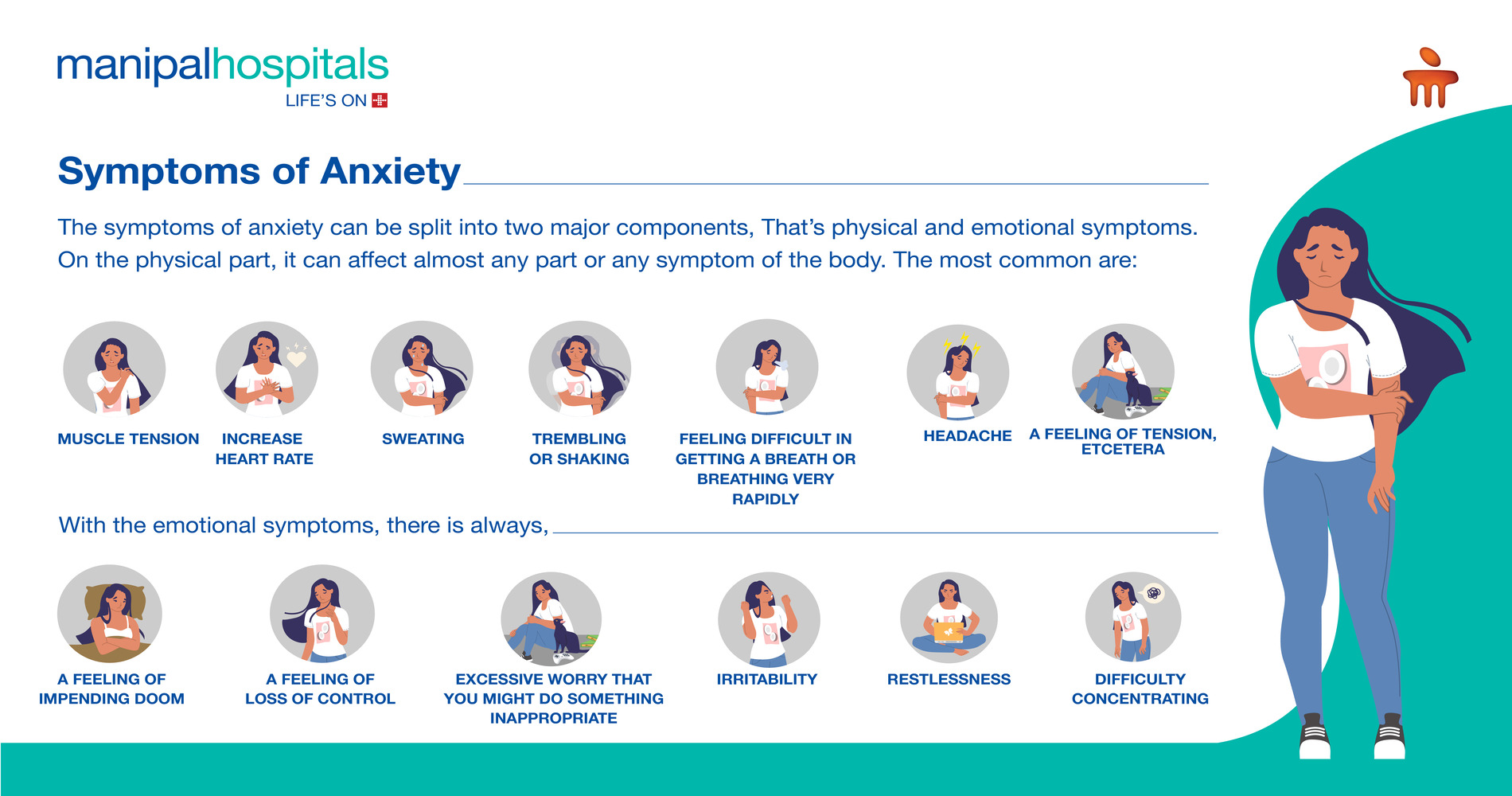
Symptoms can differ in intensity and frequency based on the individual, triggering situations, and the underlying anxiety condition. Common anxiety symptoms include:
Physical symptoms:
Muscle tension or body stiffness
Increased heart rate or palpitations
Excessive sweating without physical exertion
Trembling or shaking of the hands or body
Shortness of breath or rapid, shallow breathing
Headaches or a sense of pressure in the head
Chest discomfort or tightness
A constant feeling of physical tension or unease
Emotional and cognitive symptoms:
Persistent worry or racing thoughts
A feeling of impending danger or doom
Fear of losing control or something going wrong
Irritability, nervousness, or restlessness
Difficulty concentrating or maintaining focus
Sleep disturbances, including difficulty falling or staying asleep
Emotional exhaustion and mental fatigue
Persistent anxiety symptoms that interfere with daily activities, work, relationships, or sleep should be evaluated by a qualified mental health professional.
Symptoms of anxiety develop due to a combination of biological, psychological, and environmental factors that influence emotional regulation and stress responses. Common contributing causes include:
Imbalance of brain chemicals such as serotonin, dopamine, and norepinephrine that affect mood and anxiety control
Genetic predisposition or a family history of anxiety disorders that increases individual vulnerability
Chronic stress or prolonged exposure to high-pressure environments that overstimulate the nervous system
Traumatic experiences or adverse childhood events that impact emotional processing and coping ability
Hormonal changes that influence stress regulation and emotional stability
Medical conditions that affect brain function or overall health
Substance use, including alcohol or certain drugs, that alters emotional balance and increases anxiety
Understanding the underlying cause of anxiety is essential for determining the most effective treatment approach and supporting long-term emotional well-being.
Anxiety is both a symptom and a feature of several mental health conditions, making an accurate diagnosis essential for effective treatment. Mental health specialists rely on a comprehensive assessment rather than symptom reporting alone to understand the nature, severity, and impact of anxiety. The diagnostic process commonly includes:
Detailed clinical assessments and in-depth interviews to understand emotional patterns, triggers, and daily functioning
Evaluation of anxiety disorder symptoms, including their onset, frequency, duration, and severity
Use of structured questionnaires and self-report tools to measure anxiety levels and identify specific anxiety disorders
Behavioural observations to assess restlessness, avoidance patterns, emotional responses, and coping behaviours
Review of medical and psychological history, including past mental health conditions, medications, and family history
Assessment of lifestyle factors such as sleep habits, substance use, and stress exposure
Neurological and physical evaluations, when required to rule out medical conditions that may mimic or worsen anxiety symptoms
This multi-layered approach allows specialists to differentiate anxiety disorders from depression, medical illnesses, or neurological conditions with similar symptoms. Timely diagnosis supports customised treatment planning, helps monitor progress and ensures that individuals receive appropriate interventions tailored to their specific needs.
Anxiety management is tailored to the severity of symptoms, type of anxiety disorder, and individual needs. Treatment commonly involves psychological therapy, medication, or a combination of both to achieve effective symptom control. Common treatment options include:
Psychotherapy or counselling using collaborative, goal-oriented approaches to address emotional triggers and coping skills
Cognitive behavioural therapy (CBT) to identify and modify anxious thought patterns and unhelpful behaviours
Medications are prescribed when clinically indicated to help regulate mood, reduce anxiety intensity, or manage associated symptoms
Relaxation techniques such as deep breathing, meditation, or mindfulness can help calm the nervous system
Lifestyle changes, including regular physical exercise and balanced nutrition to support mental and physical health
Stress-management strategies to reduce daily pressure and prevent symptom escalation
Sleep regulation techniques to improve rest and emotional resilience
These treatment approaches reduce anxiety symptoms, strengthen coping ability, improve daily functioning, and restore emotional balance, supporting long-term mental well-being.
For mild anxiety, supportive self-care practices can help reduce symptoms and promote emotional balance. These approaches focus on calming the mind, improving daily structure, and strengthening coping skills. Common self-care practices include:
Practising mindfulness and meditation to improve awareness, reduce racing thoughts, and calm the nervous system
Maintaining a structured daily routine to create predictability and reduce uncertainty-related stress
Journaling thoughts and emotions to process worries and identify anxiety triggers
Seeking emotional support from friends and family to reduce feelings of isolation
Encouraging open communication in relationships to express concerns and share emotional needs
Engaging in regular physical activity helps release tension and improve mood
Prioritising adequate sleep and balanced nutrition to support emotional and physical health
These self-care measures may help manage mild anxiety and improve resilience. However, they do not replace professional evaluation or treatment for persistent, severe, or worsening anxiety symptoms that interfere with daily life.
Stress is a normal response to a challenging situation, whereas anxiety is a persistent, recurrent, excessive panic disorder syndrome that extends beyond typical stressors. Generalised anxiety disorder symptoms involve uncontrollable thoughts/worries that impact you physically and your daily normal activities.
Anxiety disorder symptoms include excessive worry, restlessness, irritability, muscle tension, rapid heartbeat, sweating, difficulty concentrating, sleep disturbances, and a feeling of unease. Symptoms can vary in intensity and may affect emotional well-being, physical health, and daily functioning.
Yes, Anxiety can be effectively managed and treated. Whether you’ve got mild anxiety or a very very severe disorder, and no matter whether you have had it for ten minutes or forty years, anxiety is a very treatable condition and you can improve with early and definite diagnosis and intervention of medical experts.
Anxiety attack symptoms may include sudden, intense fear, chest tightness, rapid breathing, palpitations, dizziness, trembling, sweating, and a feeling of losing control. These episodes can be distressing but are usually not life-threatening and improve with proper management.
The trigger points in various stressors or circumstances that might contribute to the onset of extensive and different types of anxiety disorders. Common Triggers for Anxiety are:
Stressful Life Events
Trauma
Chronic Illness
Family History
Coping strategies include mindfulness, relaxation techniques, seeking support, and, when necessary, professional guidance to develop effective coping mechanisms.
Yes. Anxiety and depression often coexist. Individuals may experience persistent worry along with low mood, fatigue, sleep problems, and reduced motivation. When symptoms overlap or persist, professional evaluation is important to guide appropriate treatment and emotional support.
No. Symptoms vary between individuals based on personality, stress tolerance, health status, and triggers. Some people experience more physical symptoms, while others notice emotional or cognitive changes. Cultural factors may also influence how anxiety symptoms are expressed or perceived.
Medical evaluation is recommended if anxiety symptoms are persistent, worsening, or interfere with work or relationships. Evaluation is warranted if it causes panic attacks or is associated with sleep problems, depression, or thoughts of self-harm. Early assessment helps ensure effective treatment.



Visit the Global site for International patient services


