6 Min Read
A head injury can be frightening, and if vomiting happens afterward, it can make the situation even more stressful. This can occur after a fall, a sports injury, or even a minor bump to the head. In some cases, vomiting is just a temporary reaction and may settle on its own. However, it can also be a warning sign of something more serious that needs medical attention.
While not every case of vomiting after a head injury is dangerous, it’s important to understand when to stay calm and when to seek medical help.
Synopsis
What is Head Injury?
A head injury is any kind of damage to the head caused by a hit, fall, or accident. It can be as minor as a small bump or bruise, or as serious as an injury that affects the brain. These injuries can happen in many situations, such as slipping and falling, road accidents, or during sports. In some cases, a head injury can affect how the brain works, leading to symptoms like feeling sick, vomiting, confusion, or changes in behaviour.
Understanding the Link Between Head Injuries and Vomiting
After a head injury, the brain may not function as smoothly as it usually does. Since it controls important processes like digestion, balance, and coordination, even a small disruption can lead to symptoms such as nausea, vomiting, dizziness, or a loss of appetite. The impact can also affect the inner ear and the body’s sense of balance, making a person feel unsteady or lightheaded, which can further trigger vomiting. In some cases, vomiting may be a short-term reaction that settles quickly, but if the brain is more significantly affected, it could indicate increased pressure or irritation inside the skull. This is why it is important to observe the symptoms closely and seek medical advice if they persist or worsen.
Why Does Vomiting Occur After a Head Injury?
Vomiting after a head injury can happen because the brain is very sensitive to any kind of impact. Even a mild hit can temporarily affect how it controls different body functions, including digestion and balance. As a result, the body may react with symptoms like nausea or vomiting.
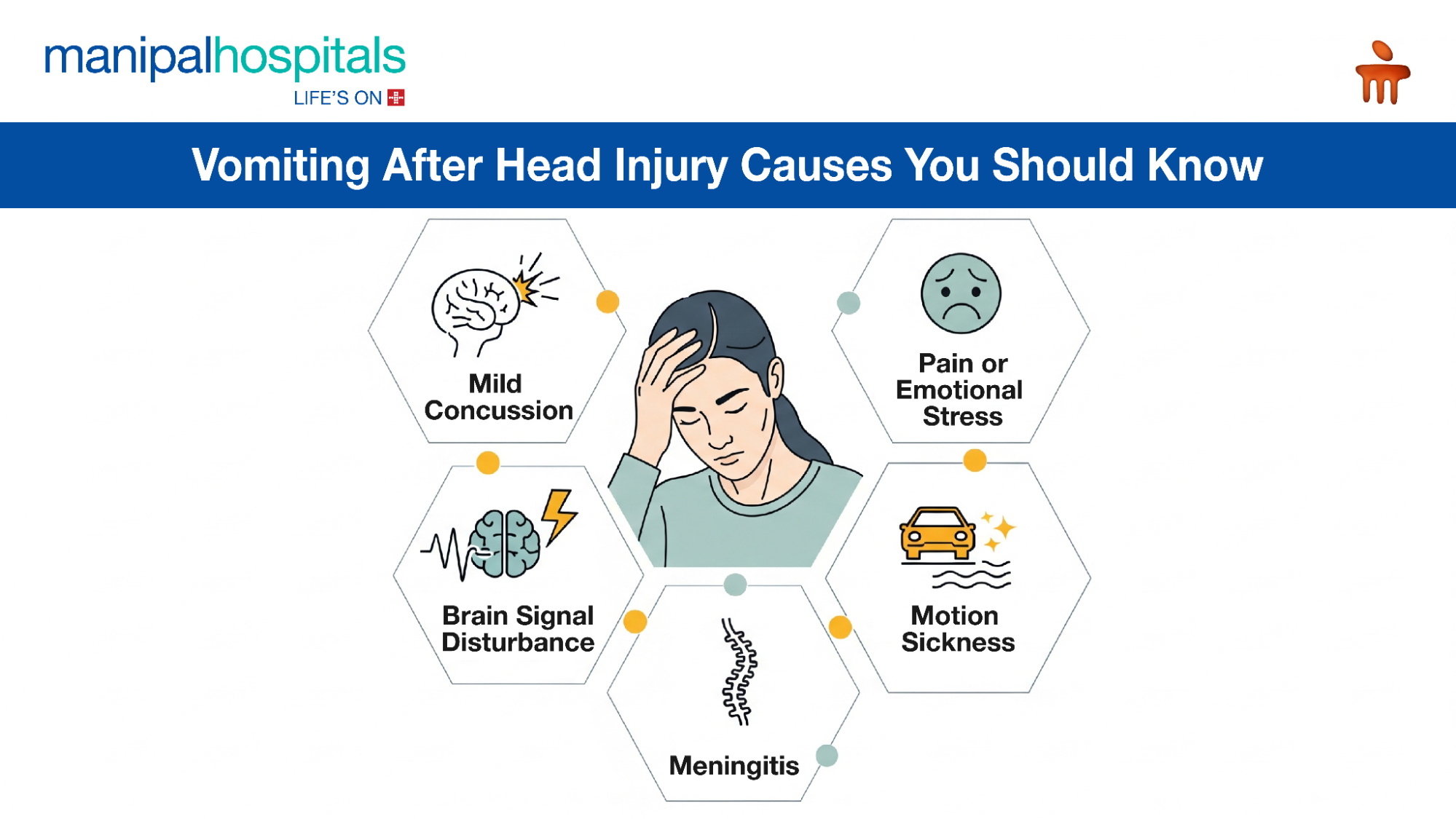
Some common causes include:
-
A mild concussion: A minor brain injury that temporarily affects normal brain function, leading to symptoms like nausea or vomiting.
-
Pain or emotional stress after the injury: The body’s stress response to injury and pain can trigger nausea and vomiting.
-
Temporary disturbance in how the brain sends signals: The injury can briefly disrupt brain communication with the body, affecting balance and digestion and causing vomiting.
-
Motion sickness: After a head injury, changes in balance control can make the brain more sensitive to movement, leading to dizziness and vomiting.
-
Meningitis (rare but serious): In some cases, infection or inflammation of the brain and spinal cord coverings can occur or be suspected after trauma, causing vomiting along with fever, headache, and neck stiffness.
Symptoms of Vomiting after a Head Injury
After a head injury, vomiting may appear along with other symptoms depending on the severity of the impact. Some common signs to watch for include:
-
Headache, which may be mild or severe
-
Dizziness or feeling unsteady
-
Nausea or repeated vomiting
-
Confusion or difficulty remembering events
-
Drowsiness or difficulty staying awake
-
Blurred vision or sensitivity to light
-
Irritability or unusual behaviour (especially in children)
-
Loss of balance or coordination
When to See a Doctor
Medical attention should be sought immediately if any of the following are present after a head injury:
-
Vomiting more than once or persistent vomiting
-
Severe or worsening headache
-
Loss of consciousness, even briefly
-
Seizures or fits
-
Confusion, agitation, or unusual behaviour
-
Difficulty waking up or excessive sleepiness
-
Weakness in arms or legs, or trouble walking
-
Neck stiffness, fever, or signs of infection
Treatment for Vomiting After Head Injury
Treatment depends on the cause and severity of the injury. Doctors may recommend:
-
Observation and monitoring: Mild cases may only need rest and close observation for 24–48 hours.
-
Medications: Anti-nausea medicines or pain relief medications may be given to manage symptoms.
-
Imaging tests: A CT scan or MRI may be done to check for internal bleeding or brain injury.
-
Hospital observation: In moderate to severe cases, the patient may be admitted for monitoring.
-
Treatment of underlying causes: If there is brain swelling, bleeding, or infection (like meningitis), specific medical or surgical treatment will be required.
Early diagnosis and timely treatment play a key role in preventing complications and ensuring recovery.
Home Remedies for Vomiting After a Head Injury
If the head injury is mild and a doctor has not identified any serious complications, some simple home care steps can help manage vomiting and discomfort. However, these are only supportive measures and not a substitute for medical evaluation.
-
Rest in a calm environment: Keep the person in a quiet, dim room to reduce strain on the brain and prevent worsening of nausea.
-
Small and frequent fluids: give small sips of water or oral rehydration solution to prevent dehydration, instead of large amounts at once.
-
Light diet: Once vomiting reduces, offer bland foods like rice, toast, or bananas in small portions.
-
Avoid sudden movement: Sudden head or body movements can worsen dizziness and trigger vomiting.
-
Keep head slightly elevated: resting with the head raised can help reduce pressure and discomfort.
-
Monitor closely: Watch for any worsening symptoms such as repeated vomiting, confusion, or severe headache.
Conclusion
Vomiting after a head injury can range from a mild, temporary reaction to a sign of a more serious underlying problem. While it may sometimes settle on its own, it should always be taken seriously, especially if it occurs repeatedly or is accompanied by symptoms like headache, dizziness, confusion, or drowsiness. Careful observation, timely medical consultation, and appropriate treatment are key to ensuring safety and preventing complications. When in doubt, it is always best to seek medical advice rather than ignore the symptoms.
At Manipal Hospitals, our specialists in the Department of Neurology provide comprehensive evaluation, accurate diagnosis, and advanced management of head injuries and related neurological conditions, including symptoms such as vomiting, dizziness, and loss of consciousness, helping ensure timely treatment, prevent complications, and support safe recovery and long-term brain health.