


 6 Min Read
Ever felt your hands suddenly shake, your legs feel weak, or a strange internal vibration run through your body for no clear reason, even when you’re completely at rest? These unexpected episodes of body shaking can feel unsettling, especially when they appear out of nowhere and leave you wondering what’s happening inside your body.
While in many cases they are harmless and linked to everyday factors like stress, low blood sugar, excess caffeine, or lack of sleep, sometimes they can also be your body’s early signal that something needs attention. Understanding these episodes can help you know when to simply relax and when it’s time to look a little deeper.
Synopsis
What is shivering?
Body shaking, often called chills, is when your body starts shaking on its own without your control. In more intense cases, it is known as rigors, where the shaking can feel strong and difficult to stop.
This usually happens because your body is trying to control its temperature. When your body feels cold or senses a change (like during a fever or infection), your brain signals your muscles to contract quickly. These rapid muscle movements help produce heat and keep your body temperature stable.
Shivering can be triggered in situations such as:
-
When you are exposed to cold weather.
-
When you have a fever.
-
During infections.
-
Under emotional stress or anxiety.
Common Causes of Body Tremors
-
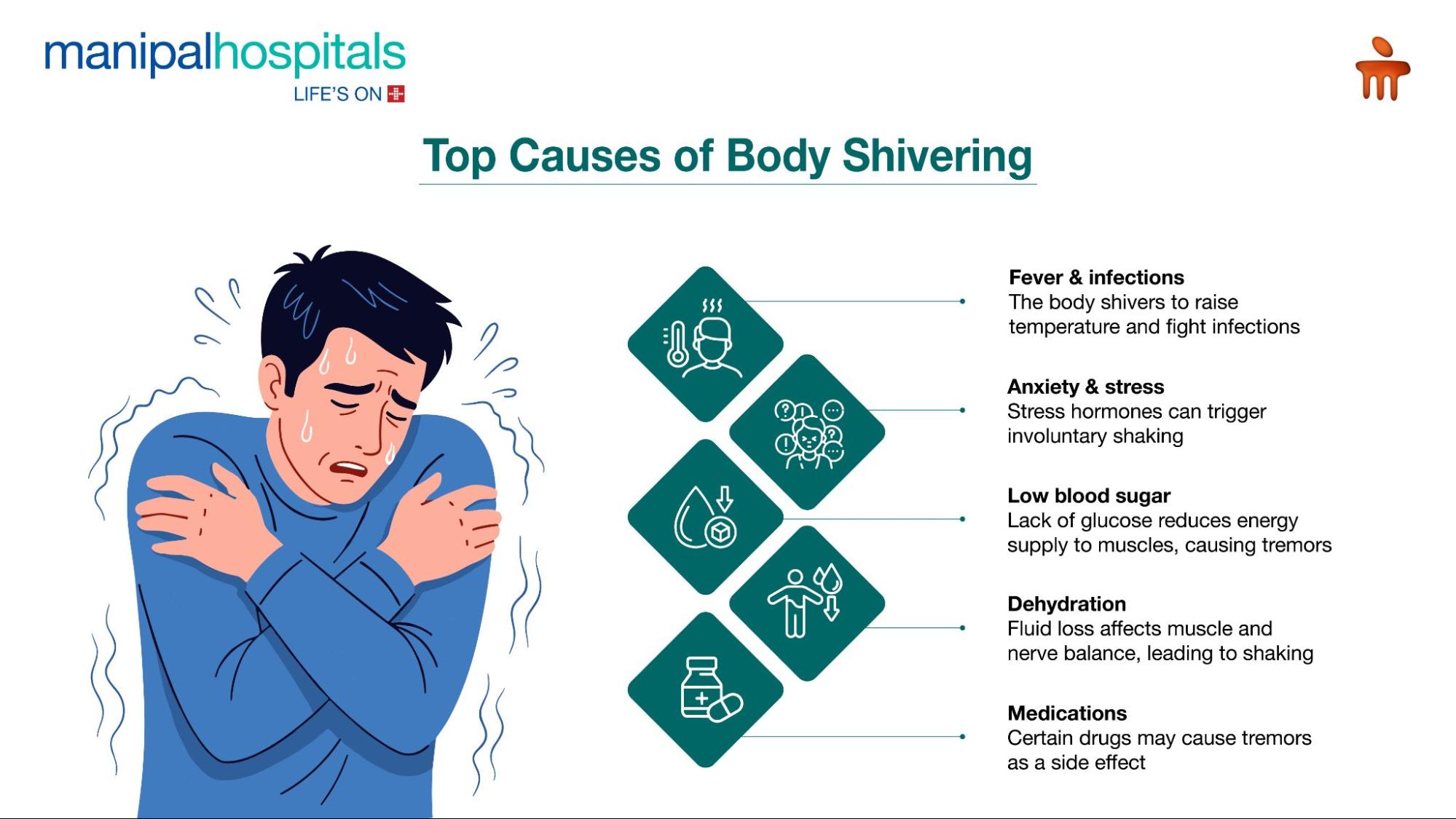
Fever or Infections: When your body fights infection, it may raise its temperature, causing chills and shivering.
-
Stress and Anxiety: Emotional stress activates your “fight or flight” response, releasing adrenaline, which can lead to, fine shaking and restlessness
-
Low Blood Sugar: When your blood sugar drops, your body reacts by releasing stress hormones. This can cause shaking, sweating and weakness
-
Dehydration: When your body doesn’t have enough water, which can lead to weakness and shaking.
-
Medications: Certain medicines can cause shaking as a side effect by affecting the nervous system.
Symptoms of Body Tremor
Shivering often comes with other symptoms that can give clues about the underlying cause. These signs may vary from mild to more noticeable depending on the condition.
You may notice:
-
Feeling cold or having chills (with or without fever)
-
Weakness and tiredness
-
Fast heartbeat
-
Muscle stiffness or body aches
-
Dizziness or feeling faint
-
Anxiety or nervousness
Home Remedies to Reduce Body Shaking
Some home remedies that can help with reducing mild tremors include:
-
Stay Warm: Wear warm clothes and use blankets.
-
Drink warm fluids: have soup, herbal tea, or warm water.
-
Stay Hydrated: Drink enough water, coconut water, or oral rehydration solutions.
-
Eat Regular Meals: Avoid skipping meals to maintain stable blood sugar.
-
Get Enough Rest: Sleep well and allow your body to recover.
-
Manage Stress: Practice meditation, yoga, or deep breathing.
-
Take a warm bath: This can relax your muscles and reduce chills.
Underlying Medical Causes of Tremors
While lifestyle factors often play a role, persistent shaking can sometimes be rooted in specific medical or neurological conditions.
Neurological Conditions
The most common medical cause of long-term tremors is essential tremor, a nervous system disorder that causes rhythmic shaking, usually in the hands during activity. Other conditions, such as Parkinson’s Disease, result from a loss of dopamine-producing brain cells, leading to a "resting tremor" that typically occurs when the muscles are relaxed. Additionally, Multiple Sclerosis (MS) can damage the protective coating of nerves, disrupting the signals that control muscle coordination.
Metabolic and Systemic Issues
Beyond the brain, systemic imbalances can trigger significant body shaking. An overactive thyroid (hyperthyroidism) can overstimulate your metabolism and nervous system, leading to fine tremors in the hands or fingers. Severe vitamin B12 deficiency can also cause neurological symptoms, including shaking and numbness, as the body struggles to maintain healthy nerve function.
Medical Treatment for Body Shaking
When home remedies are not enough, medical intervention focuses on identifying the root cause and using specialised therapies to restore stability.
Advanced Diagnostic Evaluations
To determine the best course of action, specialists perform a series of tests to rule out infections, metabolic imbalances, or neurological conditions:
-
Imaging & Nerve Tests: MRI or CT scans can identify structural issues in the brain, while electromyography (EMG) evaluates the health of muscles and the nerve cells that control them.
-
Metabolic Screening: Blood tests check for thyroid dysfunction, vitamin deficiencies (specifically B12), and glucose levels to address systemic causes.
-
Infection Screening: In cases of severe shivering (rigours), blood or urine cultures help identify bacterial or viral infections that require immediate treatment.
Pharmacological Options
Medication is often the first line of defence for persistent shaking:
-
Beta-Blockers: Commonly used for essential tremors, these help block the nerve impulses to the muscles, reducing the physical intensity of the shaking.
-
Anti-Seizure Medications: For patients who do not respond to beta-blockers, specific anticonvulsants can be effective in calming overactive nerve signals.
- Botulinum Toxin (Botox) Injections: These are often used for localised tremors, such as those affecting the head or voice, by temporarily weakening the specific muscles involved in the shaking.
Specialised Neurological Procedures
For severe or treatment-resistant tremors, modern medicine offers highly effective, minimally invasive options:
-
Deep Brain Stimulation (DBS): This involves placing a small electrode in the area of the brain responsible for movement. A pulse generator, similar to a pacemaker, sends electrical signals to interrupt the tremors.
-
Focused Ultrasound (FUS): A breakthrough, incision-less procedure that uses sound waves to target and treat the specific brain tissue causing the tremor, often providing immediate relief.
-
Physical & Occupational Therapy: Therapists work with patients to improve muscle coordination and provide adaptive tools—such as weighted utensils—to help maintain independence in daily activities.
Whether the shaking is a response to an infection or a long-term neurological condition, professional medical guidance ensures that the treatment is as precise as the diagnosis.
When to See a Doctor
Seek medical help if:
-
Shivering lasts more than 2–3 days.
-
You have a high fever.
-
You feel very weak or dizzy.
-
You experience confusion or trouble breathing.
-
Episodes happen repeatedly without a clear reason.
Conclusion
Body shaking or shivering is often harmless and can be managed with simple care at home. However, frequent or severe episodes should not be ignored.
Getting the right diagnosis and treatment helps prevent complications and ensures better overall health. A combination of home care and professional medical advice is the best approach to manage these symptoms effectively.
At Manipal Hospitals, our specialists at the Department of Neurology provide accurate diagnosis and effective treatment for body shaking and tremors, using advanced tests and personalised care to manage symptoms and improve overall nervous system health.
FAQ's
Shivering without a fever is often caused by external cold exposure, anxiety, hypoglycemia, or certain neurological conditions. These triggers disrupt the body's internal temperature regulation or stress response, resulting in involuntary muscle contractions.
While occasional shivering is typically a normal physical reaction, it is not usually a cause for immediate alarm. However, if the shivering is persistent, severe, or accompanied by other concerning symptoms, it may indicate an underlying medical issue requiring professional attention.
You can often stop shivering by warming your body with blankets or warm clothing and consuming fluids to stabilise your internal system. If the shivering is stress-related, focus on deep breathing techniques, but seek medical advice if the sensation does not subside quickly.
Yes, dehydration can interfere with your body's ability to regulate its core temperature effectively, which may lead to chills. When the body is low on fluids, blood flow and thermoregulation are compromised, potentially triggering a shivering response.
Share this article on:






