6 Min Read
Dehydration is a common condition that occurs when you don't drink enough fluids, leading your body to lose more fluid than it takes in. While often associated with thirst and fatigue, you may also wonder if dehydration can cause headaches when you don't drink enough water during the day. A dehydration headache is a common symptom of insufficient fluid intake and can range from mild discomfort to severe pain.
Synopsis
Understanding Dehydration
Dehydration happens when your body loses more fluid than it takes in. Water is essential for countless bodily functions, from regulating body temperature and lubricating joints to transporting nutrients and removing waste. Even mild dehydration can disrupt these vital processes.
-
Fluid Imbalance: The human body is primarily composed of water. When this balance is disturbed, your body's systems begin to struggle.
-
Common Causes: Insufficient fluid intake, excessive sweating (due to exercise, hot weather, or fever), vomiting, diarrhoea, and certain medications can all lead to dehydration.
Does Dehydration Cause Headaches?
A headache is one of the most common physical manifestations of inadequate fluid intake. When your body is dehydrated, several physiological changes occur that contribute directly to headache pain.
The primary mechanism involves the brain itself. Our brain is largely composed of water, and when you're dehydrated, it can temporarily shrink or contract due to fluid loss. This shrinkage pulls the brain away from the skull, causing pain. Additionally, dehydration can lead to a decrease in blood volume and electrolyte imbalances, which can affect blood flow to the brain and alter neurotransmitter activity, further contributing to headache development. Persistent dehydration and recurring headaches may sometimes require evaluation by an Internal Medicine specialist to identify underlying health concerns and ensure proper treatment.
Research indicates that even mild dehydration, resulting from a relatively small fluid loss, can significantly impact cognitive function and trigger headaches. In fact, studies show that adequate rehydration often effectively relieves headaches, highlighting the direct and impactful link.
Symptoms of Dehydration Headache
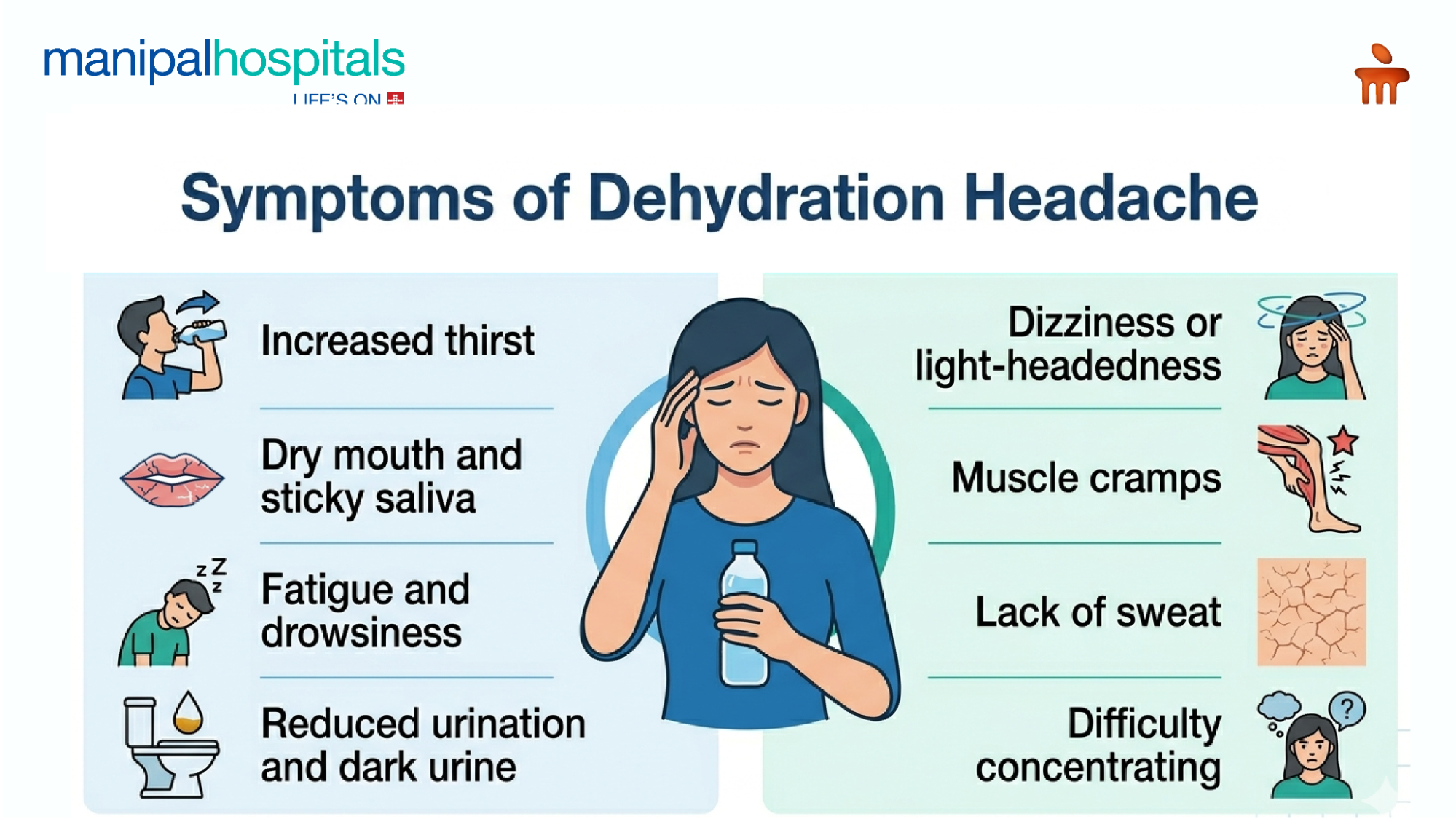
A dehydration headache typically feels different from other types of headaches. It's often described as a dull ache or throbbing pain that can affect the entire head, but it's particularly noticeable in the front, sides, or back of the head. Unlike tension headaches, it doesn't usually cause pain in the neck. Some other signs along with the headache include:
-
Increased Thirst: While obvious, sometimes thirst is not prominent until dehydration is moderate.
-
Dry Mouth and Sticky Saliva: A clear indicator of reduced fluid levels.
-
Fatigue and Drowsiness: Lack of energy is a common symptom.
-
Reduced Urination and Dark Urine: Your kidneys conserve water, making urine more concentrated.
-
Dizziness or Lightheadedness: Especially when standing up quickly.
-
Muscle Cramps: Electrolyte imbalances can affect muscle function.
-
Lack of Sweat: Even when active, if your body is trying to conserve water.
-
Irritability and Difficulty Concentrating: Cognitive functions are impaired.
Immediate Relief for Dehydration Headaches
The good news is that relief for a dehydration headache is often straightforward: rehydration.
-
Drink Fluids: The most effective remedy. Opt for water, electrolyte-rich beverages, or clear broths. Sip slowly rather than gulping large amounts to avoid stomach upset. For moderate dehydration, oral rehydration solutions can be highly effective, replenishing lost fluids and electrolytes quickly.
-
Rest: Lie down in a cool, quiet, dark room. Rest can help alleviate the headache and allow your body to recover.
-
Avoid Triggers: Temporarily avoid caffeine and alcohol, which can further dehydrate you.
-
Cool Compress: Applying a cool, damp cloth to your forehead or the back of your neck may provide some comfort.
Timely rehydration can often resolve a dehydration headache within 30 minutes to 3 hours.
Staying Hydrated
Preventing dehydration headaches involves making hydration a consistent part of your daily routine. Here's how to ensure you're always adequately hydrated:
-
Set Daily Goals: Aim to drink approximately 8-10 glasses (about 2-2.5 litres) of water daily, though individual needs vary based on activity level, climate, and health conditions.
-
Drink Regularly: Don't wait until you're thirsty. Sip water throughout the day. Keep a water bottle handy as a visual reminder.
-
Incorporate Hydrating Foods: Fruits and vegetables like watermelon, cucumber, oranges, and strawberries have high water content and can significantly contribute to your daily fluid intake.
-
Adjust for Activity and Climate: Increase your fluid intake when exercising, spending time in hot weather, or when you have a fever, vomiting, or diarrhoea.
-
Monitor Urine Colour: Pale yellow urine usually indicates good hydration. Darker urine suggests you need to drink more.
-
Limit Dehydrating Beverages: Excessive intake of caffeinated drinks and alcohol can act as diuretics, leading to fluid loss.
Hydration Best Practices: A Quick Guide
|
Do's for Effective Hydration |
Don'ts to Prevent Dehydration |
|
Drink fluids regularly throughout the day, aiming for consistent intake rather than large amounts at once. |
Wait until you feel thirsty, as thirst is an early sign of dehydration. |
|
Prioritise water as your main beverage, supplemented by electrolyte-rich drinks when active or ill. |
Solely rely on sugary drinks, excessive caffeine, or alcohol for hydration, as these can have diuretic effects. |
|
Increase fluid intake during exercise, hot weather, fever, vomiting, or diarrhoea. |
Ignore changes in urine colour (darker urine signals a need for more fluids). |
|
Incorporate water-rich foods like fruits and vegetables (e.g., watermelon, cucumber) into your diet. |
Attempt to rehydrate too quickly or excessively, which can be harmful; steady intake is safer. |
|
Seek medical advice if headaches are severe, persistent, or accompanied by alarming symptoms despite rehydration. |
Dismiss recurring headaches without exploring potential causes or consulting a doctor. |
When to Seek Medical Attention
While most dehydration headaches resolve with rehydration, it's important to know when to seek professional medical advice. If your headache is:
-
Severe and doesn't improve with fluid intake.
-
Accompanied by confusion, persistent vomiting, high fever, or loss of consciousness.
-
Frequent or recurring, despite consistent hydration efforts.
These could indicate more serious underlying conditions or severe dehydration requiring intravenous fluids. If you are experiencing persistent headaches or severe dehydration symptoms, it's crucial to seek timely medical advice. Our experts at the Department of Internal Medicine at Manipal Hospitals can help you navigate and even relieve your dehydration headaches.
FAQ's
With proper rehydration, a mild dehydration headache can start to subside within 30 minutes to a few hours. Complete relief may take a bit longer, depending on the severity of dehydration.
Not necessarily. Even mild dehydration can trigger a headache. However, if the headache is severe and accompanied by other serious symptoms like confusion or fainting, it could indicate moderate to severe dehydration that requires immediate medical attention.
While over-the-counter pain relievers might offer temporary symptomatic relief, the most effective treatment for a dehydration headache is to rehydrate your body. Address the root cause first. Consult a doctor for appropriate medication advice.
Water is always the best choice. For more significant fluid and electrolyte loss (e.g., after intense exercise or illness), electrolyte-rich beverages or oral rehydration solutions can be more beneficial.
General guidelines suggest around 8-10 glasses (2-2.5 litres) of water daily. However, individual needs vary based on activity level, climate, diet, and health conditions. Listen to your body and aim for consistent hydration throughout the day.
Yes, sometimes. Both can cause throbbing pain. However, dehydration headaches often improve quickly with fluid intake and typically lack the aura, light sensitivity, or sound sensitivity often associated with migraines. If unsure, consult a doctor.
Share this article on: