


 6 Min Read
Typhoid fever is a serious bacterial infection that affects millions of people worldwide, particularly in areas with poor sanitation and limited access to clean drinking water. While most people are familiar with the infection itself, fewer understand a potentially dangerous complication known as a typhoid ulcer. If left untreated, a typhoid ulcer can lead to severe health problems and may even become life-threatening.
Synopsis
What Is a Typhoid Ulcer?
A typhoid ulcer is an ulcer or sore that develops in the lining of the small intestine because of typhoid fever. Typhoid fever is caused by the bacterium Salmonella Typhi, which spreads through contaminated food and water.
When the bacteria enter the body, they travel through the digestive system and bloodstream, causing infection. In severe or untreated cases, the bacteria can damage the intestinal lining, leading to the formation of ulcers. These ulcers are most found in the lower part of the small intestine, known as the ileum.
Although not every person with typhoid fever develops a typhoid ulcer, the risk increases when treatment is delayed or the infection becomes severe.
How Does a Typhoid Ulcer Develop?
The development of a typhoid ulcer usually happens in stages:
https://www.manipalhospitals.com/uploads/image_gallery/typhoid-ulcer-symptoms-and-treatment-guide.png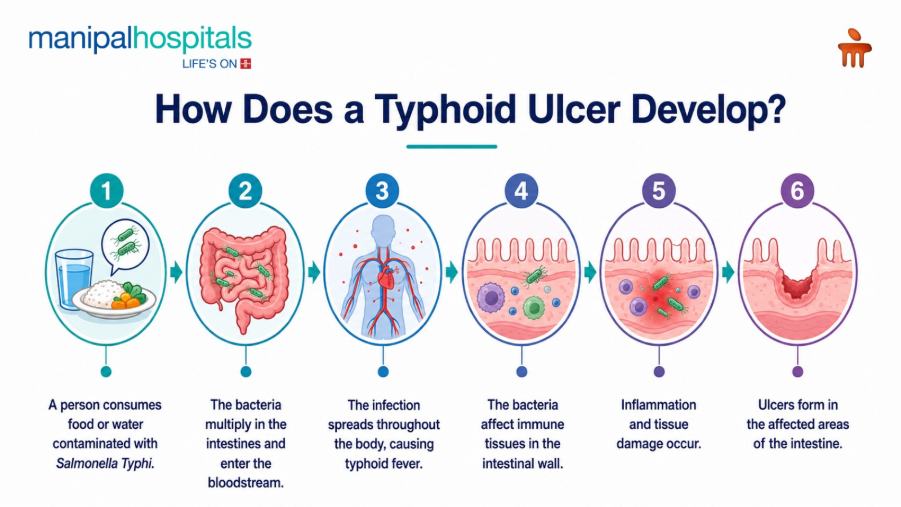
-
A person consumes food or water contaminated with Salmonella Typhi.
-
The bacteria multiply in the intestines and enter the bloodstream.
-
The infection spreads throughout the body, causing typhoid fever.
-
The bacteria affect immune tissues in the intestinal wall.
-
Inflammation and tissue damage occur.
-
Ulcers form in the affected areas of the intestine.
These ulcers can become deeper over time, increasing the risk of bleeding or perforation if not treated promptly.
Typhoid Ulcer Symptoms
Recognising typhoid ulcer symptoms early can help prevent serious complications. Since a typhoid ulcer develops as a complication of typhoid fever, symptoms often begin with the typical signs of the infection. People with typhoid fever may experience persistent high fever, nausea, vomiting, constipation, diarrhoea, weakness and abdominal pain. As the condition progresses and a typhoid ulcer develops, additional symptoms may appear.
Typhoid Ulcer Symptoms to Watch For
Common signs of a typhoid ulcer include:
-
Increasing abdominal pain
-
Tenderness in the abdomen
-
Bloating or swelling of the stomach area
-
Blood in the stool
-
Dark or black stools caused by internal bleeding
-
Severe digestive discomfort
-
Sudden worsening of symptoms
These symptoms should never be ignored, as they may indicate damage to the intestinal wall.
In some cases, a typhoid ulcer can lead to intestinal perforation, which is a medical emergency. Symptoms may include sudden and severe pain, dizziness or signs of shock, high fever, and a hard or rigid abdomen. Anyone experiencing these symptoms should seek
Who Is Most at Risk?
Certain factors can increase the likelihood of developing a typhoid ulcer. These include:
-
Delayed diagnosis of typhoid fever
-
Failure to complete antibiotic treatment
-
Limited access to healthcare
-
Poor sanitation and hygiene conditions
-
Consumption of contaminated food or water
-
A weakened immune system
Children, older adults and individuals with existing health conditions may be particularly vulnerable to complications.
How Is a Typhoid Ulcer Diagnosed?
Doctors diagnose typhoid fever and its complications through a combination of medical history, physical examination and laboratory testing.
Blood and Stool Tests: The most common tests include blood cultures, stool cultures, complete blood count (CBC), or other laboratory investigations recommended by a healthcare professional. These tests help identify the presence of Salmonella Typhi and assess the severity of the infection.
Imaging Tests: If a typhoid ulcer or intestinal complication is suspected, doctors may request an abdominal ultrasound, CT scan or X-rays. These imaging tests can help identify bleeding, perforation or other abnormalities in the digestive tract.
Endoscopy: In some situations, an endoscopic examination may be used to assess intestinal damage and confirm the presence of ulcers.
Typhoid Ulcer Treatment
Prompt typhoid ulcer treatment is essential to prevent serious complications. Treatment focuses on eliminating the infection, supporting recovery and managing any intestinal damage.
Antibiotic Treatment: Antibiotics are the main course of treatment for typhoid fever and typhoid ulcers. The specific antibiotic prescribed depends on local resistance patterns and the patient's condition. Early antibiotic treatment can, stop the spread of infection, reduce inflammation, promote healing of ulcers and lower the risk of complications. Patients should always complete the full course of medication as prescribed, even if symptoms improve before treatment ends.
Hydration and Nutrition: Many patients experience dehydration due to fever, vomiting or diarrhoea. Treatment may include drinking plenty of fluids, oral rehydration solutions, intravenous fluids in severe cases and nutritional support. A balanced diet can help the body recover more effectively.
Hospital Care: Some patients may require hospital admission, especially if they have significant bleeding, signs of intestinal perforation, dehydration or persistent high fever. Hospital care allows doctors to monitor the condition closely and provide emergency treatment if needed.
Surgical Treatment: Surgery is sometimes necessary when complications occur. Surgical intervention may be required to repair a perforated intestine, control severe internal bleeding and remove damaged sections of bowel. Although surgery is not needed in most cases, it can be lifesaving when complications develop.
Typhoid Ulcer Complications
Understanding typhoid ulcer complications is critically important because several of these conditions can escalate into life-threatening emergencies very rapidly. One of the most common complications is intestinal bleeding, which occurs when a typhoid ulcer erodes into a blood vessel within the intestinal wall. This internal bleeding may manifest as visible blood in the stool, black and tarry stools, progressive weakness, fatigue, and anaemia. While mild bleeding might be manageable, severe haemorrhage often requires urgent hospital treatment and, in some cases, blood transfusions to stabilize the patient.
If an ulcer deepens, it can lead to an intestinal perforation, a severe complication where a hole is created entirely through the wall of the intestine. This perforation causes the infectious intestinal contents to leak directly into the sterile abdominal cavity. Because of the immediate risk of widespread contamination and severe infection, an intestinal perforation is always considered a critical medical emergency that almost always requires immediate surgical intervention to repair the tear.
Following a perforation, the leaked contents can trigger peritonitis, which is the acute inflammation and infection of the lining of the abdomen. Peritonitis presents with intense symptoms, including severe abdominal pain, high fever, and persistent nausea, representing a life-threatening infection. If this localised abdominal infection escapes into the bloodstream and spreads throughout the entire body, it can escalate into sepsis. Sepsis is a rapid, potentially fatal systemic response that requires urgent, aggressive medical treatment to prevent total organ failure.
Preventing Typhoid Ulcers
The best way to prevent a typhoid ulcer is to prevent typhoid fever.
Helpful prevention measures include:
-
Drinking safe, clean water
-
Practising good hand hygiene
-
Washing fruits and vegetables thoroughly
-
Avoiding food from unsafe sources
-
Maintaining proper sanitation
-
Receiving a typhoid vaccine when recommended
Early diagnosis and treatment of typhoid fever also significantly reduce the risk of ulcer formation and complications.
Conclusion
A typhoid ulcer is a serious complication of typhoid fever that develops when Salmonella Typhi damages the intestinal lining. Common typhoid ulcer symptoms include abdominal pain, digestive discomfort, bleeding and worsening gastrointestinal symptoms. Prompt typhoid ulcer treatment, including antibiotics, hydration and medical monitoring, is essential for recovery. Without proper care, dangerous typhoid ulcer complications such as intestinal bleeding, perforation and sepsis can occur.
By recognising symptoms early, seeking timely medical treatment and following preventive measures, individuals can reduce the risk of severe complications and support a full recovery from typhoid fever. If you are worried about having symptoms related to typhoid ulcer, do consult with our at the Department of Gastroenterology at Manipal Hospitals.
FAQ's
A typhoid ulcer is an open sore that develops in the lining of the small intestine as a complication of typhoid fever. It occurs when the Salmonella Typhi bacteria cause inflammation and damage to the intestinal tissues, leading to ulcer formation.
Common typhoid ulcer symptoms include abdominal pain, stomach tenderness, bloating, blood in the stool, black or tarry stools, persistent fever, and worsening digestive discomfort. Severe symptoms require immediate medical attention,
Typhoid ulcer treatment typically involves antibiotics to eliminate the infection, adequate hydration, nutritional support, and close medical monitoring. In severe cases involving bleeding or intestinal perforation, hospitalisation and surgery may be necessary.
Typhoid ulcer complications can include intestinal bleeding, intestinal perforation, peritonitis (infection of the abdominal lining), sepsis, and severe dehydration. These complications can become life-threatening if not treated promptly.
Yes. The risk of developing a typhoid ulcer can be reduced by preventing typhoid fever through good hygiene, drinking safe water, eating properly cooked food, maintaining sanitation, and receiving a typhoid vaccination when recommended.
Share this article on:






