


 7 Min Read
An aortic aneurysm is a swelling or bulge in the aorta, the largest blood vessel that carries blood from the heart to the rest of the body. It happens when a part of the aorta becomes weak and stretches outward. The most common cause is the buildup of fatty deposits in the blood vessels, but injuries, infections, inherited conditions, and other health problems can also lead to an aortic aneurysm. Understanding what this condition is can help with getting the treatment required to avoid them from rupturing or forming clots.
Synopsis
Definition of Aneurysm
An aneurysm is a localised, balloon-like bulge or swollen area in the wall of a blood vessel (usually an artery). It occurs when a section of the blood vessel wall weakens, causing it to stretch and widen under the pressure of flowing blood.
Why Are They Dangerous?
-
Rupture: If the wall becomes too thin, the aneurysm can burst, causing life-threatening internal bleeding.
-
Blood Clots: The irregular blood flow inside an aneurysm can cause clots to form, which can break off and block blood flow elsewhere.
What is Aortic Aneurysm?
Your aorta is the largest artery in your body. It carries blood and oxygen from your heart to other parts of your body. An aortic aneurysm develops when a weak spot develops in the wall of the aorta. As blood flows through the aorta, the pressure can cause the weak area to bulge outward like a balloon, causing an aortic aneurysm. Aneurysms are usually small and become larger over time as the pressure increases.
If not treated or addressed, sometimes aneurysms burst and cause bleeding inside the body. Because the aorta is such a large blood vessel, it can be very dangerous and is often fatal.
Types of Aortic Aneurysm
There are two different types of aortic aneurysm based on location:
Abdominal aortic aneurysm (AAA): is a bulge in the part of your aorta that runs through your stomach. It usually causes no symptoms, but some people have deep pain in their lower backs or a pulsing sensation in their bellies.
Thoracic aortic aneurysm (TAA): is a bulge in the part of your aorta that runs through your chest. It forms when your aorta wall grows weak from plaque, connective tissue disorders or other factors.
Signs and Symptoms
In many cases, people do not know they have an aortic aneurysm. It often does not cause any symptoms until it ruptures.
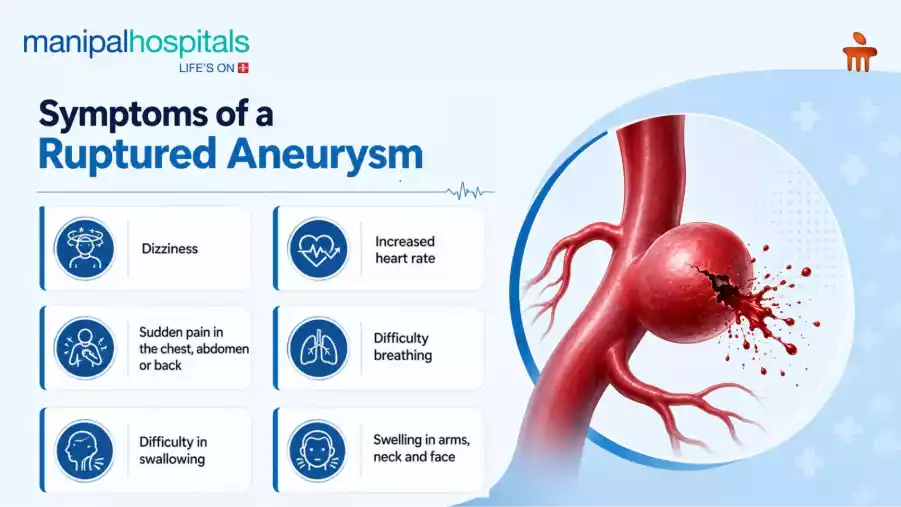
Symptoms of a ruptured aneurysm can include:
-
Dizziness or light-headedness.
-
Rapid heart rate.
-
Sudden severe chest pain, abdominal pain or back pain.
-
Difficulty breathing or shortness of breath.
-
Painful or difficult to swallow.
-
Swelling of your arms, neck and face.
Risk Factors of Aortic Aneurysm
-
Age: your risk for aortic aneurysm goes up as you age. Abdominal aortic aneurysms are most common in adults after the age of 65.
-
Family history and genetics: one in 10 people with an abdominal aortic aneurysm have a family history of them. The chance of developing aortic abdominal aneurysm is 1 in 5 for people who have a parent, brother, sister or child with the condition, which is known as a first-degree relative.
-
Lifestyle: some lifestyle habits increase your risk of having an aortic aneurysm. These include:
-
Cigarette smoking is one of the main factors that increase your risk for abdominal aortic aneurysm. If you are a current smoker, an abdominal aortic aneurysm may grow more quickly and be more likely to burst.
-
Medical conditions that could cause an aortic aneurysm include:
- Aneurysm of blood vessels in other parts of your body.
- Chronic obstructive pulmonary disease.
- Cardiovascular conditions such as atherosclerosis, coronary heart disease and peripheral artery disease.
- Unhealthy blood cholesterol level.
- High blood pressure.
- Bacterial infections
- Obesity
- Kidney conditions such as renal failure, chronic kidney disease and polycystic kidney disease.
Treatment Options
Treatment aims to prevent the aneurysm from growing large enough to tear the artery or burst.
For smaller, unruptured aneurysms, your provider may prescribe medications to improve blood flow. This can help slow the growth of the aneurysm and reduce pressure on the artery wall.
Common medications include:
-
Beta blockers which lower heart rate and blood pressure.
-
Angiotensin receptor blockers (ARBs), which help control blood pressure, may be particularly useful in some inherited connective tissue disorders.
-
ACE inhibitors, which also lower the blood pressure.
-
Statins which reduce cholesterol and may help lower the risk of cardiovascular events.
Types Of Aortic Aneurysm Surgery
-
Open aneurysm repair: your provider removes the aneurysm and sews a graft in place to repair the artery. This may also be necessary if an aneurysm bursts.
-
Endovascular aneurysm repair (EVAR): it is a minimally invasive procedure to fix aortic aneurysms. During the procedure, your provider uses a catheter (thin tube) to insert a graft to reinforce or repair the artery.
Lifestyle Modifications
While lifestyle changes generally cannot reverse an existing aortic aneurysm, they can help reduce the risk of developing one, slow its growth and lower the risk of complications.
-
Exercise regularly: moderate aerobic activities such as walking, cycling or swimming are usually beneficial for cardiovascular health. People with an existing aneurysm should discuss exercise limits with their doctor, especially regarding heavy lifting.
-
Eat a heart-healthy diet: focus on fruits, vegetables, whole grains, lean proteins and healthy fats. This helps control blood pressure, cholesterol and weight.
-
Maintain a healthy weight: excess weight can contribute to high blood pressure and other cardiovascular risks.
-
Control diabetes if you have it.
-
Limit excessive alcohol consumption and avoid recreational drugs that can sharply raise blood pressure.
When Should You Meet a Doctor?
Consult the Department of Cardiology for timely evaluation, diagnosis, and management of aortic aneurysm and related heart conditions.
-
If you have risk factors for an aortic aneurysm, such as high blood pressure, a family history of aneurysms or certain genetic conditions.
-
If you develop symptoms that could be related to an aneurysm, such as deep persistent pain in the chest, back, abdomen or side.
-
Severe weakness, dizziness or shock.
-
Sudden shortness of breath
-
A pulsating sensation in the abdomen.
Conclusion
Taking steps to improve your heart health can help prevent aortic aneurysm from developing or worsening. If you are at risk for aortic aneurysm, be sure to get regular screenings. Finding and treating an aneurysm early greatly reduces the risk of rupture or other complications. Talk to our experts at the Department of Cardiology about what lifestyle changes and prevention strategies you need to follow for aortic aneurysms.
FAQ's
The primary cause of an aortic aneurysm is the weakening of the aorta’s wall, most commonly triggered by atherosclerosis (hardening of the arteries). Other major contributing factors include chronic high blood pressure, smoking, genetic connective tissue disorders (such as Marfan syndrome), and aging.
Yes, you can survive an aortic aneurysm. Survival depends highly on whether the aneurysm is discovered before it ruptures and how quickly you receive emergency medical attention.
No, an aortic aneurysm never goes away or shrinks on its own. The damage to the artery wall is permanent, though small aneurysms can remain stable for years with proper blood pressure control.
Aortic aneurysms generally grow very slowly, averaging an expansion rate of 1 to 3 millimetres per year. However, they do not grow at constant speed; their progression depends heavily on individual health factors and the initial size of the bulge.
Small or unruptured aneurysms usually cause no symptoms. Early warning signs only appear if the aneurysm grows and presses on nerves/tissues or leaks slightly. Symptoms vary by location. If you suspect a ruptured aneurysm (which involves sudden, excruciating pain), seek emergency medical attention immediately.
Share this article on:






