6 Min Read
Liver cancer is one of the serious conditions affecting the liver’s normal function, especially when diagnosed at an advanced stage. It often develops silently and is detected only when symptoms become noticeable or the disease has progressed. Stage 4 liver cancer represents the most advanced form of the disease, where cancer has spread beyond the liver to other parts of the body. Understanding its causes, symptoms, and available treatment options is important for timely medical care and informed decision-making.
Synopsis
What is Stage 4 Liver Cancer?
Stage 4 liver cancer is the most advanced stage of primary liver cancer or cancer that has spread to the liver from another part of the body. At this stage, cancer cells have spread beyond the liver to distant organs such as the lungs, bones, or lymph nodes.
Liver cancer usually develops when normal liver cells undergo genetic changes and start growing uncontrollably. These changes may occur due to long-term liver damage or underlying health conditions. In Stage 4 disease, the cancer is no longer limited to the liver, which makes treatment more complex. This stage is clinically important because liver function may already be affected, and treatment focuses on controlling disease spread, reducing symptoms, and maintaining quality of life.
Causes of Stage 4 Liver Cancer
The common causes and risk factors are explained below in simple terms:
-
Chronic hepatitis B or hepatitis C infection: These are viral infections that affect the liver for many years. Over time, they can damage liver cells and increase the risk of cancer.
-
Liver cirrhosis: This means long-term scarring of the liver. It can happen due to alcohol use, viral infections, or fatty liver disease. Scarred liver tissue does not work normally and has a higher chance of developing cancer.
-
Excess alcohol consumption: Regular heavy drinking can slowly damage liver cells. This repeated damage can lead to liver scarring and eventually increase cancer risk.
-
Non-alcoholic fatty liver disease (NAFLD): In this condition, fat builds up in the liver even in people who do not drink alcohol. It is commonly linked with obesity, diabetes, and unhealthy lifestyle habits. Over time, it may lead to liver damage.
-
Exposure to toxins (aflatoxins): These are harmful substances that can be found in food grains or nuts that are not stored properly. Long-term exposure can damage the liver.
-
Family history of liver cancer: In some cases, having close relatives with liver cancer may slightly increase the risk.
-
Cancer spreading from other organs (metastatic cancer): Sometimes cancer does not start in the liver but spreads there from organs like the colon, lungs, or breast.
Symptoms of Stage 4 Liver Cancer
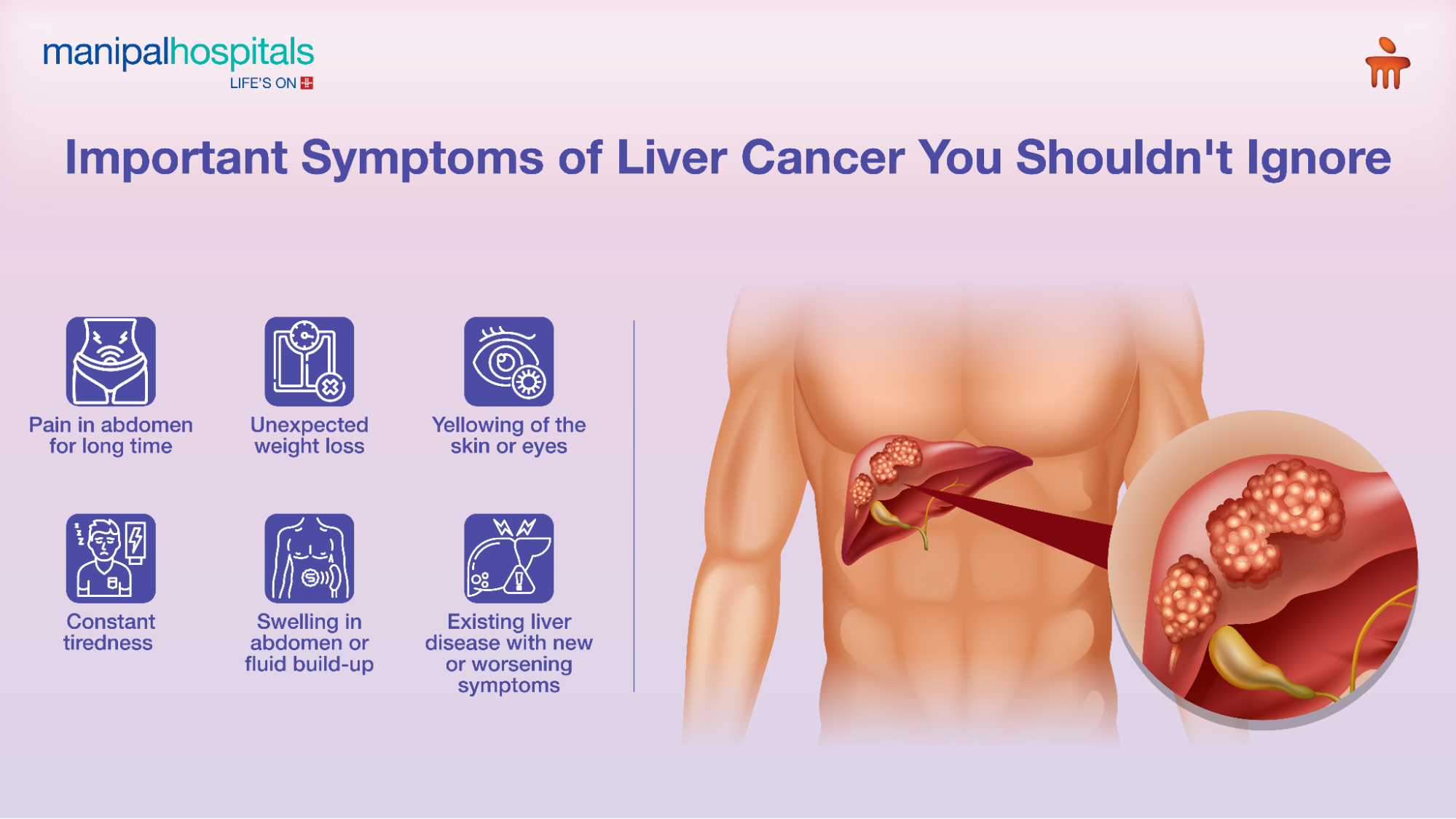
In Stage 4 liver cancer, symptoms are usually more noticeable because the cancer affects both the liver and other parts of the body. Below are some of the common symptoms explained simply:
-
Pain in the upper right side of the abdomen: Many patients feel a constant or recurring pain in the upper right part of the stomach, where the liver is located. This happens due to swelling or pressure from the tumour.
-
Unexplained weight loss: People may lose weight quickly without trying. This happens because the body is using more energy to fight illness, and appetite is usually reduced.
-
Loss of appetite: Patients often feel full quickly or lose interest in eating. This can lead to weakness over time.
-
Fatigue and weakness: Feeling extremely tired even after rest is very common. The liver is not working properly, which affects overall energy levels.
-
Abdominal swelling (ascites): Fluid may build up in the stomach area, causing visible swelling and discomfort. This happens due to changes in liver function and fluid balance in the body.
-
Yellowing of skin and eyes (jaundice): When the liver is not able to process waste properly, a substance called bilirubin builds up in the body, causing yellow discolouration of the skin and eyes.
When to See a Doctor
You should consult a doctor without delay if you experience the above symptoms, such as persistent abdominal pain, unexplained weight loss, jaundice, ongoing fatigue, or abdominal swelling. These symptoms should not be ignored, especially if you have an existing liver condition or if they are new or worsening, as early medical evaluation is important for timely diagnosis and treatment.You can also take our health checkup to assess your symptoms and understand whether you should seek prompt medical attention.
Treatment Options for Stage 4 Liver Cancer
Treatment in Stage 4 liver cancer is usually aimed at controlling cancer spread and improving quality of life rather than a cure. A combination of therapies may be used based on the patient's condition.
1. Targeted Therapy
Targeted therapy uses medicines that block specific signals responsible for cancer growth. These drugs help slow tumour progression and may reduce blood supply to cancer cells.
2. Immunotherapy
Immunotherapy helps the body’s immune system identify and attack cancer cells. It is commonly used in advanced liver cancer and may help control disease progression in some patients.
3. Chemotherapy
Chemotherapy uses anti-cancer drugs to kill rapidly dividing cells. It may be used when other treatments are not suitable or in combination with other therapies, although the response in liver cancer can vary.
4. Radiation Therapy
Radiation therapy uses high-energy beams to control tumour growth and relieve symptoms such as bone pain when cancer has spread.
5. Liver-Directed Procedures
In selected cases, procedures such as:
-
Transarterial chemoembolization (TACE)
-
Radiofrequency ablation (RFA)
-
Microwave ablation
may be used to target liver tumours directly and control disease locally.
6. Palliative Care
Palliative care focuses on symptom management and supportive care. It helps manage pain, nausea, fatigue, and emotional stress. It can be provided along with cancer-directed treatments.
7. Clinical Trials
Some patients may be eligible for clinical trials that provide access to newer therapies under research. Eligibility depends on a medical assessment.
Conclusion
Stage 4 liver cancer is an advanced condition where the disease has spread beyond the liver and requires a comprehensive treatment approach. While a complete cure is usually not possible at this stage, various medical options such as targeted therapy, immunotherapy, and supportive care can help control the disease, reduce symptoms, and improve quality of life. Early medical attention, regular follow-up, and personalised treatment planning play an important role in managing the condition effectively and ensuring better patient comfort.
At Manipal Hospitals, our Department of Oncology offers comprehensive evaluation, accurate diagnosis, and advanced management of stage 4 liver cancer. With a multidisciplinary approach, we provide personalised treatments including targeted therapy, immunotherapy, chemotherapy, and palliative care to help control disease, manage symptoms, improve quality of life, and support patients through every stage of their journey.
FAQ's
Stage 4 liver cancer is generally not considered curable. However, treatment can help control its spread and manage symptoms effectively in many cases.
The main goal is to slow disease progression, reduce symptoms, and improve quality of life rather than a complete cure.
Liver transplant is usually not an option in Stage 4 disease because the cancer has already spread outside the liver.
Survival varies depending on overall health, extent of spread, and response to treatment. Some patients respond well to modern therapies and live longer than expected.
Timely diagnosis, appropriate treatment selection, good liver function, and regular medical follow-up contribute to better disease control.
Share this article on: