6 Min Read
Blood tests are commonly used in routine healthcare, but their role in early cancer detection is not explored. Blood tests help by detecting biological indicators (biomarkers) that may suggest abnormal activity in the body. This happens because cancer cells can sometimes release proteins, DNA, or other substances into the bloodstream. The usefulness of these tests depends on the type of cancer and how it behaves in the body. While blood tests can support early suspicion, they are mainly used as a screening or supportive tool. Final diagnosis usually requires additional investigations.
Synopsis
Can Blood Tests Detect Cancer Early?
While some blood tests can show changes in the body that may be linked to cancer, they usually cannot confirm it on their own. These tests may detect unusual blood cell counts or certain substances released by cancer cells. However, these findings are not specific enough to make a diagnosis. They are best used as a starting point, guiding doctors toward further testing if needed.
Early cancer detection refers to identifying cancer or pre-cancerous changes before symptoms appear. This is done using screening and diagnostic tests such as blood tests, imaging scans, and tissue sampling. The goal is to detect abnormal cell changes at an early stage when treatment is more effective.
Tests Used to Detect Different Cancers
Doctors use different types of tests depending on the suspected cancer. No single test can detect all cancers, so a combination is often used.
Complete Blood Count (CBC)
This is a basic blood test that checks red cells, white cells, and platelets.
Abnormal levels may suggest blood-related cancers like leukaemia, but further tests are needed for confirmation.
Tumour Marker Tests
These blood tests look for specific substances released by cancer cells.
Mammography (Breast Cancer Screening)
This is a low-dose X-ray of the breast used to detect early changes.
It can identify small lumps or abnormalities before they can be felt.
Pap Smear Test (Cervical Cancer)
This test collects cells from the cervix to look for abnormal changes.
It helps detect pre-cancerous conditions early, allowing treatment before cancer develops.
Colonoscopy (Colorectal Cancer)
A thin tube with a camera is used to examine the large intestine.
It can detect and remove pre-cancerous growths before they turn into cancer.
Prostate-Specific Antigen (PSA) Test
This blood test measures a protein produced by the prostate.
Higher levels may indicate prostate problems, including cancer, but further evaluation is needed.
Imaging Tests (CT Scan, MRI, Ultrasound)
These scans create detailed images of the body’s internal structures.
They help locate tumours, assess size, and check if cancer has spread.
Biopsy
A small sample of tissue is taken from the suspected area. This is the most definitive test, as it confirms whether cancer cells are present.
If screening results are abnormal, further tests are needed to confirm the diagnosis. These usually include imaging tests like a CT scan, an MRI, or an ultrasound, and a biopsy, where a small tissue sample is examined to confirm cancer.
Once confirmed, treatment depends on the type and stage of cancer. Common options include surgery to remove the tumour, radiotherapy to control its growth, and medicines such as chemotherapy, targeted therapy, or immunotherapy. In some early or low-risk cases, doctors may suggest close monitoring instead of immediate treatment.
Early detection is important because it allows treatment to start sooner, improves the chances of successful outcomes, and provides more treatment options.
Causes for Cancer
Cancer develops when changes occur in the DNA (genetic material) of cells, causing them to grow and divide in an uncontrolled way. These changes may build up over time due to a mix of inherited, environmental, infectious, and lifestyle-related factors.
Common contributing factors include:
-
Family history: Some cancers are linked to inherited genetic changes passed through families
-
Environmental exposure: Smoking, radiation, and harmful chemicals can damage cells over time
-
Infections: Certain viruses and long-term infections may increase cancer risk
-
Lifestyle habits: Unhealthy diet, physical inactivity, and alcohol use can contribute to risk
-
Random cell changes: Natural errors that occur during normal cell division
These changes often develop silently in the early stages, without noticeable symptoms. That is why regular screening and early detection are important for timely diagnosis and better outcomes.
Early Symptoms of Cancer
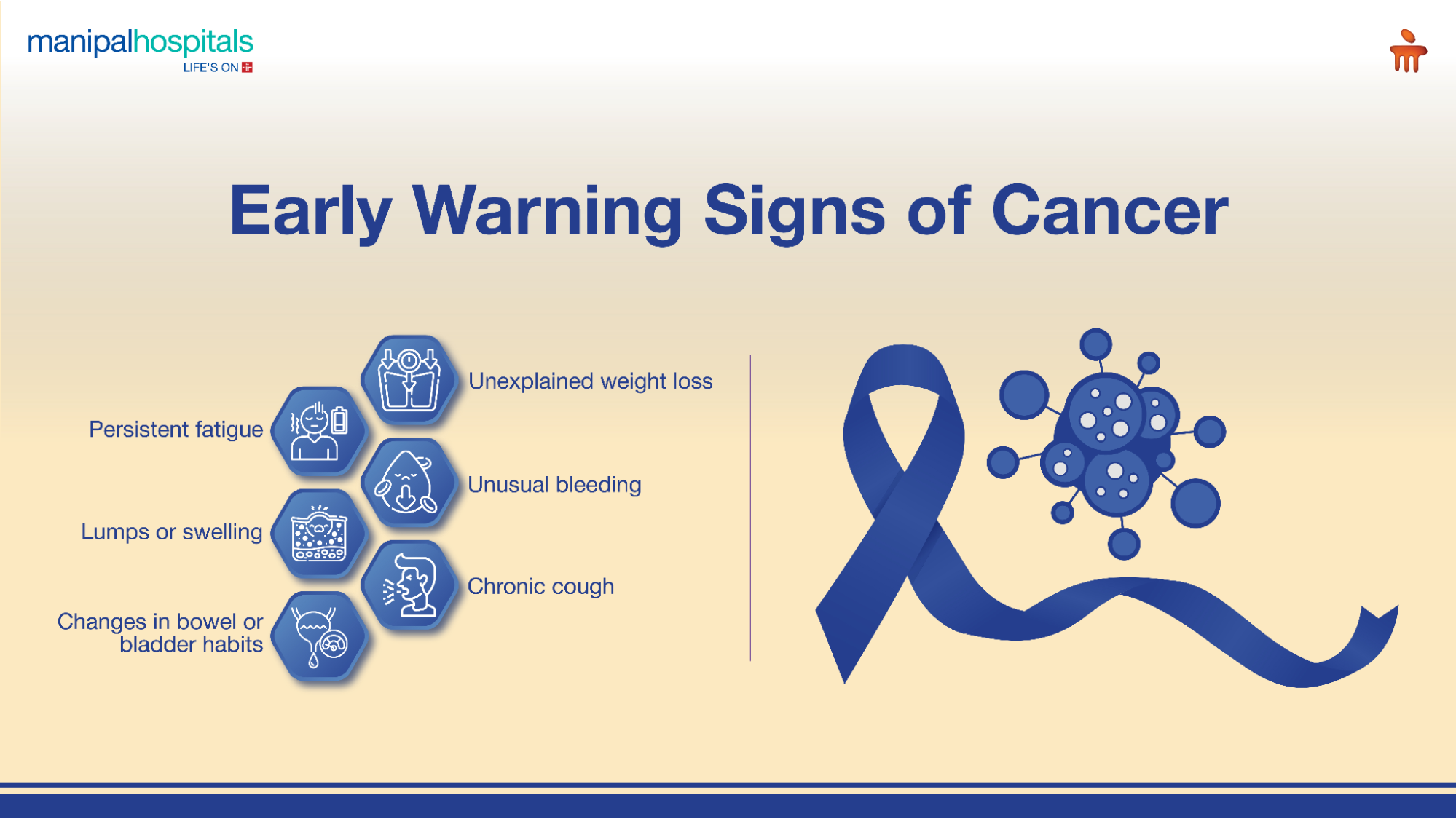
In the early stages, cancer often develops quietly without clear or specific signs. When symptoms do appear, they may be mild, general, and easily mistaken for common health issues, which is why they are often overlooked.
Some possible warning signs include:
When to see a doctor
It is important to consult a doctor when your body shows signs that are unusual, persistent, or unexplained. Early medical advice can help identify health problems at an early stage and improve treatment outcomes.
You should consider a medical evaluation if you have:
-
Symptoms that persist for a long time or keep getting worse without a clear reason
-
A strong family history of cancer or related conditions
-
Long-term exposure to risk factors such as smoking, harmful chemicals, or radiation
-
Eligibility for routine cancer screening based on your age or overall risk profile
Even if there are no clear symptoms, regular health check-ups and screening tests are important. They help in detecting changes early, often before symptoms appear, which allows for timely diagnosis, better treatment options, and improved recovery chances.
Conclusion
Blood tests can provide useful clues, but they are only one part of the bigger picture. Early cancer detection depends on combining different tests, medical history, and clinical evaluation. Regular screenings, awareness of symptoms, and early medical consultation remain the most effective ways to detect cancer early and improve outcomes.
At Manipal Hospitals, our experts at the department of oncology offer complete cancer care, including early detection, accurate diagnosis, and advanced treatment. With expert specialists and modern technology, patients receive personalised care such as surgery, chemotherapy, and radiotherapy, focusing on early treatment and better outcomes.
FAQ's
They can sometimes show warning signs, but they cannot confirm cancer on their own.
No, they help identify risk or early changes, but further testing is needed for confirmation.
It doesn’t prevent cancer, but it improves treatment success and survival.
Common ones include breast, cervical, colorectal, and prostate cancers.
No, some cancers do not yet have reliable screening methods.
Share this article on: