6 Min Read
Reaching the third trimester pregnancy phase means you are entering the final home stretch of your journey to parenthood. Spanning from week 28 through week 40 (and sometimes slightly beyond), this trimester is marked by remarkable fetal growth, rapid brain development, and the final preparations for labour and delivery.
While excitement grows, the physical demands on your body reach their peak. As your baby occupies more space, you may experience symptoms ranging from constipation third trimester issues to shortness of breath or right side pain during pregnancy third trimester. Understanding normal body changes, maintaining a normal blood pressure pregnancy third trimester reading, and recognising crucial danger signs of pregnancy in third trimester will help keep both you and your baby safe.
This complete guide covers everything you need to know about navigating the late weeks—including being 8 months pregnant, safety guidelines for late pregnancy, and essential warning signs to monitor.
Synopsis
What is the Third Trimester?
The third trimester officially begins at week 28 and continues until your baby is born, typically around weeks 39 to 40. By the time you are 8 months pregnant (around weeks 32 through 35), your baby weighs between 3.5 to 5 pounds and is rapidly adding layers of protective fat.
Key Fetal Developmental Milestones
- Weeks 28–31: Eyes can open and close, bones are fully developed (though soft), and the baby begins storing essential minerals like iron and calcium.
- Weeks 32–35 (8 Months Pregnant): Skin becomes smooth as fat deposits accumulate, brain development accelerates rapidly, and lungs continue maturing.
- Weeks 36–40: The baby settles lower into the pelvis (lightening or engagement), lungs reach full maturity, and bodily systems prepare for life outside the womb.
Common Third Trimester Symptoms and Management
As your baby grows, physical pressure on surrounding organs drives a variety of late-stage body changes.
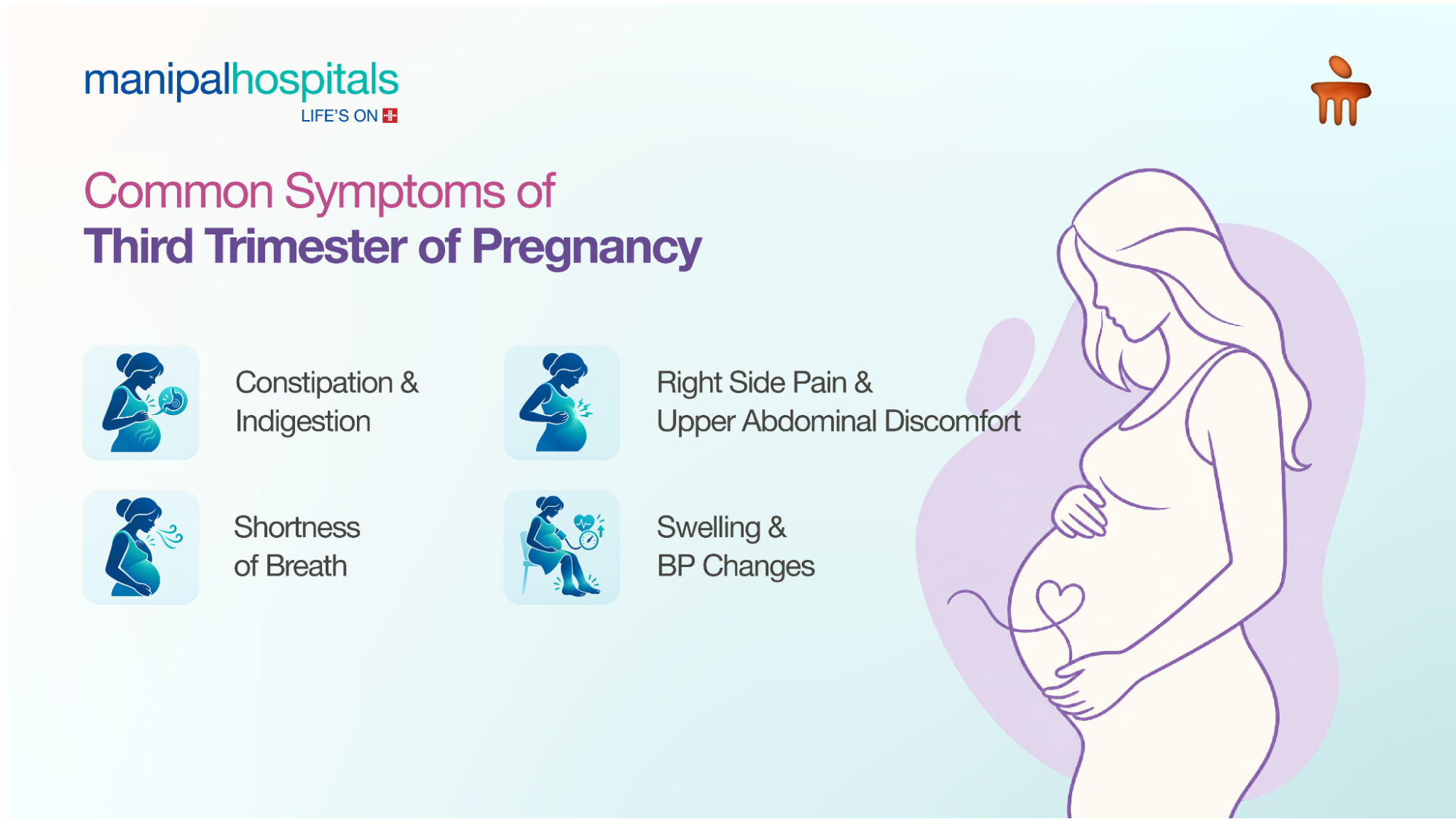
1. Constipation and Indigestion
Dealing with constipation third trimester discomfort is extremely common. Elevated progesterone slows down the digestive tract, while the heavy uterus presses directly against the intestines and rectum.
- Management: Drink plenty of fluids (at least 8 to 10 glasses of water daily), eat high-fiber foods (prunes, whole grains, fruits, and vegetables), and maintain gentle daily movement like walking. Always consult your healthcare provider before taking stool softeners.
2. Right Side Pain and Upper Abdominal Discomfort
Experiencing right side pain during pregnancy third trimester can occur for several reasons:
- Round Ligament Strain: Stretching of supporting pelvic tissues.
- Rib Flaring & Baby Kicks: Pressure from baby's feet or back wedged under the right rib cage.
- Preeclampsia or Gallbladder Issues: Persistent or severe right upper quadrant pain under the ribs can indicate liver involvement from preeclampsia or gallbladder distress and requires immediate medical assessment.
3. Shortness of Breath
Unlike a breathing problem in early pregnancy—which is primarily driven by hormone shifts affecting the respiratory center—late-trimester shortness of breath happens because the expanding uterus pushes the diaphragm upward against the lungs. As the baby drops into the pelvis near week 36, breathing often becomes easier.
- Management: Maintain good posture, sit upright, use extra pillows when sleeping, and slow down during physical activities.
4. Swelling and Blood Pressure Changes
Mild swelling (edema) in the ankles and feet is typical due to fluid retention. Keeping a normal blood pressure pregnancy third trimester reading (typically under 120/80mmHg) is critical. Blood pressure of 140/90mmHg or higher can signal preeclampsia.
How Late-Stage Symptoms Differ from Early Weeks
It is fascinating to look back on how far your body has come. During week 3 (or very early pregnancy), 3rd week pregnancy symptoms are practically imperceptible, marked mostly by microscopic fertilization and implantation processes. By contrast, the late third trimester involves noticeable structural changes, heavy belly weight, Braxton Hicks contractions, and intense physical pressure.
Danger Signs of Pregnancy in the Third Trimester
While many discomforts are benign, knowing the danger signs of pregnancy in third trimester allows you to act quickly if complications arise. Contact your healthcare provider or emergency medical services immediately if you experience:
- Severe or Persistent Headache: Especially if accompanied by blurred vision, spots in front of your eyes, or sensitivity to light (key preeclampsia indicators).
- Sudden, Extreme Swelling: Rapid puffiness in your face, hands, or around your eyes.
- Fever During Pregnancy Third Trimester: A high fever during pregnancy third trimester can indicate intrauterine infections (such as chorioamnionitis) or urinary tract infections, both of which require immediate medical intervention.
- Decreased Fetal Movement: A noticeable drop or stoppage in your baby’s regular kick count pattern.
- Vaginal Bleeding or Fluid Leaking: Any bright red bleeding or a sudden gush/trickle of fluid (ruptured membranes).
- Severe Right Upper Abdominal Pain: Sharp or constant pain under the right rib cage.
Focus Spot: Things to Avoid at 36 Weeks Pregnant
At 36 weeks pregnant, you are at the doorstep of full-term status. Key things to avoid at 36 weeks pregnant include:
- Long-Distance Travel: Avoid traveling far from your hospital or birth center, as labor can begin unexpectedly.
- Lying Flat on Your Back: Sleeping on your back compresses the inferior vena cava, reducing oxygen flow to the baby and lowering maternal blood pressure. Stick to side-sleeping.
- Ignoring Fetal Movements: Do not assume the baby "runs out of room" to move. Kick counts should remain active and steady.
- Unprescribed Herbal Supplements or Induction Methods: Avoid unregulated teas, castor oil, or aggressive labor-inducing methods without medical supervision.
- Dehydration: Inadequate water intake can trigger premature uterine contractions or false labor.
Summary: Third Trimester Do’s and Don’ts
| Category | Recommended Practices (Do’s) | Things to Avoid (Don’ts) |
| Daily Habits |
|
|
| Health Monitoring |
|
|
| Preparation |
|
|
Conclusion
The third trimester pregnancy phase brings both physical challenges and immense anticipation. By managing common discomforts like constipation third trimester struggles, keeping track of fetal movements, avoiding high-risk activities at 36 weeks pregnant, and acting promptly on any severe warning signs, you help protect both yourself and your baby as you prepare for childbirth.
Always consult your healthcare team with any questions or unexpected symptoms as you approach your delivery date.
FAQ's
A normal blood pressure pregnancy third trimester reading is generally below 120/80mmHg. Readings consistently at or above 140/90mmHg require immediate medical evaluation for preeclampsia or gestational hypertension.
Right side pain can be caused by benign issues like round ligament stretching, gas, or baby kicking against the ribs. However, severe pain under the right rib cage can also be a warning sign of preeclampsia (liver involvement) or gallbladder complications, so always inform your doctor.
If you develop a fever during pregnancy third trimester, contact your doctor right away. Fevers can signal infections that need prompt treatment to avoid triggering early labor.
A breathing problem in early pregnancy is usually hormone-driven as progesterone increases your respiration rate. Third-trimester shortness of breath is physical, caused by the large uterus compressing your lungs and diaphragm upward.
Key things to avoid at 36 weeks pregnant include long-distance travel, lying flat on your back, ignoring changes in fetal movement patterns, dehydrating, and trying unapproved labor induction remedies.
Share this article on: