7 Min Read
Cancer care has undergone a profound transformation, moving from broad-spectrum treatments to highly specific, patient-tailored approaches. At the forefront of this evolution is targeted therapy for cancer, a groundbreaking form of precision medicine that offers new hope and improved quality of life for many patients. Unlike conventional chemotherapy, which indiscriminately targets rapidly dividing cells, targeted therapy meticulously identifies and blocks specific molecules involved in the growth and spread of cancer cells, leaving healthy cells largely untouched.
Synopsis
Understanding Targeted Therapy: A New Era of Precision Medicine
Targeted therapy for cancer represents a paradigm shift in oncology. It’s a treatment that specifically targets the genes, proteins, or the tissue environment that contribute to cancer growth and survival. This approach is rooted in a deep understanding of the unique molecular characteristics of each patient's tumour, making treatment significantly more personalised and effective.
How Does Targeted Therapy Work?
The core principle of targeted therapy lies in its ability to pinpoint and interfere with specific pathways critical for cancer cell proliferation. These pathways often involve mutated genes or overactive proteins that drive uncontrolled cell growth. By blocking these targets, targeted therapy can:
-
Block signals that tell cancer cells to grow and divide.
-
Prevent cancer cells from living longer than normal cells.
-
Deliver toxic substances directly to cancer cells.
-
Induce cancer cells to self-destruct (apoptosis).
-
Starve tumours by inhibiting the formation of new blood vessels (angiogenesis).
-
Enhance the immune system's ability to destroy cancer cells.
This molecular precision often results in fewer severe side effects compared to traditional treatments, significantly improving the patient's experience during therapy.
The Transformative Benefits of Targeted Therapy for Cancer
The impact of targeted therapy on cancer treatment has been remarkable. Its precision-guided approach brings several significant advantages:
-
Enhanced Efficacy: For many cancers, targeted therapy offers higher response rates and longer progression-free survival. For instance, in certain types of lung cancer with specific genetic mutations, targeted therapies have shown a nearly 70% improved response rate compared to traditional chemotherapy in clinical trials.
-
Reduced Side Effects: By selectively attacking cancer cells, targeted therapy generally causes fewer systemic side effects than chemotherapy, leading to a better quality of life for patients. While side effects can occur, they are often more manageable.
-
Personalised Treatment: Each targeted therapy is chosen based on the unique genetic profile of a patient's tumour, ensuring a highly individualised treatment plan.
-
Extended Survival: For many patients with advanced cancers, targeted therapies have transformed aggressive diseases into chronic, manageable conditions, significantly extending life expectancy.
Targeted Therapy vs. Chemotherapy: Understanding the Differences
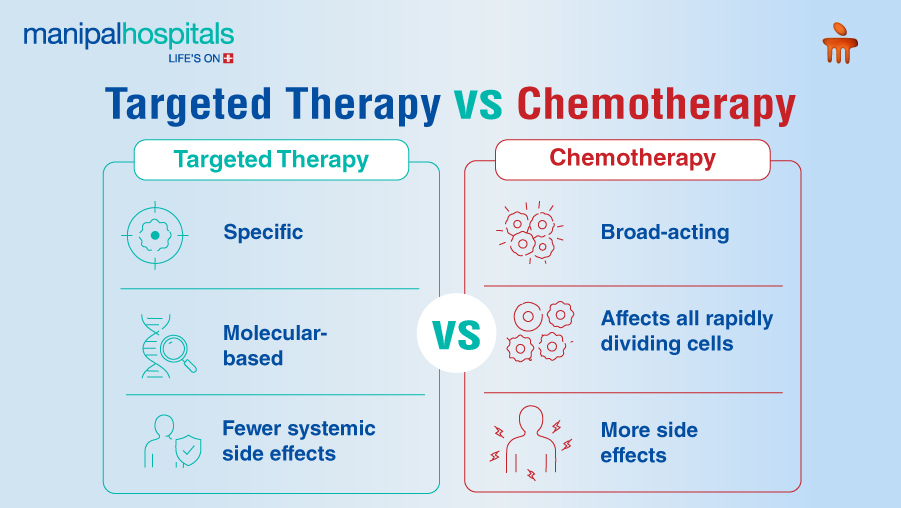
The question of "targeted therapy vs chemotherapy" is frequently asked by patients. While both are crucial tools in cancer treatment, their mechanisms and implications differ significantly:
Chemotherapy:
-
Works by killing rapidly dividing cells, including both cancer cells and fast-growing healthy cells (e.g., hair follicles, bone marrow, digestive tract lining).
-
Often associated with more widespread and severe side effects like hair loss, nausea, and fatigue.
-
Generally less specific, acting on a broader range of cancers.
Targeted Therapy:
-
Specifically identifies and attacks molecules unique to cancer cells or crucial for their growth, leaving most healthy cells unharmed.
-
Typically associated with a different and often more manageable spectrum of side effects.
-
Requires molecular testing of the tumour to identify specific targets, making it highly personalised.
In many cases, targeted therapy for cancer is used in combination with chemotherapy, radiation, or surgery to achieve the best possible outcome, demonstrating their complementary roles in comprehensive cancer care.
Navigating Targeted Therapy Side Effects
While often better tolerated than chemotherapy, targeted therapy can still have side effects. These "targeted therapy side effects" vary widely depending on the specific drug and the target it impacts. Common side effects can include skin rashes, diarrhoea, fatigue, liver problems, high blood pressure, and problems with blood clotting or wound healing. However, these are often less severe and more specific than those seen with traditional chemotherapy.
Our expert oncologists in Delhi emphasise proactive management of these side effects. Many symptoms can be effectively controlled with supportive medications and lifestyle adjustments. Open communication with your healthcare team is vital to ensure any side effects are promptly addressed, allowing you to continue treatment safely and comfortably.
Can Targeted Therapy Cure Cancer?
This is a profound and common question: "Can targeted therapy cure cancer?" For some patients, targeted therapy can lead to long-term remission, where no signs of cancer are detectable. In certain early-stage cancers or specific molecular subtypes, it can contribute significantly to a cure, especially when part of a multidisciplinary treatment plan that may include surgery or radiation. For many others, particularly in advanced stages, targeted therapy transforms cancer into a chronic, manageable disease, extending life and improving quality significantly, though not necessarily achieving a complete cure.
The goal is often to control the cancer, slow its progression, and improve the patient's overall well-being. The continuous advancements in research offer increasing hope for a cure in a growing number of cancer types.
Understanding Targeted Therapy Cost
The "targeted therapy cost" can be a significant concern for many patients. These innovative treatments are often premium medications due to the extensive research and development involved. Costs vary widely based on the specific drug, duration of treatment, and regional healthcare systems. It's important to discuss financial considerations with your care team. Our patient support services can help you explore insurance coverage, patient assistance programs, and other financial aid options to ensure access to these life-changing therapies.
If you are experiencing any symptoms or have concerns about cancer, it's crucial to seek timely medical advice. Book an appointment with our expert oncologists today to explore personalised treatment options at Manipal Hospitals.
FAQ's
Targeted therapy is effective for various cancers, including certain types of breast cancer, lung cancer, colorectal cancer, melanoma, kidney cancer, leukaemia, and lymphomas, among others. The applicability depends on the specific genetic mutations or protein overexpression found in the tumour.
Targeted therapies can be administered in various forms. Many are oral medications (pills or capsules) that patients can take at home, offering convenience. Others are given intravenously (IV infusion) in a clinic or hospital setting.
Eligibility is determined through comprehensive molecular testing (genomic sequencing) of the tumour tissue or blood. This testing identifies specific genetic mutations, protein expressions, or other biomarkers that the targeted drug can act upon.
Yes, absolutely. Targeted therapy is often used in combination with chemotherapy, radiation therapy, surgery, or immunotherapy. This multimodal approach is designed to maximise treatment effectiveness and achieve better outcomes.
The duration of targeted therapy varies significantly depending on the type of cancer, the specific drug, the patient's response to treatment, and the occurrence of side effects. Some patients may take targeted therapy for a few months, while others may continue for several years as long as the treatment is effective and tolerable.
Share this article on: