6 Min Read
Colorectal cancer affects many people around the world, and hearing that diagnosis can be overwhelming, not just for the person diagnosed but for their entire circle. Thankfully, medicine is evolving every day.
Robotic colorectal cancer surgery is one of the most intriguing advances in our times because of its unsurpassed precision, minimal pain, and fast recovery. This high-tech procedure has already changed lives and given the patients a meaningful ray of hope to go forward with courage and optimism.
In this blog, we’ll talk about what colorectal cancer is, what colorectal cancer symptoms to watch out for, the common colorectal cancer causes, and why surgery, especially robotic-assisted surgery, is often the most effective treatment. You’ll also find out how our oncologists in Delhi support patients throughout their journey with personalised care and the best colorectal cancer treatment options available.
Synopsis
- Colorectal Cancer: What Is It?
- Recognising Symptoms of Colorectal Cancer
- What Causes Colorectal Cancer?
- Treatment Options: Is Surgery Needed?
- Why Is Surgery Important in Colorectal Cancer?
- What Has Changed With Robotic Surgery?
- The Benefits to Patients
- What About Diet After Surgery?
- Is Surgery Necessary for Treatment?
- Conclusion
Colorectal Cancer: What Is It?
In very simple terms, colorectal cancer comes into being when certain cells in the colon or rectum begin growing out of control. These abnormal cells can become tumours that hinder your digestive system from functioning properly.
Colorectal cancer is usually slow to progress. In many cases, it starts in the form of polyps, which are tiny growths that may or may not turn cancerous. The problem is that early-stage colorectal cancer mostly presents very few colorectal cancer symptoms or none at all, and so screening is the most important, especially if it is after the age of fifty. When symptoms do show up, they might be subtle, like:
-
Changes in bowel habits, such as more frequent diarrhoea or constipation
-
Blood or mucus in your stools
-
Abdominal cramps or discomfort
-
Unexplained weight loss or feeling unusually tired
-
A sensation that you haven’t fully emptied your bowels
If any of these persist or concern you, don’t hesitate to get checked. Early evaluation makes a big difference, and our facility is equipped to guide you carefully through tests and colorectal cancer treatment.
Recognising Symptoms of Colorectal Cancer
It’s easy to overlook changes that might seem small or related to something else. However, please consult our specialists in Delhi if you discover any blood in your stool, even if it is only a small amount, or if you observe any long-term changes in your bowel habits. These colorectal cancer symptoms could be early indicators, and a timely diagnosis could lead to better colorectal cancer treatment options.
What Causes Colorectal Cancer?
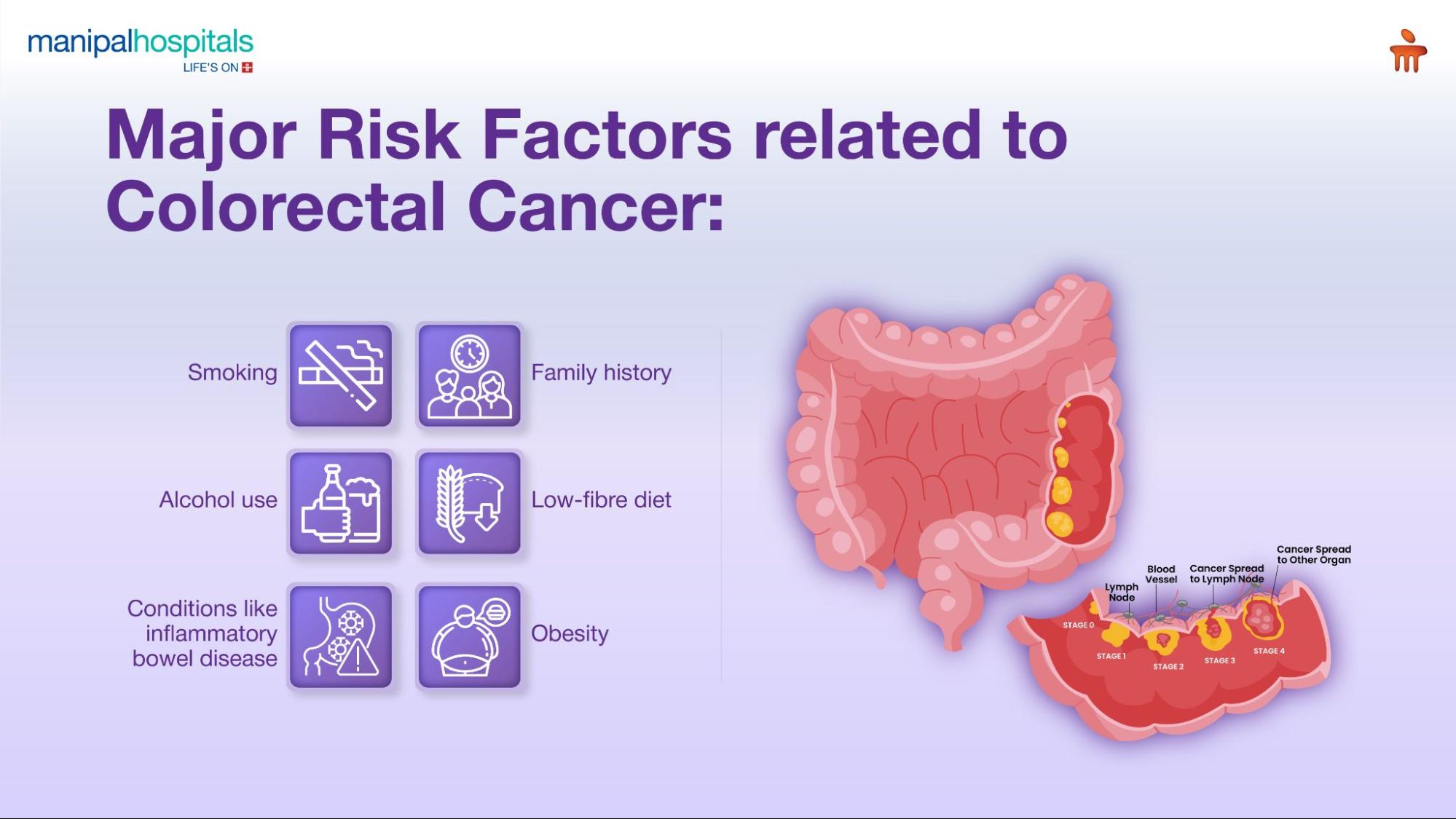
While no single cause exists, several factors could increase your susceptibility and are known as key colorectal cancer causes:
-
Age, the risk increases after fifty
-
Polyps or colorectal cancer in the family
-
A diet rich in red or processed meats but poor in fibre
-
Being overweight and inactive
-
Excessive consumption of alcohol and smoking
-
Certain inherited genes
Knowing your risk factors can help with matters like screening or lifestyle changes, which are important in the context of colorectal cancer treatment and prevention.
Treatment Options: Is Surgery Needed?
Providing the best possible care, personalised plans are created by our experts in Delhi that combine colorectal cancer surgery with other therapies as needed. Our comprehensive approach ensures that each patient’s treatment integrates the most suitable interventions for their case.
Why Is Surgery Important in Colorectal Cancer?
Surgery is the chance for a cure if the cancer can be completely removed. Colorectal cancer surgery gives the best chance to remove the cancer fully. The aim is to take out the cancerous area and some nearby lymph nodes, while making sure you retain as much healthy bowel as possible to keep your digestive system working well.
Types of Colorectal Cancer Surgery
The type of surgery depends on where the tumour is and how large it is. Here we highlight the main colorectal cancer surgery types:
-
Local excision: Removing small tumours just from the inside lining of the bowel, without removing large parts
-
Colectomy: Removing part or all of the colon, then rejoining the remaining sections
-
Proctectomy: Removing some or all of the rectum, sometimes creating a stoma for waste to pass through—either temporarily or permanently
Our surgical team will help you understand which option is right for you and inform you about the risks and benefits of each colorectal cancer surgery type.
What Has Changed With Robotic Surgery?
Robotic colorectal cancer surgery has been revolutionising treatment by allowing surgeons to operate with a very high degree of precision through tiny incisions. This technology uses robotic arms controlled by the surgeon, giving flexibility and precision way beyond what would be achievable using conventional techniques.
The Benefits to Patients
Among the advantages are:
-
Less pain and smaller scars following surgery
-
Reduced hospital stays and an earlier return to regular activities
-
Safeguarding the sensitive nerves surrounding the colon, preventing problems with the bladder or sexual function
-
More accurate tumour removal for improved long-term management
This newer technique truly elevates the standard of colorectal cancer treatment and has become the preferred approach in many cases.
What About Diet After Surgery?
Eating well after colorectal cancer surgery supports healing and helps your body adjust. While needs vary, some general advice is:
-
Gradually adding more fibre to restore bowel function.
-
Drinking plenty of fluids
-
Eating small, regular meals instead of large ones
-
Avoiding foods that cause gas or discomfort in the early days
-
Working with nutrition experts for a personalised plan
Our dietitians are also part of the care team, helping patients recover comfortably.
Is Surgery Necessary for Treatment?
Colorectal cancer treatment without surgery can sometimes be considered, especially in very early tumours or cases where surgery is unsafe due to other medical conditions. Techniques such as chemotherapy or radiation therapy may be used alone or in combination. However, for the majority of patients, colorectal cancer surgery remains the cornerstone of curative treatment.
Conclusion
Colorectal cancer is a demanding journey, but the patients are assured of better results and a new lease of life with expert care and advanced treatment options in robotic surgery. Our oncologists in Delhi will offer global expertise that is delivered with compassion and with a patient-first approach.
If that very diagnosis has either you or your loved one, then our specialists need to be contacted at the earliest for hope and healing.
FAQ's
Check for chronic change in bowel habit, blood in the stool, fatigue, abdominal pain, or unexplained weight loss. These are typical colorectal cancer symptoms.
Options include local removal of small tumours, partial or full removal of the colon (colectomy), or removal of the rectum (proctectomy). These are the main colorectal cancer surgery types.
Offering surgeons single-detailed views into operative fields and precise control over instrumentation through small incisions leads to less pain, faster recovery, and better nerve preservation.
Patients are advised to increase fibre slowly, keep hydrated well, eat small, frequent meals, and avoid foods that irritate the healing stomach or intestine. This is a crucial diet after colorectal cancer surgery.
In very few cases, yes, but the complete removal of cancerous tissue and cure usually requires colorectal cancer surgery, making surgery the mainstay in most instances.
Share this article on: