8 Min Read
Receiving a diagnosis of neck cancer can be a daunting experience, bringing with it a myriad of questions and concerns about treatment options and future outlook. At Manipal Hospitals, we understand these anxieties and are committed to providing clarity, compassionate care, and advanced surgical solutions. Among the critical surgical interventions for neck cancer, neck dissection stands out as a highly effective procedure. Specifically, Functional Neck Dissection represents a refined approach, aiming to remove cancerous lymph nodes while preserving essential structures in the neck, thereby optimising recovery and quality of life. Our expert oncologists in Delhi are at the forefront of these advanced techniques, dedicated to delivering precise and patient-centric care.
This comprehensive guide delves into the nuances of neck dissection surgery, focusing on the benefits and intricacies of Functional Neck Dissection, providing you with essential information on what to expect, from the procedure itself to recovery and beyond.
Synopsis
- Understanding Neck Cancer and the Role of Neck Dissection
- Types of Neck Dissection Surgery
- The Functional Neck Dissection Procedure: What to Expect
- Benefits of Functional Neck Dissection
- Navigating Neck Dissection Complications and Recovery
- Potential Neck Dissection Complications
- Life Expectancy After Neck Dissection
- Conclusion
Understanding Neck Cancer and the Role of Neck Dissection
Neck cancer often involves the spread of cancer cells from a primary tumour (e.g., in the mouth, throat, or larynx) to the lymph nodes in the neck. These lymph nodes act as filters for the body's lymphatic system and can trap cancer cells, allowing them to potentially spread further if not addressed. Neck dissection is a surgical procedure designed to remove these lymph nodes and surrounding tissues that may contain or be at risk of harbouring cancer cells.
The decision to perform a neck dissection is carefully made by a multidisciplinary team, considering the type and stage of cancer, its location, and whether there's evidence of lymph node involvement. This surgical intervention is a cornerstone of effective Neck Cancer Surgery, significantly improving prognosis for many patients.
Types of Neck Dissection Surgery
Over the years, neck dissection surgery has evolved significantly, moving towards more targeted and less invasive approaches. The primary goal is to remove the fibrofatty tissue along with the lymph nodes of the affected side while preserving vital structures. Here are the main types:
-
Radical Neck Dissection: This is the most extensive procedure, involving the removal of all lymph nodes from levels I to V, along with the sternocleidomastoid muscle, internal jugular vein, and spinal accessory nerve. While highly effective for advanced disease, it can lead to significant functional and aesthetic changes.
-
Modified Radical Neck Dissection: This procedure removes the same lymph node levels as a radical dissection but spares one or more non-lymphatic structures (e.g., spinal accessory nerve, internal jugular vein, or sternocleidomastoid muscle) to preserve function. This is a common and highly effective form of Neck Cancer Surgery.
-
Selective Neck Dissection: This is a more conservative approach, removing only specific groups of lymph nodes (e.g., levels I-III or II-IV) that are most likely to contain metastatic disease, while preserving all non-lymphatic structures. Selective neck dissection is often chosen for early-stage cancers or when there is a low risk of spread to certain lymph node groups.
-
Functional Neck Dissection: This term is often used interchangeably with or as a specific type of Modified Radical or Selective Neck Dissection. The defining characteristic of Functional Neck Dissection is the meticulous preservation of non-lymphatic structures (sternocleidomastoid muscle, internal jugular vein, and spinal accessory nerve) whenever oncologically safe, ensuring better post-operative function and appearance. This approach represents a significant advancement in Neck Cancer Surgery.
The Functional Neck Dissection Procedure: What to Expect
Functional Neck Dissection is a highly specialised procedure performed by experienced head and neck surgeons. It aims to achieve excellent oncological outcomes while prioritising the patient's quality of life post-surgery.
How Functional Neck Dissection is Performed
The procedure typically involves:
-
Anaesthesia: The patient is placed under general anaesthesia.
-
Incision: An incision is made in the neck, strategically placed to allow access to the lymph nodes while minimising visible scarring.
-
Identification and Preservation: The surgeon meticulously identifies and carefully preserves vital non-lymphatic structures such as the spinal accessory nerve (which controls shoulder movement), the internal jugular vein (a major blood vessel), and the sternocleidomastoid muscle (a large muscle in the neck). This is the hallmark of Functional Neck Dissection.
-
Lymph Node Removal: The targeted lymph node groups, determined pre-operatively based on imaging and biopsy results, are carefully dissected and removed.
-
Closure: Once the dissection is complete, drains are often placed to prevent fluid accumulation, and the incision is closed with sutures.
The duration of neck dissection surgery can vary depending on the extent of the disease and whether it's combined with other procedures, such as removal of the primary tumour.
Benefits of Functional Neck Dissection
The primary advantage of Functional Neck Dissection lies in its ability to effectively remove cancerous lymph nodes while significantly reducing the risk of long-term functional deficits. Key benefits include:
-
Preservation of Function: By sparing critical nerves and muscles, patients often experience better shoulder movement, less neck stiffness, and improved aesthetic outcomes compared to more radical procedures.
-
Reduced Morbidity: Fewer post-operative complications related to nerve damage or muscle weakness.
-
Improved Quality of Life: Enhanced ability to perform daily activities, less pain, and better cosmetic results contribute to a higher quality of life for survivors of Neck Cancer Surgery.
-
Effective Cancer Control: Despite its conservative nature, when appropriately selected, Functional Neck Dissection provides comparable rates of regional cancer control to more radical procedures. Studies show that for certain stages, the 5-year survival rate after a successful Functional Neck Dissection can be as high as 80-90%.
Navigating Neck Dissection Complications and Recovery
Like any surgical procedure, neck dissection surgery carries potential risks and requires a dedicated recovery period. Understanding these aspects is crucial for a smooth journey.
Post-Operative Recovery
Immediately after neck dissection surgery, patients can expect to spend a few days in the hospital. During this time:
-
Pain Management: Pain will be managed with medication.
-
Drains: Surgical drains will be in place to remove excess fluid, typically for several days until fluid output decreases.
-
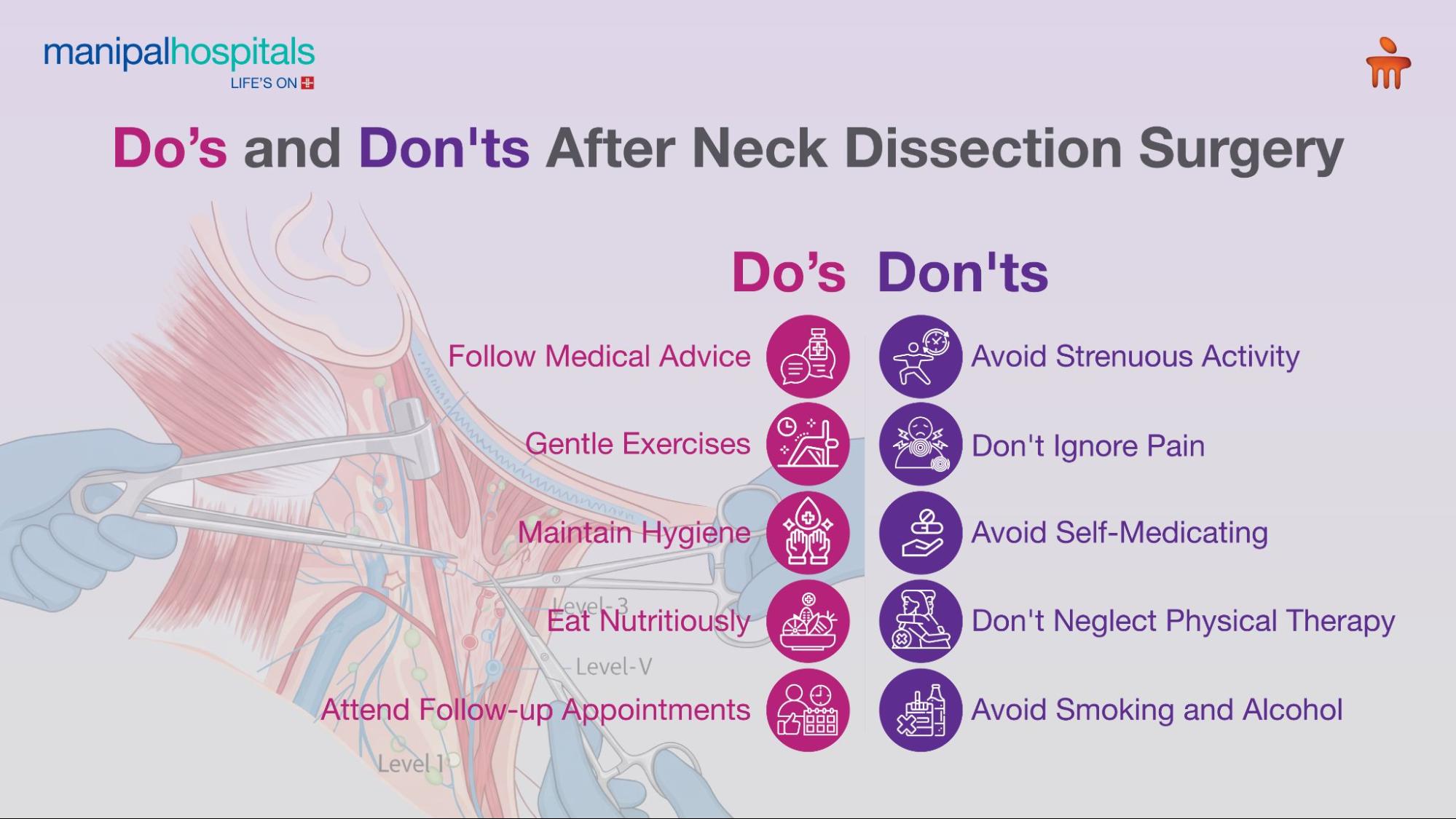
Mobility: Early mobilisation and gentle neck exercises, as advised by the medical team, are encouraged to prevent stiffness.
-
Diet: A soft diet may be recommended initially, gradually progressing to normal foods.
Full recovery can take several weeks to months. Physical therapy may be recommended to help regain a full range of motion in the neck and shoulder, especially if some nerves or muscles were affected.
Potential Neck Dissection Complications
While Functional Neck Dissection aims to minimise complications, some can still occur. These potential neck dissection complications include:
-
Numbness: In the neck, ear, or shoulder area due to nerve irritation or removal.
-
Swelling: Temporary swelling of the neck or face.
-
Seroma or Haematoma: Collection of fluid or blood under the skin, which may require drainage.
-
Nerve Damage: Though carefully preserved in functional dissection, temporary or, rarely, permanent weakness in shoulder movement (spinal accessory nerve), facial movement, or voice changes can occur.
-
Chyle Leak: Leakage of lymphatic fluid, a rare but serious complication requiring specific management.
-
Infection: As with any surgery, there is a risk of wound infection.
Our surgical team at Manipal Hospitals employs rigorous protocols to minimise these risks and provides comprehensive post-operative care to address any complications promptly.
Life Expectancy After Neck Dissection
The question of life expectancy after neck dissection is highly individual and depends on numerous factors, including the stage and type of cancer, the presence of metastasis, and the overall health of the patient. However, it's important to frame this positively:
-
Improved Prognosis: For many patients with head and neck cancers, successful neck dissection surgery significantly improves prognosis and increases the chances of long-term survival. For instance, studies indicate that for certain early-stage head and neck cancers with lymph node involvement, a well-executed neck dissection can lead to a 5-year survival rate exceeding 70-85%.
-
Early Detection is Key: When neck cancer is detected early and treated with procedures like Functional Neck Dissection, the outcomes are generally very favourable. Our oncologists in Delhi emphasise regular screenings for high-risk individuals.
-
Multimodal Treatment: Often, neck dissection is part of a broader treatment plan that may include radiation therapy, chemotherapy, or targeted therapies, further enhancing treatment effectiveness and improving life expectancy after neck dissection.
Ongoing follow-up care, including regular examinations and imaging, is crucial to monitor for any recurrence and ensure the best possible long-term outcomes.
Conclusion
If you are experiencing symptoms concerning neck cancer or have recently received a diagnosis, it's crucial to seek timely medical advice. Book an appointment with our expert oncologists at Manipal Hospitals today to discuss your options and receive world-class care.
FAQ's
The main difference lies in the extent of tissue removal. Radical Neck Dissection removes all lymph nodes and several major non-lymphatic structures (muscle, vein, nerve), while Functional Neck Dissection meticulously preserves these non-lymphatic structures whenever oncologically safe, leading to better functional and cosmetic outcomes.
Initial recovery, including hospital stay and drain removal, usually takes a few days to a week. Full recovery, including regaining a full range of motion and managing any residual discomfort, can take several weeks to a few months, often supported by physical therapy.
Yes, there will be a scar, but surgeons performing Functional Neck Dissection aim to place incisions in natural skin creases or less visible areas to minimise cosmetic impact. Over time, scars typically fade.
Long-term side effects can include some numbness in the neck or shoulder, mild stiffness, or subtle changes in shoulder movement. However, Functional Neck Dissection is designed to significantly reduce the severity and incidence of these issues compared to older, more radical procedures.
While an excellent option for many, the suitability of Functional Neck Dissection depends on the specific cancer type, stage, and extent of lymph node involvement. Your oncology team will determine the most appropriate surgical approach based on your individual case.
Share this article on: