7 Min Read
A congenital heart condition diagnosed in childhood can continue to affect health well into adulthood. One such condition is a ventricular septal defect, commonly known as a “hole in the heart.” While many people associate congenital heart disease with infants and children, an increasing number of adults today are living with repaired, unrepaired, or newly diagnosed congenital heart defects.
At Manipal Hospitals, our specialists focus not only on pediatric care but also on the long-term management of adults with congenital heart disease. With advanced expertise in the VSD closure procedure, we continue to achieve success rates exceeding 90%, helping patients lead healthier and more active lives.
Synopsis
- What Is a Ventricular Septal Defect?
- Understanding Ventricular Septal Defect Pathophysiology
- Ventricular Septal Defect Causes in Adults
- Ventricular Septal Defect Symptoms in Adults
- Ventricular Septal Defect and Atrial Septal Defect: Understanding the Difference
- What Size VSD Requires Surgery?
- Diagnosing Ventricular Septal Defect in Adults
- VSD Closure Procedure: Advanced Treatment Options
- Life After Ventricular Septal Defect Treatment
- Why Choose Manipal Hospitals for Adult Congenital Heart Care?
- Conclusion
What Is a Ventricular Septal Defect?
A ventricular septal defect is a congenital heart defect characterised by an opening in the wall (septum) separating the heart’s two lower chambers, known as ventricles. This opening allows oxygen-rich blood from the left ventricle to mix with oxygen-poor blood in the right ventricle.
The abnormal circulation caused by a ventricular septal defect forces the heart and lungs to work harder over time. While some small defects close naturally during childhood, others may persist into adulthood and cause complications if left untreated.
Many adults today are diagnosed with a ventricular septal defect during routine health check-ups, pregnancy evaluations, or investigations for unexplained breathlessness and fatigue.
Understanding Ventricular Septal Defect Pathophysiology
The Ventricular septal defect pathophysiology revolves around abnormal blood flow between the ventricles. Normally, the left side of the heart pumps oxygenated blood to the body, while the right side sends oxygen-poor blood to the lungs.
In a ventricular septal defect, blood moves from the high-pressure left ventricle into the lower-pressure right ventricle. This creates excess blood flow to the lungs and increases the workload on the heart.
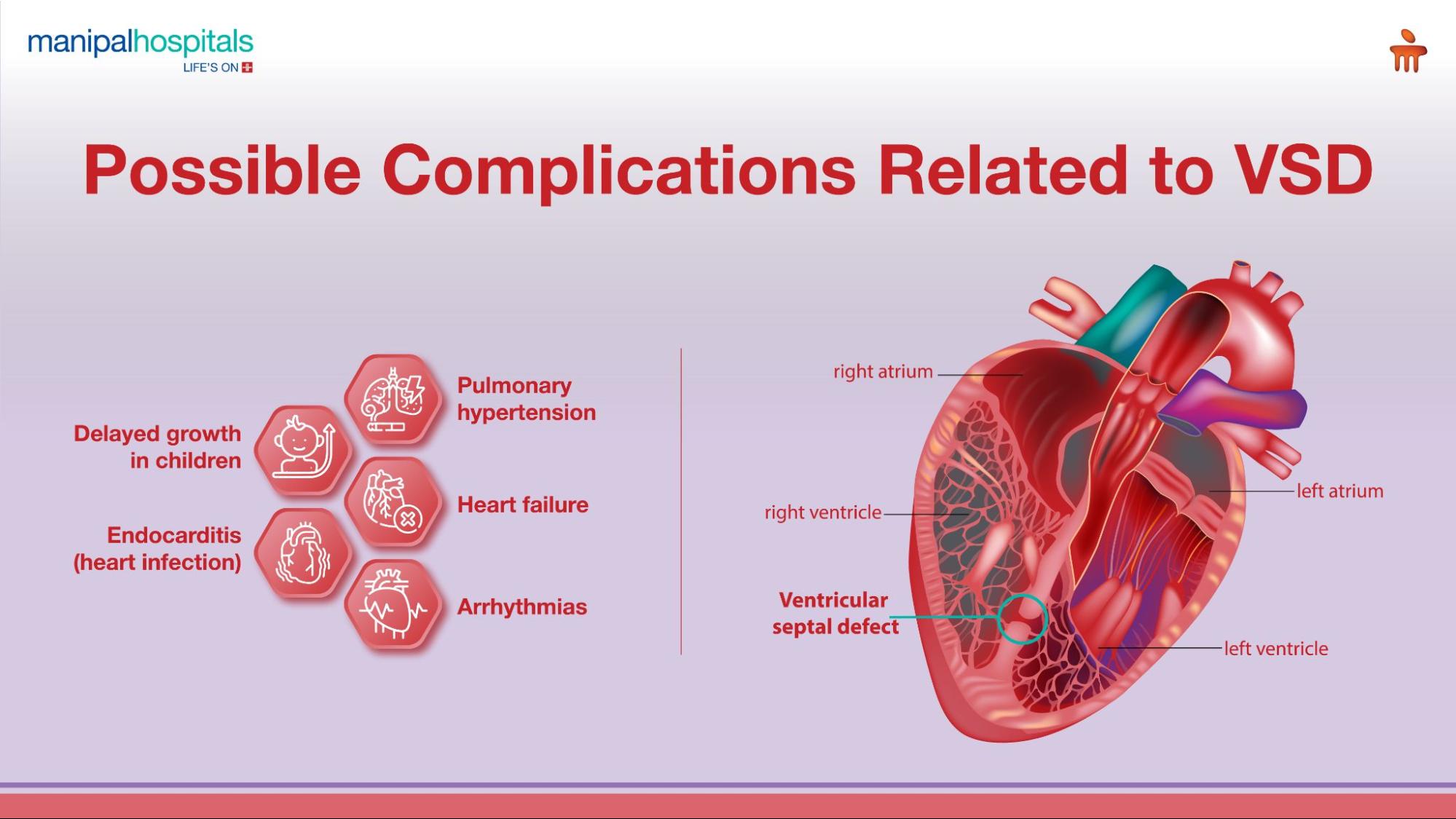
Over time, untreated Ventricular septal defect pathophysiology may lead to:
-
Enlargement of the heart chambers
-
Pulmonary hypertension
-
Heart failure
-
Irregular heart rhythms
-
Reduced exercise tolerance
Adults with a longstanding ventricular septal defect may also develop complications affecting overall cardiovascular health and quality of life.
Ventricular Septal Defect Causes in Adults
The primary causes of a ventricular septal defect are congenital, meaning the condition develops before birth. However, many individuals reach adulthood without symptoms or without receiving an early diagnosis.
Common Ventricular septal defect causes and associated risk factors include:
-
Genetic predisposition
-
Family history of congenital heart disease
-
Chromosomal conditions such as Down syndrome
-
Maternal diabetes during pregnancy
-
Maternal viral infections or certain medications during pregnancy
Although most Ventricular septal defect causes originate during fetal development, adults may only become aware of the condition later due to mild symptoms in childhood.
Ventricular Septal Defect Symptoms in Adults
The presentation of ventricular septal defect symptoms in adults can differ significantly from those seen in children. Some adults remain asymptomatic for years, while others develop progressive symptoms due to long-term strain on the heart and lungs.
Common ventricular septal defect symptoms include:
-
Shortness of breath during activity
-
Fatigue and low stamina
-
Heart palpitations
-
Chest discomfort
-
Frequent respiratory infections
-
Swelling in the legs or ankles
-
Heart murmur
-
Reduced exercise tolerance
In severe cases, ventricular septal defect symptoms may indicate developing pulmonary hypertension or heart failure.
Women with an unrepaired ventricular septal defect may also experience complications during pregnancy, making early cardiac evaluation essential.
Ventricular Septal Defect and Atrial Septal Defect: Understanding the Difference
Many patients confuse a ventricular septal defect with an Atrial septal defect. While both are congenital heart defects involving holes in the heart, they occur in different chambers.
An Atrial septal defect is an opening in the wall separating the upper chambers (atria), whereas a ventricular septal defect affects the lower chambers (ventricles).
Compared with an Atrial septal defect, a ventricular septal defect often creates greater pressure overload because the ventricles pump blood with much higher force.
Both conditions may remain undetected until adulthood and can require specialised intervention depending on severity and symptoms.
What Size VSD Requires Surgery?
One of the most common concerns among adult patients is: What size VSD requires surgery?
The answer depends not only on the size of the defect but also on symptoms, heart function, lung pressure, and complications.
In general, the size of VSD that requires surgery is determined by the following factors:
-
Moderate to large VSD causing a significant blood flow imbalance
-
Enlargement of heart chambers
-
Pulmonary hypertension
-
Recurrent respiratory infections
-
Heart failure symptoms
-
Reduced oxygen levels
-
Progressive decline in exercise capacity
When evaluating what size VSD requires surgery, cardiologists also assess whether the defect is causing long-term structural damage to the heart or lungs.
At Manipal Hospitals, advanced imaging techniques such as echocardiography and cardiac MRI help specialists decide the ideal treatment timing.
Diagnosing Ventricular Septal Defect in Adults
A ventricular septal defect in adults may be discovered during evaluation for unrelated cardiac symptoms.
Diagnostic tests commonly include:
-
Echocardiography
-
Chest X-ray
-
Cardiac CT or MRI
-
Cardiac catheterization
These investigations help doctors understand the severity of the ventricular septal defect, assess complications, and determine whether intervention is necessary.
VSD Closure Procedure: Advanced Treatment Options
The primary goal of a VSD closure procedure is to stop abnormal blood flow between the ventricles and prevent long-term complications.
At Manipal Hospitals, treatment is tailored according to the patient’s age, symptoms, defect size, and overall heart condition.
Surgical VSD Closure Procedure
The traditional surgical VSD closure procedure involves open-heart surgery, where the defect is closed using stitches or a surgical patch.
Modern surgical advancements have made the VSD closure procedure highly safe and effective, with excellent long-term outcomes in both children and adults.
Catheter-Based VSD Closure Procedure
For selected patients, a minimally invasive VSD closure procedure can be performed using catheter-based techniques.
During this approach:
-
A catheter is inserted through a blood vessel
-
A closure device is guided to the heart
-
The device seals the defect without open-heart surgery
This minimally invasive VSD closure procedure offers:
-
Faster recovery
-
Smaller incisions
-
Reduced hospital stay
-
Earlier return to normal activities
Life After Ventricular Septal Defect Treatment
Most adults undergoing successful treatment for a ventricular septal defect experience major improvements in quality of life.
Benefits include:
-
Better exercise capacity
-
Reduced breathlessness
-
Improved heart function
-
Lower risk of heart failure
-
Reduced risk of pulmonary hypertension
Long-term follow-up remains important after a VSD closure procedure, especially for adults with complex congenital heart disease histories.
Why Choose Manipal Hospitals for Adult Congenital Heart Care?
Managing a ventricular septal defect in adulthood requires expertise in both congenital and adult cardiology. At Manipal Hospitals, our multidisciplinary team provides comprehensive care using advanced diagnostics, minimally invasive technology, and internationally accepted treatment protocols.
Our strengths include:
-
Specialised adult congenital heart disease experts
-
High success rates in the VSD closure procedure
-
Advanced cardiac imaging facilities
-
Personalised long-term follow-up care
-
Comprehensive surgical and interventional cardiology support
Conclusion
A ventricular septal defect may begin at birth, but its impact can extend far into adulthood if left untreated. Advances in diagnosis and treatment now allow adults with congenital heart disease to lead healthier and more fulfilling lives.
Understanding ventricular septal defect symptoms, recognizing Ventricular septal defect causes, learning what size VSD requires surgery, and seeking timely intervention can significantly reduce long-term complications.
At Manipal Hospitals, our specialists are committed to providing world-class care for adults living with congenital heart conditions through advanced VSD closure procedure options and comprehensive lifelong cardiac support.
If you or a loved one has been diagnosed with a ventricular septal defect or an Atrial septal defect, consult our expert cardiac specialists today for personalised evaluation and treatment.
FAQ's
Yes, a small ventricular septal defect may not cause obvious symptoms during childhood and can remain undetected until adulthood.
The most common ventricular septal defect symptoms in adults include breathlessness, fatigue, palpitations, reduced exercise tolerance, and recurrent chest infections.
The decision regarding what size VSD requires surgery depends on defect size, symptoms, heart enlargement, pulmonary pressure, and overall cardiac function.
Yes, modern VSD closure procedure techniques are highly safe and effective when performed by experienced cardiologist in Delhi at cardiac centres like Manipal Hospitals.
A ventricular septal defect affects the lower heart chambers, while an Atrial septal defect affects the upper chambers of the heart.
Share this article on: