8 Min Read
Infertility can be a challenging journey for many couples, and increasingly, young men are finding themselves facing the complexities of male infertility. At Manipal Hospitals, our urologists in Delhi are observing a noticeable trend in younger demographics seeking help for fertility issues. This rise in male infertility causes significant concern, prompting a deeper look into the factors at play, the subtle male infertility symptoms, and the advanced male infertility treatment options available. Understanding these aspects is crucial for early detection and effective management, offering hope to those aspiring to start a family. We are committed to providing comprehensive care and support to help you navigate this journey.
Synopsis
Understanding Male Infertility
Male infertility refers to a male's inability to cause pregnancy in a fertile female after a year or more of unprotected intercourse. It can stem from various factors, including issues with sperm production, sperm function, or blockages that prevent sperm delivery. While it can affect men of all ages, the increasing prevalence among younger men highlights evolving health challenges.
Globally, infertility affects approximately 15% of couples, with male factors contributing to about 50% of these cases. In India, recent studies indicate that male infertility rates have risen by 20-30% over the last decade, particularly among men under 35. These statistics underscore the urgent need to address this growing public health concern and provide accessible, effective solutions.
Why the Rise? Key Male Infertility Causes
The factors contributing to the rise in male infertility among young men are multifaceted, ranging from lifestyle choices to environmental exposures and underlying medical conditions. Identifying these male infertility causes is the first step towards prevention and effective intervention.
Lifestyle Factors
-
Diet and Nutrition: Poor dietary habits, characterised by high intake of processed foods and low antioxidant consumption, can negatively impact sperm quality.
-
Obesity: Excess body fat can disrupt hormone balance, leading to reduced sperm count and motility. Studies show that obesity can decrease sperm concentration by up to 20%.
-
Smoking and Alcohol: Both nicotine and alcohol are known to impair sperm production and function, increasing oxidative stress.
-
Stress: Chronic psychological stress can affect hormonal regulation, potentially reducing sperm quality.
-
Lack of Physical Activity: A sedentary lifestyle is often linked to obesity and other health issues that can compromise fertility.
Environmental Toxins
-
Endocrine Disruptors: Exposure to chemicals like phthalates and BPA, found in plastics and personal care products, can interfere with hormone production.
-
Pesticides and Herbicides: Agricultural chemicals can be potent reproductive toxins.
-
Heavy Metals: Lead, mercury, and cadmium exposure can damage sperm.
-
Air Pollution: Particulate matter in polluted air has been linked to decreased semen quality.
Medical Conditions
-
Varicocele: This is a swelling of the veins that drain the testicle, similar to a varicose vein. It's one of the most common reversible male infertility causes, affecting approximately 15% of all men and 40% of men with primary infertility. Timely diagnosis and intervention by our urologists in Delhi can significantly improve outcomes.
-
Infections: Past or present infections of the reproductive tract can impair sperm production or cause blockages.
-
Hormonal Imbalances: Imbalances in hormones like testosterone, FSH, and LH can disrupt sperm production.
-
Genetic Factors: Chromosomal abnormalities or specific gene mutations can lead to severe sperm deficiencies.
-
Certain Medications: Some medications, including chemotherapy drugs, specific antibiotics, and anabolic steroids, can temporarily or permanently affect fertility.
-
Undescended Testicles: If one or both testicles fail to descend into the scrotum during fetal development, it can lead to impaired sperm production.
Psychological Impact
The emotional burden of infertility can create a vicious cycle. The stress of trying to conceive, coupled with the societal pressures, can further impact a man's overall well-being, which in turn may affect reproductive health.
Recognising the Signs: Male Infertility Symptoms
Unlike female infertility, which often has clear indicators, male infertility symptoms can be subtle or non-existent, often remaining unnoticed until a couple struggles to conceive. The primary symptom is the inability to achieve pregnancy after a year of regular, unprotected intercourse.
However, some men might experience other, less obvious signs:
-
Problems with Sexual Function: Including difficulty with ejaculation (ejaculatory dysfunction), reduced sexual desire, or erectile dysfunction.
-
Pain, Swelling, or a Lump in the Testicular Area: This could indicate conditions like varicocele or infection.
-
Recurrent Respiratory Infections: In some cases, genetic conditions affecting the lungs can also impact sperm quality.
-
Inability to Smell: A rare genetic condition can cause both infertility and loss of smell.
-
Abnormal Breast Growth (Gynecomastia): This can be a sign of hormonal imbalance.
-
Decreased Facial or Body Hair: Another indicator of hormonal issues.
-
Low Sperm Count or Issues with Sperm Motility/Morphology: Diagnosed through semen analysis, which may reveal a sperm count below 15 million sperm per millilitre, poor sperm movement, or abnormally shaped sperm.
If you experience any of these symptoms or if conception has been difficult, consulting with a specialist from Manipal Hospitals is advisable.
Hope and Healing: Male Infertility Treatment Options
The good news is that advancements in medical science offer a wide range of effective male infertility treatment options. The approach is highly personalised, based on the specific cause and individual circumstances. At Manipal Hospitals, our urologists in Delhi collaborate closely with reproductive specialists to offer comprehensive care.
Lifestyle Modifications
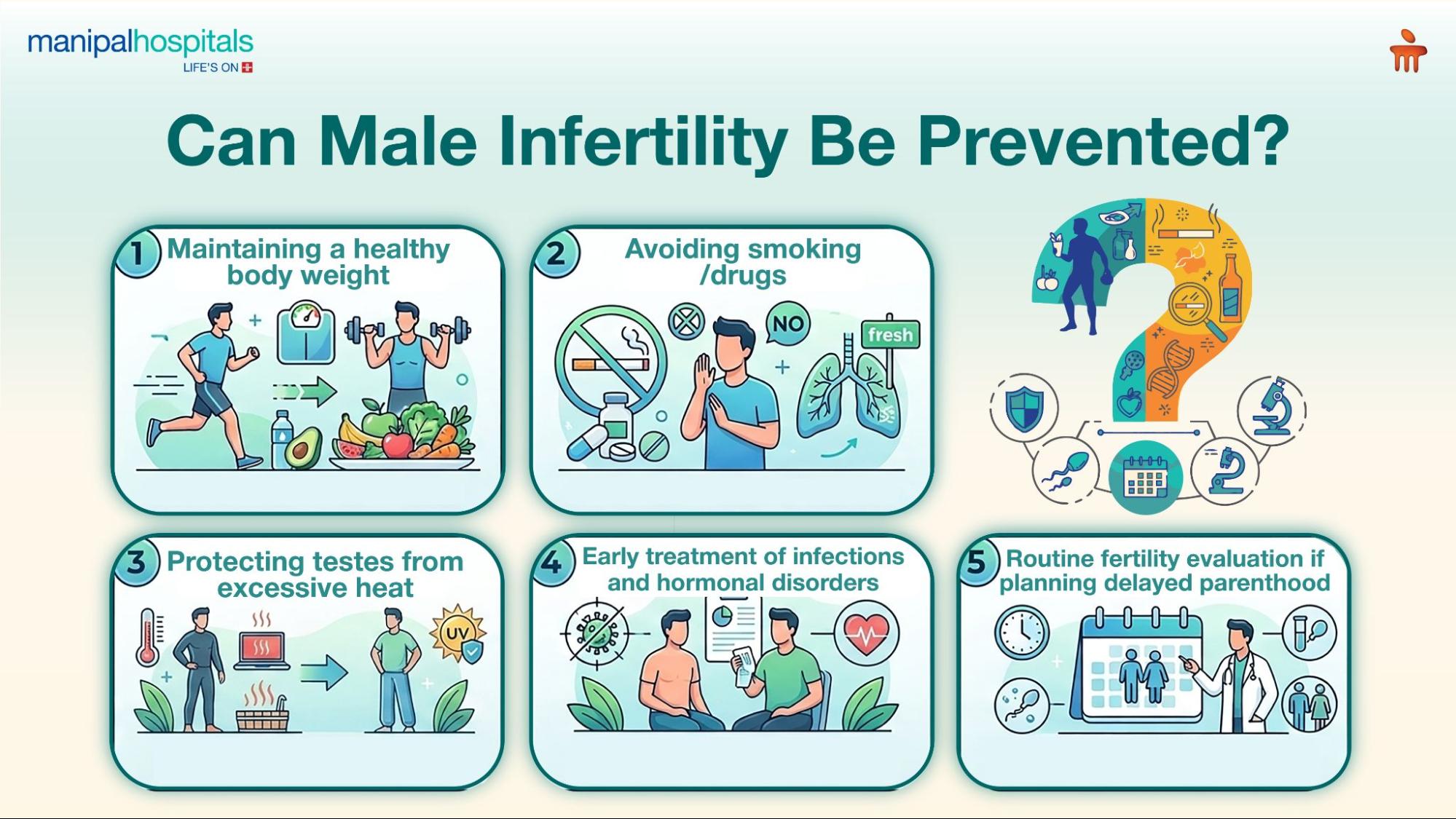
For many, simple changes can make a significant difference. Adopting a healthier diet, regular exercise, maintaining a healthy weight, quitting smoking, and reducing alcohol intake can improve sperm quality. Over 40% of men with lifestyle-related infertility can see significant improvements in semen parameters with consistent changes over 3-6 months.
Medical Interventions
-
Medications: For hormonal imbalances, specific medications can stimulate hormone production or correct underlying deficiencies.
-
Antibiotics: If an infection is identified, a course of antibiotics can clear the infection and potentially restore fertility.
Surgical Procedures
-
Varicocelectomy: This procedure surgically corrects a varicocele, improving blood flow and often leading to increased sperm count and motility. Success rates for improved semen parameters after varicocelectomy are as high as 70-80%, with pregnancy rates improving by 30-50%.
-
Sperm Retrieval Techniques: For men with blockages or very low sperm counts, sperm can be directly retrieved from the testicles or epididymis using techniques like TESE (Testicular Sperm Extraction) or PESA (Percutaneous Epididymal Sperm Aspiration). These procedures boast high success rates in retrieving viable sperm, often exceeding 95%.
-
Vasectomy Reversal: For men who have had a vasectomy and wish to restore fertility, microsurgical techniques can reconnect the vas deferens, with patency rates ranging from 75-95%.
Assisted Reproductive Technologies (ART)
When natural conception or less invasive treatments are not successful, ART offers viable pathways:
-
Intrauterine Insemination (IUI): Specially prepared sperm are placed directly into the woman's uterus around the time of ovulation.
-
In Vitro Fertilisation (IVF): Eggs are fertilised by sperm in a lab setting, and the resulting embryos are transferred into the uterus.
-
Intracytoplasmic Sperm Injection (ICSI): A single sperm is directly injected into an egg. This technique is particularly effective for severe male factor infertility and has revolutionised treatment, achieving high fertilisation rates even with very few sperm.
Can Male Infertility Be Cured?
Addressing the question, "Can male infertility be cured?" it's important to understand that while not all causes can be completely reversed, a significant majority can be effectively managed to achieve pregnancy. For many men, the underlying issues can be treated, improving natural fertility. For others, advanced reproductive technologies provide a successful path to parenthood. Our goal at Manipal Hospitals is to offer personalised solutions that maximise your chances of starting a family, with success rates for achieving pregnancy through various treatments often exceeding 60% over multiple cycles.
Types of Male Infertility
Understanding the different types of male infertility helps in pinpointing the cause and guiding treatment. Infertility can be broadly categorised based on where the problem originates:
-
Pre-testicular Infertility: This type arises from issues that affect the hormonal signals to the testicles, leading to impaired sperm production. Causes include hormonal imbalances (e.g., low testosterone), genetic disorders affecting hormone production, or certain medications.
-
Testicular Infertility: This is the most common type, stemming from problems directly within the testicles that impair sperm production or function. Examples include varicocele, genetic defects (like Klinefelter syndrome), infections (e.g., mumps orchitis), trauma to the testicles, or exposure to radiation/chemotherapy.
-
Post-testicular Infertility: This occurs when sperm are produced normally but cannot be delivered due to blockages in the reproductive tract or issues with ejaculation.
Causes include blockages in the epididymis or vas deferens (e.g., from prior infection, surgery, or congenital absence), retrograde ejaculation, or erectile dysfunction.
If you are experiencing these symptoms or struggling with conception, it's crucial to seek timely medical advice. Book an appointment with our expert urologists and fertility specialists at Manipal Hospitals today.
FAQ's
Male factors contribute to approximately 50% of all infertility cases, making it a significant concern for many couples.
Absolutely. Healthy lifestyle changes like a balanced diet, regular exercise, maintaining a healthy weight, and avoiding smoking and excessive alcohol can significantly improve sperm quality and overall reproductive health for many men.
No, in many cases, male infertility is treatable or manageable. Depending on the underlying cause, various medical, surgical, or assisted reproductive techniques can help men achieve fatherhood.
The first step is typically a consultation with a fertility specialist or urologist, followed by a semen analysis, which is a key diagnostic test to evaluate sperm count, motility, and morphology.
While male fertility declines more gradually than female fertility, age does play a role. Sperm quality and quantity can decrease with age, increasing the time it takes to conceive and potentially affecting the offspring's health.
Share this article on: