8 Min Read
Do you find yourself constantly searching for the nearest restroom? Does a sudden, intense urge to urinate interrupt your daily activities, often leading to a mad dash to the toilet? If this sounds familiar, you might be experiencing overactive bladder (OAB). This common condition affects millions worldwide, significantly impacting quality of life. At Manipal Hospitals, our urologists in Delhi understand the challenges posed by OAB and offer comprehensive, patient-centric solutions to help you regain control and live life to the fullest.
Overactive bladder isn't just an inconvenience; it's a medical condition characterised by a sudden, often overwhelming urge to urinate, which may or may not be accompanied by urge incontinence (the involuntary loss of urine). While it affects both men and women, its prevalence increases with age. Studies show that approximately 1 in 8 adults experiences some form of OAB, with a significant number not seeking help due to embarrassment or a mistaken belief that it's a normal part of ageing. The good news is that effective treatments are available, offering a high success rate for improved bladder control and a better quality of life.
Synopsis
Understanding Overactive Bladder: The Urgency Explained
Overactive bladder, often referred to as OAB, is a set of urinary symptoms that include urinary urgency (a sudden, compelling need to urinate that is difficult to defer), usually with frequency (urinating eight or more times in 24 hours) and nocturia (waking up two or more times at night to urinate). These overactive bladder symptoms can severely disrupt daily routines, work, sleep, and social interactions, turning simple outings into anxiety-ridden events due to the constant worry about finding a toilet.
Many patients ask, "What is the main cause of overactive bladder?" The truth is, OAB isn't always caused by a single factor. Often, it's a combination of issues affecting nerve signals between the bladder and the brain, or problems with the bladder muscles themselves. It’s important to distinguish OAB from other bladder control problems like stress incontinence, where urine leaks during physical activity. OAB is primarily about the urgency, with or without leakage.
Common Overactive Bladder Symptoms
-
Urinary Urgency: A sudden, strong need to urinate that's hard to postpone. This is the hallmark of OAB.
-
Urinary Frequency: Needing to urinate more often than usual, typically more than eight times in a 24-hour period.
-
Nocturia: Waking up two or more times during the night to pass urine, disrupting sleep patterns.
-
Urge Incontinence: The involuntary loss of urine following a sudden urge to urinate. Not everyone with OAB experiences incontinence, but many do.
Why the Frequent Urge? Causes of Overactive Bladder
Understanding the root causes behind overactive bladder symptoms is crucial for effective treatment. While the exact reason can vary greatly among individuals, several factors contribute to the development of OAB.
Underlying Factors
-
Involuntary Bladder Muscle Contractions: The detrusor muscle in the bladder wall contracts involuntarily, even when the bladder isn't full, creating the sudden urge to urinate.
-
Nerve Damage: Conditions like stroke, Parkinson's disease, multiple sclerosis, or spinal cord injury can disrupt nerve signals between the bladder and the brain, leading to miscommunication and OAB.
-
Hormonal Changes: In women, menopause can lead to changes in bladder tissue and muscle tone, contributing to bladder control problems.
-
Bladder Outlet Obstruction: In men, an enlarged prostate (BPH) can obstruct urine flow, leading to the bladder working harder and becoming overactive.
Risk Factors
-
Age: The risk of OAB increases with age, though it's not a normal part of ageing.
-
Obesity: Excess weight can put pressure on the bladder and pelvic floor muscles.
-
Diabetes: High blood sugar can damage nerves, including those that control bladder function.
-
Certain Medications: Some diuretics or sedatives can affect bladder function.
-
High Caffeine or Alcohol Intake: These can irritate the bladder and act as diuretics.
-
Urinary Tract Infections (UTIs): While UTIs cause similar symptoms, they are typically temporary and resolve with antibiotics. However, recurrent UTIs can sometimes contribute to OAB-like symptoms.
Effective Overactive Bladder Symptoms and Treatment Options
The good news is that a wide range of effective treatments are available to manage overactive bladder symptoms. Our goal at Manipal Hospitals is to create a personalised treatment plan that significantly improves your quality of life, allowing you to regain confidence and freedom. With a comprehensive approach, over 70% of patients experience significant symptom improvement with initial non-invasive treatments.
Lifestyle Modifications
Often, the first line of defence involves simple yet effective changes in daily habits.
-
Bladder Training: Gradually increasing the time between urination helps the bladder hold more urine. This behavioural therapy shows success rates of up to 75% in reducing urgency and frequency.
-
Scheduled Voiding: Urinating at fixed intervals, rather than waiting for the urge, can help retrain the bladder.
-
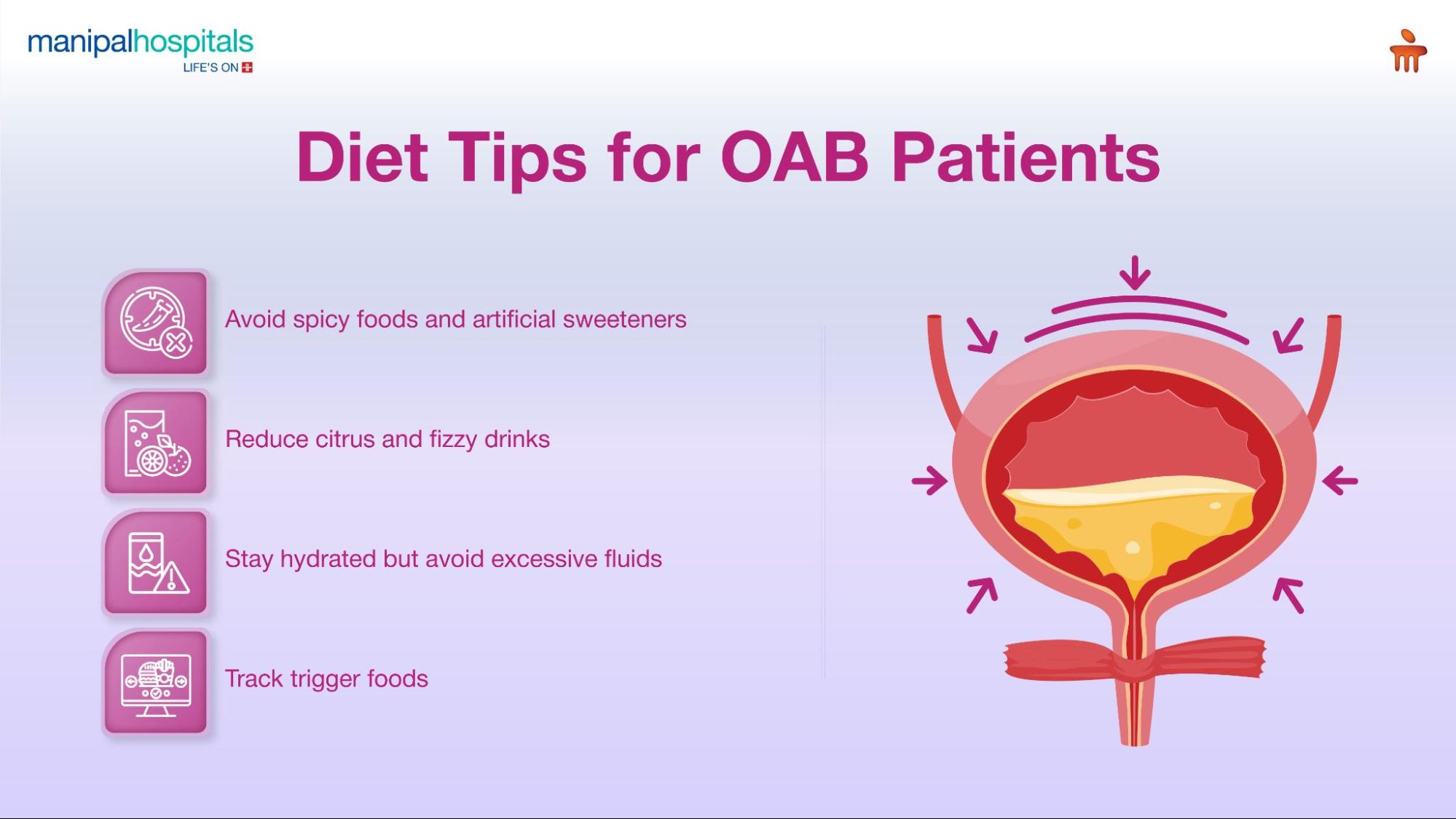
Fluid Management: Reducing intake of bladder irritants like caffeine, alcohol, and acidic foods can make a big difference. Maintaining adequate hydration is still important, just smarter choices.
-
Pelvic Floor Exercises (Kegels): Strengthening these muscles can improve bladder control, especially when combined with bladder training. Approximately 60% of patients report improvement with consistent pelvic floor exercises.
-
Weight Management: Losing even a small amount of weight can reduce pressure on the bladder.
Medical Therapies
When lifestyle changes aren't enough, medication can be very effective in relaxing the bladder muscle and reducing urgency. These are often prescribed after careful evaluation by specialists like our urologists in Delhi.
-
Antimuscarinics: These medications block nerve signals that trigger involuntary bladder contractions, reducing urgency and frequency.
-
Beta-3 Adrenergic Agonists: These drugs relax the bladder muscle, allowing it to hold more urine and reducing the sensation of urgency.
Advanced Interventions
For individuals whose overactive bladder symptoms do not respond to initial therapies, advanced options are available, offering significant relief. Our expert team, including our urologists in Delhi, are highly experienced in these cutting-edge treatments.
-
Botulinum Toxin Injections: Injected directly into the bladder muscle, it temporarily paralyses parts of the muscle, reducing involuntary contractions for several months. Patients often experience a 50% reduction in urgency and incontinence episodes.
-
Nerve Stimulation (Neuromodulation):
-
Sacral Neuromodulation: A small device implanted near the sacral nerves modulates nerve signals to the bladder, restoring normal function. This procedure has a success rate of over 70% for long-term symptom relief.
-
Percutaneous Tibial Nerve Stimulation (PTNS): A minimally invasive procedure where a fine needle stimulates the tibial nerve, which indirectly affects bladder function. It’s a weekly outpatient treatment.
-
-
Surgery: In very rare and severe cases, surgical options like bladder augmentation may be considered. These are typically reserved as a last resort after all other treatments have been exhausted, and are discussed in detail with our urologists in Delhi.
If you are experiencing any symptoms, it's crucial to seek timely medical advice. Book an appointment with expert urologists in Delhi today.
Conclusion
Overactive bladder can be physically exhausting, emotionally stressful, and socially limiting, but it is far from untreatable. With timely diagnosis, lifestyle modifications, and advanced medical therapies, most patients can achieve significant relief from symptoms and regain confidence in their daily lives. Whether it is frequent urination, sudden urgency, or urge incontinence, ignoring the signs can lead to worsening discomfort and disruption of sleep, work, and personal activities. At Manipal Hospitals, our experienced urologists in Delhi provide comprehensive evaluation and personalised treatment plans tailored to every patient’s needs. From bladder training and medications to advanced nerve stimulation therapies, we combine expertise with compassionate care to deliver lasting results. Remember, bladder control problems are not simply a part of ageing and should never be suffered in silence. Seeking expert medical guidance from our urologists in Delhi early can make a remarkable difference in restoring comfort, independence, and overall quality of life.
FAQ's
Overactive bladder (OAB) is a set of symptoms including urgency, frequency, and nocturia. Urge incontinence is the involuntary leakage of urine associated with that sudden, strong urge. Not everyone with OAB experiences incontinence, but many do.
While stress doesn't directly cause OAB, it can exacerbate existing symptoms. Anxiety and stress can make the urge to urinate feel more intense and harder to control.
Lifestyle changes like bladder training, pelvic floor exercises, and dietary modifications (reducing caffeine, alcohol, acidic foods) are often considered "natural" and are the first line of treatment. Certain herbal supplements exist, but their efficacy is not consistently proven and should be discussed with a doctor.
Response to treatment varies. Behavioural therapies may show improvements within weeks to a few months. Medications often start to show effects within 2-4 weeks. Advanced therapies like neuromodulation can take longer for full benefits but often provide lasting relief.
OAB is often a chronic condition, but it is highly manageable. With effective treatment and lifestyle adjustments, many individuals experience significant symptom reduction, allowing them to lead normal, active lives. Symptoms can improve, especially with consistent adherence to treatment.
Share this article on: