7 Min Read
The heart, an incredible organ, tirelessly beats approximately 100,000 times a day, maintaining a steady rhythm that fuels our lives. But what happens when this intricate rhythm goes awry? For millions worldwide, an irregular heartbeat causes a condition known as Atrial Fibrillation, or AFib. This often silent, yet potentially dangerous, condition is not merely an inconvenience; it significantly increases your stroke risk and demands serious attention. At Manipal Hospitals, our leading cardiologists are dedicated to diagnosing and treating AFib, ensuring you receive the highest standard of care.
Affecting an estimated 33.5 million people globally, AFib is the most common type of serious cardiac arrhythmia. It's a condition where the heart's upper chambers (atria) beat chaotically and irregularly, leading to poor blood flow. While some experience noticeable atrial fibrillation symptoms, many live with AFib unknowingly, making early detection crucial.
Synopsis
Understanding Atrial Fibrillation: The Irregular Rhythm
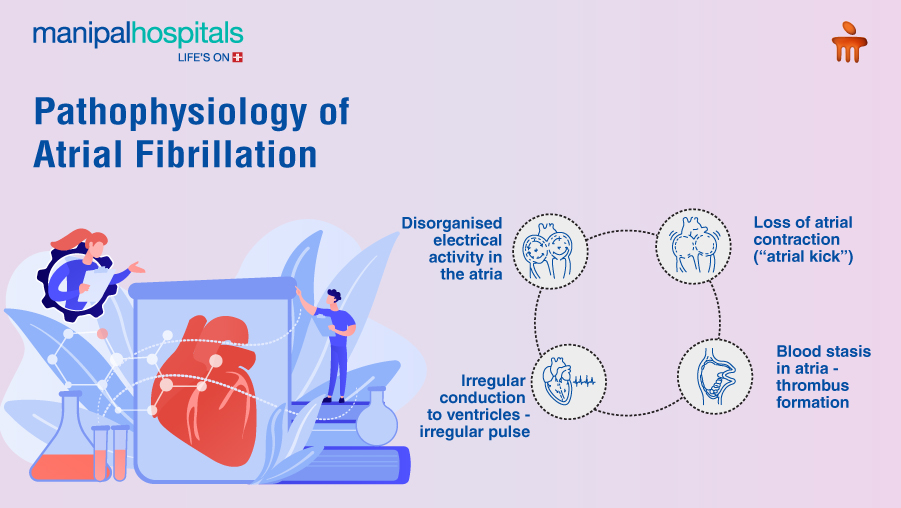
In a healthy heart, electrical signals originate from the sinus node, acting as the heart’s natural pacemaker, ensuring a coordinated and rhythmic contraction. In AFib, these electrical signals become disorganised and rapid, causing the atria to quiver instead of beating effectively. This chaotic activity leads to a fast and irregular heart rate, which can sometimes reach up to 175 beats per minute, significantly higher than the normal 60-100 beats per minute.
Studies show that AFib prevalence increases with age, affecting about 1 in 10 individuals over the age of 80. Despite its commonality, awareness about this condition and its serious implications, particularly the elevated stroke risk, remains a critical area for patient education.
Recognising the Atrial Fibrillation Symptoms
AFib can manifest differently for everyone. Some individuals might experience profound symptoms, while others might have "silent AFib," where they feel no symptoms at all, making routine check-ups even more important. When symptoms do appear, they can be unsettling and impact daily life. These may include:
-
Palpitations: A sensation of a racing, pounding, or fluttering heart.
-
Shortness of Breath: Especially during exertion or even at rest.
-
Fatigue: Persistent tiredness, even after adequate rest.
-
Dizziness or Lightheadedness: Feeling faint or unsteady.
-
Chest Pain or Pressure: A heavy or uncomfortable feeling in the chest.
-
Weakness: A general feeling of reduced strength.
It’s important to note that these symptoms can also be indicative of other heart conditions. Therefore, if you experience any of these, especially if they are new or worsening, prompt medical evaluation is essential.
What Causes an Irregular Heartbeat?
While the exact cause of AFib isn't always clear, several factors can contribute to its development, increasing the likelihood of an irregular heartbeat.
Understanding these risk factors is the first step towards prevention and management:
-
Advanced Age: The risk significantly increases with age.
-
High Blood Pressure: Uncontrolled hypertension is a major risk factor.
-
Heart Disease: Conditions like coronary artery disease, heart failure, or a history of heart attack.
-
Diabetes: Poorly managed blood sugar levels can contribute to AFib.
-
Obesity: A higher body mass index is linked to increased risk.
-
Sleep Apnea: Interrupted breathing during sleep can strain the heart.
-
Thyroid Disease: An overactive thyroid (hyperthyroidism) can trigger AFib.
-
Excessive Alcohol Consumption: Binge drinking or chronic heavy alcohol use.
-
Family History: A genetic predisposition can increase risk.
-
Certain Lung Diseases: Such as chronic obstructive pulmonary disease (COPD).
Addressing these underlying conditions through lifestyle modifications and medical treatment can play a crucial role in preventing or managing AFib.
Diagnosing AFib: Uncovering the Truth
Accurate diagnosis is paramount for effective AFib treatment. At Manipal Hospitals, our expert cardiologist in Delhi employs a comprehensive approach using state-of-the-art diagnostic tools:
-
Electrocardiogram (ECG): A quick and painless test that records the heart's electrical activity.
-
Holter Monitor: A portable ECG device worn for 24-48 hours (or longer) to record heart activity during daily routines, capturing intermittent AFib episodes.
-
Event Recorder: A portable device that can be worn for weeks or months, activated by the patient when symptoms occur.
-
Echocardiogram: An ultrasound of the heart to visualise its structure and function.
-
Blood Tests: To check for underlying conditions like thyroid problems or electrolyte imbalances.
Early and accurate diagnosis helps in initiating timely treatment, significantly reducing the risk of complications, especially stroke. Our advanced diagnostic capabilities ensure that even the most elusive AFib cases are identified.
The Link Between AFib and Stroke: A Critical Concern
One of the most serious complications of AFib is the significantly increased risk of stroke. When the atria quiver instead of contracting effectively, blood can pool in the heart’s upper chambers, particularly in a small pouch called the left atrial appendage (LAA). This stagnant blood can form clots. If a blood clot dislodges and travels to the brain, it can block blood flow, leading to an ischemic stroke.
Patients with AFib are approximately 5 times more likely to suffer a stroke compared to those with a normal heart rhythm. Moreover, AFib-related strokes tend to be more severe, causing greater disability and a higher mortality rate. Thankfully, with appropriate medical management, the risk of stroke due to atrial fibrillation can be effectively reduced by up to 60-70% through anticoagulant therapy, highlighting the importance of adherence to prescribed treatments.
Effective AFib Treatment Options at Manipal Hospitals
At Manipal Hospitals, our dedicated team of cardiologists in Delhi offers a wide spectrum of advanced AFib treatment options tailored to each patient's unique needs, aiming to control symptoms, restore normal rhythm, and prevent stroke. Our comprehensive approach often results in successful outcomes, with many patients experiencing a significant improvement in quality of life.
Medications
-
Rate Control: Medications to slow down the heart rate to a normal range.
-
Rhythm Control: Medications to restore and maintain a normal heart rhythm.
-
Anticoagulants (Blood Thinners): Crucial for reducing stroke risk in atrial fibrillation by preventing blood clot formation. Adherence to these medications is critical, reducing stroke risk by over 60%.
Cardioversion
A procedure that uses electrical shocks or medications to reset the heart's rhythm back to normal. This procedure boasts a high immediate success rate, often exceeding 80-90% in restoring sinus rhythm.
Catheter Ablation for AF
This minimally invasive procedure is a cornerstone of advanced AFib management. During catheter ablation for AF, thin, flexible wires (catheters) are guided to the heart to identify and destroy (ablate) the small areas of heart tissue that are causing the irregular electrical signals. Our expert electrophysiologists perform thousands of these procedures annually, achieving excellent long-term success rates, with studies showing up to 70-80% of patients remaining free from AFib after a single procedure, and even higher with subsequent procedures if needed.
Left Atrial Appendage (LAA) Occlusion
For select patients who cannot take long-term anticoagulants, devices can be implanted to close off the LAA, where most stroke-causing clots form in AFib, offering an alternative for stroke prevention.
Our commitment to cutting-edge technology and patient-centric care ensures that you receive the best possible outcome.
Conclusion
If you are experiencing symptoms of an irregular heartbeat or have concerns about your heart health, it's crucial to seek timely medical advice. Book an appointment with our expert cardiologists at Manipal Hospitals today. Our team is here to provide personalised care, advanced diagnostics, and comprehensive AFib treatment to help you live a healthier life.
FAQ's
While AFib can be challenging, treatments like catheter ablation for AF can effectively restore normal rhythm for many patients, significantly reducing or eliminating episodes. For others, it's managed long-term to control symptoms and prevent complications.
AFib is serious primarily due to its link with stroke and potential for heart failure. However, with proper diagnosis and consistent AFib treatment, most people with AFib can lead full, active lives.
Maintaining a healthy weight, exercising regularly, eating a heart-healthy diet, limiting alcohol and caffeine, managing stress, and quitting smoking are all crucial lifestyle changes that can significantly help manage AFib.
Catheter ablation for AF is generally considered safe with a high success rate. Like any medical procedure, it carries some risks, but our experienced cardiologist in Delhi will discuss these thoroughly with you, ensuring informed consent.
The frequency of follow-up appointments depends on your specific condition, symptoms, and treatment plan. Your cardiologist in Delhi will recommend a personalised schedule, usually ranging from every few months to annually.
Share this article on: