7 Min Read
Obesity has become a major global health concern, increasing the risk of diabetes, heart disease, and metabolic disorders. For individuals struggling with severe obesity, bariatric surgery has emerged as one of the most effective long-term medical solutions. Modern innovations have now introduced robotic bariatric surgery, a highly precise advancement that is redefining the future of weight loss surgery. Unlike traditional approaches, robotic-assisted procedures allow surgeons to perform complex bariatric surgery with improved accuracy and control. Patients considering weight loss surgery often explore the types of bariatric surgery available today and the overall benefits of bariatric surgery. With technological progress, robotic bariatric surgery is becoming an important option for individuals seeking safe and effective bariatric surgery, and consultation with our bariatric surgeons in Delhi can help determine the most suitable approach.
Synopsis
Understanding Bariatric Surgery
Bariatric surgery refers to a group of medical procedures designed to help individuals achieve significant and sustained weight reduction. Unlike diet or medication alone, bariatric surgery alters the digestive system to limit food intake or reduce nutrient absorption. This form of weight loss surgery is usually recommended for individuals with severe obesity or obesity-related health complications.
Over the years, bariatric surgery has evolved significantly with the introduction of minimally invasive techniques and robotic technology. These developments have made weight loss surgery safer, more precise, and more accessible to patients worldwide.
Many patients explore the types of bariatric surgery to understand which procedure suits their health condition. Each method offers unique advantages and contributes to the overall benefits of bariatric surgery, including improved metabolic health and long-term weight management. The emergence of robotic bariatric surgery has further enhanced the accuracy of modern bariatric surgery procedures.
Why Bariatric Surgery Is Becoming More Advanced
Traditional bariatric surgery has already proven to be highly effective in treating obesity. However, advancements in technology have significantly improved surgical outcomes. Today, robotic bariatric surgery is helping surgeons perform complex weight loss surgery procedures with enhanced precision.
Robotic systems provide surgeons with high-definition visualisation, improved dexterity, and greater control during bariatric surgery. These advantages make robotic bariatric surgery particularly useful in delicate areas of the digestive system. Patients undergoing weight loss surgery using robotic assistance often experience reduced surgical trauma and improved recovery.
Technological progress has also expanded the types of bariatric surgery available. Whether a patient requires gastric bypass, sleeve gastrectomy, or another procedure, robotic assistance can optimise surgical accuracy. These innovations are helping maximise the benefits of bariatric surgery while minimising complications.
Types of Bariatric Surgery
Patients considering bariatric surgery often want to understand the various procedures available. The types of bariatric surgery differ in how they affect digestion and weight reduction.
1. Gastric Sleeve Surgery
One of the most common types of bariatric surgery is sleeve gastrectomy. In this weight loss surgery, a large portion of the stomach is removed, leaving a smaller stomach pouch. This limits food intake and supports long-term weight reduction. When performed through robotic bariatric surgery, the procedure allows surgeons to operate with exceptional precision.
2. Gastric Bypass Surgery
Gastric bypass is another widely performed bariatric surgery. This weight loss surgery involves creating a small stomach pouch and rerouting the small intestine. Among the types of bariatric surgery, gastric bypass is known for delivering significant metabolic improvements and enhancing the benefits of bariatric surgery.
3. Mini Gastric Bypass
Mini gastric bypass is a simplified variation of traditional bypass procedures. This bariatric surgery combines stomach reduction with intestinal bypass to achieve effective weight reduction. Robotic technology can further enhance the accuracy of this weight loss surgery.
4. Adjustable Gastric Band
Another option among the types of bariatric surgery is gastric banding, where an adjustable band is placed around the upper stomach. Although less common today, this weight loss surgery can still offer certain benefits of bariatric surgery for selected patients.
Each procedure can be performed through minimally invasive or robotic bariatric surgery, depending on patient needs and surgical expertise.
What Is Robotic Bariatric Surgery?
Robotic bariatric surgery is an advanced surgical approach that uses robotic systems to assist surgeons during bariatric surgery procedures. Despite the name, the surgeon remains in full control while robotic instruments provide enhanced precision.
During robotic bariatric surgery, the surgeon operates from a specialised console that controls robotic arms equipped with surgical instruments. This system provides magnified three-dimensional visuals and improved manoeuvrability.
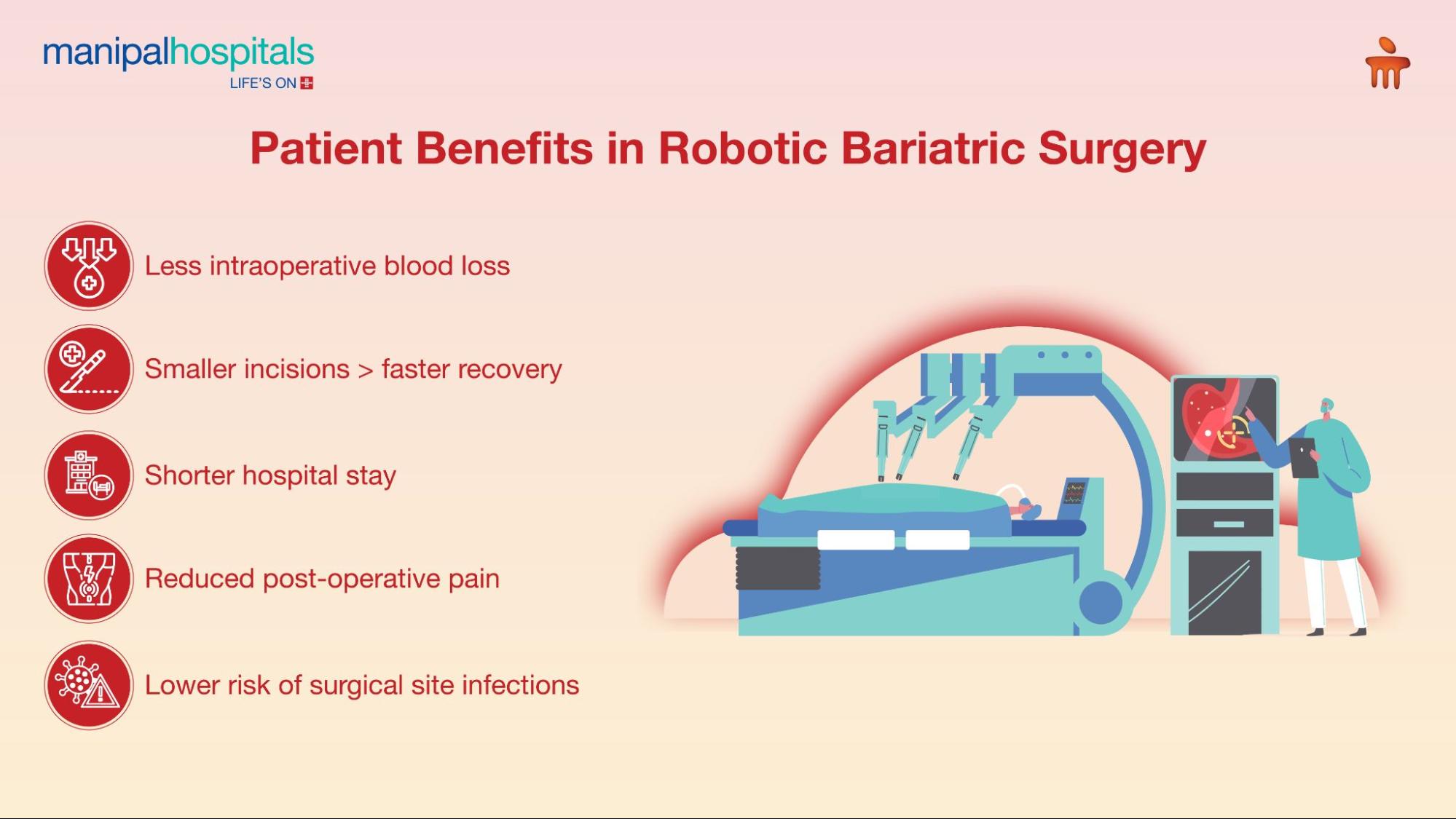
Compared with traditional weight loss surgery, robotic bariatric surgery allows greater accuracy in delicate surgical steps. These improvements help reduce tissue trauma and support faster healing after bariatric surgery.
As technology continues to evolve, robotic bariatric surgery is expected to become an integral part of modern weight loss surgery, enhancing both patient safety and surgical outcomes.
Benefits of Bariatric Surgery
The benefits of bariatric surgery extend far beyond weight reduction. Modern bariatric surgery procedures help patients achieve better metabolic health and improved quality of life.
One of the most significant benefits of bariatric surgery is sustained weight loss. Unlike temporary weight reduction achieved through dieting alone, weight loss surgery helps regulate appetite and metabolism.
Another important advantage is the improvement of obesity-related health conditions. Many patients experience remission of type 2 diabetes, high blood pressure, and sleep apnoea after bariatric surgery.
The benefits of bariatric surgery also include enhanced mobility, improved cardiovascular health, and better psychological well-being. Patients undergoing robotic bariatric surgery may experience additional advantages such as smaller incisions, reduced pain, and quicker recovery after weight loss surgery.
Because of these significant health improvements, the benefits of bariatric surgery are increasingly recognised by healthcare professionals worldwide.
Who Is a Candidate for Bariatric Surgery?
Not everyone struggling with weight issues requires bariatric surgery. Doctors carefully evaluate whether weight loss surgery is appropriate for each patient.
Candidates for bariatric surgery usually include individuals with severe obesity who have been unable to achieve sustainable weight reduction through lifestyle changes alone. Patients with obesity-related conditions may also benefit from weight loss surgery.
During evaluation, doctors assess medical history, lifestyle habits, and potential surgical risks. Understanding the types of bariatric surgery helps determine which procedure may provide the most effective results.
Consulting our bariatric surgeons in Delhi can help patients explore whether robotic bariatric surgery or another form of bariatric surgery is the most suitable option.
The Future of Bariatric Surgery
The future of bariatric surgery is closely linked to technological innovation. As robotic systems continue to improve, robotic bariatric surgery is expected to play an even greater role in modern obesity treatment.
Advancements in imaging, artificial intelligence, and surgical robotics are helping refine the types of bariatric surgery available today. These innovations aim to enhance the benefits of bariatric surgery while reducing recovery time and surgical risks.
Patients seeking long-term weight management solutions may increasingly consider robotic bariatric surgery as a preferred approach to weight loss surgery. With the guidance of our bariatric surgeons in Delhi, individuals can access advanced surgical techniques that support safe and effective bariatric surgery outcomes.
As medical science progresses, the combination of precision technology and expert surgical care will continue to redefine the possibilities of bariatric surgery for patients around the world.
FAQ's
Bariatric surgery is a medical procedure that alters the digestive system to support significant and sustained weight reduction in individuals with severe obesity.
The most common types of bariatric surgery include sleeve gastrectomy, gastric bypass, mini gastric bypass, and adjustable gastric band procedures.
The benefits of bariatric surgery include long-term weight loss, improved metabolic health, reduced risk of chronic diseases, and better overall quality of life.
Robotic bariatric surgery is an advanced form of bariatric surgery where surgeons use robotic technology to perform weight loss surgery with greater precision and control.
Weight loss surgery is usually recommended for individuals with severe obesity or obesity-related health conditions when lifestyle changes alone have not produced sustainable results.
Share this article on: