7 Min Read
An inguinal hernia, a common condition where a part of the intestine or fatty tissue protrudes through a weak spot in the abdominal wall, can be a source of significant discomfort and concern. When this condition affects both sides of the groin, it's known as a bilateral inguinal hernia. While the prospect of surgery can be daunting, understanding your treatment options and what to expect can ease anxieties. At Manipal Hospitals, our leading gastroenterologists in Delhi are at the forefront of providing advanced and compassionate care for such conditions, ensuring optimal outcomes and a smooth recovery. Our commitment to patient well-being is reflected in our high success rates and patient-focused approach to every inguinal hernia surgery.
Synopsis
Understanding Bilateral Inguinal Hernia
What is an Inguinal Hernia?
An inguinal hernia occurs when soft tissue, usually part of the intestine, pushes through a weak point in the abdominal muscles in the groin area. This bulge can be painful, especially when you cough, bend over, or lift a heavy object. It's far more common in men than women, with a lifetime risk estimated to be up to 27% for men and 3% for women. Prompt diagnosis and consideration of inguinal hernia surgery are essential to prevent complications such as strangulation, where the blood supply to the trapped tissue is cut off.
The Challenge of Bilateral Hernias
A bilateral inguinal hernia means that hernias are present on both the left and right sides of the groin. While each hernia can be treated individually, a comprehensive approach for bilateral inguinal hernia repair is often recommended to address both simultaneously, minimising the number of surgical procedures and overall recovery time. Studies indicate that approximately 10-15% of all inguinal hernia cases are bilateral, presenting a unique challenge that requires skilled surgical expertise for effective repair and long-term relief.
Surgical Treatment Options for Inguinal Hernia
The primary treatment for an inguinal hernia is surgical repair. The choice of surgical technique for inguinal hernia surgery often depends on various factors, including the size and type of hernia, the patient's overall health, and the surgeon's expertise. For bilateral inguinal hernia repair, surgeons often weigh the benefits of a single procedure over two separate operations.
Open Inguinal Hernia Surgery
Open hernia repair, also known as herniorrhaphy or hernioplasty, involves making a single, longer incision in the groin area. The surgeon then pushes the protruding tissue back into the abdomen and reinforces the weakened muscle wall, typically with a synthetic mesh. This procedure has been a reliable standard for decades, boasting excellent success rates, often exceeding 95% for primary unilateral repairs. For bilateral cases, two incisions would typically be made, one on each side.
-
Advantages: Generally performed under local or regional anaesthesia with sedation, straightforward for many hernia types.
-
Considerations: Longer incision, potentially more post-operative pain, and a slightly longer inguinal hernia surgery recovery time compared to minimally invasive options.
Laparoscopic Hernia Surgery
Laparoscopic hernia surgery, a minimally invasive approach, is increasingly becoming the preferred method for bilateral inguinal hernia repair. This technique involves making several small incisions through which a laparoscope (a thin tube with a camera) and specialised surgical instruments are inserted. The surgeon views the procedure on a monitor, carefully repairing the hernia by placing a mesh over the weakened area from within the abdominal wall.
-
Advantages: Smaller incisions, reduced post-operative pain, faster hernia surgery recovery time, and lower risk of infection. It's particularly advantageous for bilateral hernias as both sides can often be repaired through the same set of small incisions.
-
Considerations: Requires general anaesthesia, and may not be suitable for all patients, especially those with very large or incarcerated hernias or previous extensive abdominal surgery. The recurrence rate for laparoscopic hernia surgery is remarkably low, often less than 2-3% in expert hands, further highlighting its efficacy.
Choosing the Right Approach for Bilateral Repair
For bilateral inguinal hernia repair, laparoscopic hernia surgery often offers distinct advantages. The ability to repair both sides without creating two large separate incisions means less trauma, less pain, and a potentially quicker overall inguinal hernia surgery recovery time. Our team of gastroenterologists in Delhi will thoroughly evaluate your specific condition, health history, and lifestyle to recommend the most appropriate surgical plan, tailored for optimal results and comfort.
Preparing for Inguinal Hernia Surgery
Pre-operative Assessment
Before any inguinal hernia surgery, a comprehensive pre-operative assessment is crucial. This typically includes a physical examination, blood tests, and an electrocardiogram (ECG) to ensure you are fit for surgery. You will discuss your medical history, current medications, and any allergies with your surgeon and anaesthetist. Following their instructions regarding fasting before surgery and adjusting medications is vital for your safety.
What to Expect on Surgery Day
On the day of your hernia surgery, you'll be admitted to the hospital, and the surgical team will prepare you for the procedure. Depending on the type of anaesthesia, you might receive a general anaesthetic (putting you to sleep) or a regional anaesthetic (numbing the surgical area). The procedure itself for bilateral inguinal hernia repair typically takes between one to two hours, after which you will be monitored in a recovery area.
Inguinal Hernia Surgery Recovery Time
Understanding the inguinal hernia surgery recovery time is key to a smooth post-operative period. While individual experiences vary, especially between open and laparoscopic hernia surgery, most patients can expect a gradual return to normal activities.
Immediate Post-Operative Care
Immediately after inguinal hernia surgery, you may experience some pain or discomfort at the incision sites. Pain medication will be provided to manage this. Most patients undergoing laparoscopic hernia surgery for bilateral repair are discharged the same day or the following morning. For open repair, a one-night hospital stay might be more common. You'll be encouraged to get up and walk short distances soon after surgery to aid circulation and prevent complications.
Managing Pain and Discomfort
Pain management is a crucial aspect of hernia surgery recovery time. Your surgeon will prescribe appropriate pain relief. Applying ice packs to the surgical area can also help reduce swelling and discomfort. It's important to take your medication as prescribed and report any severe or worsening pain to your healthcare provider.
Gradual Return to Activity
The inguinal hernia surgery recovery time varies based on the surgical method and individual factors.
-
For Laparoscopic Hernia Surgery: Patients often return to light activities within 1-2 weeks and full normal activities, including exercise, within 3-4 weeks. Many patients experience a 50% faster return to work and daily routines compared to open surgery.
-
For Open Inguinal Hernia Surgery: A full return to normal activities might take 4-6 weeks.
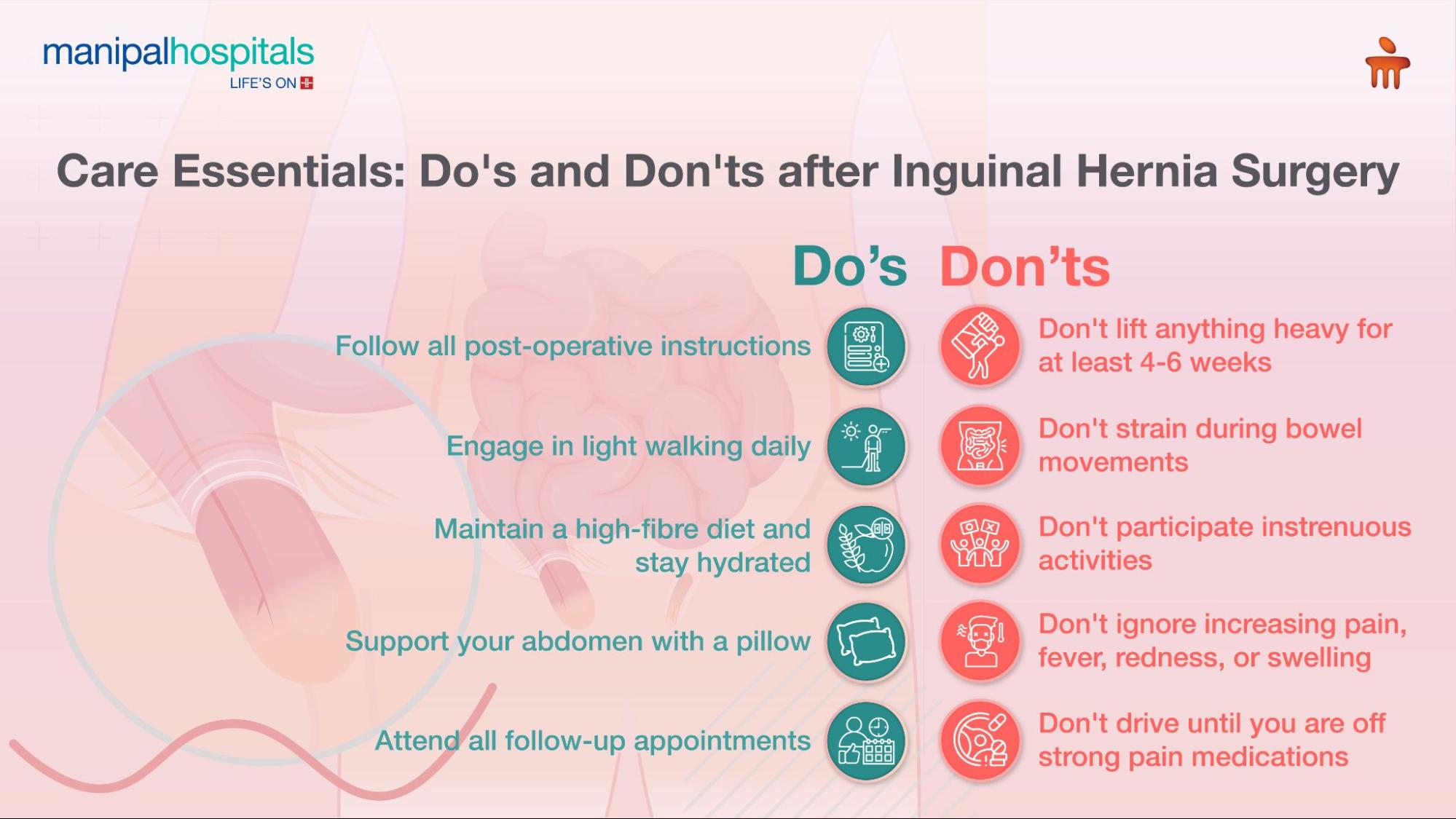
Avoid heavy lifting and strenuous activities for several weeks to allow the surgical site to heal properly. Your surgeon will provide specific guidelines tailored to your recovery.
Long-term Recovery and Lifestyle Adjustments
After your bilateral inguinal hernia repair, it's vital to adopt certain lifestyle adjustments to minimise the risk of recurrence. This includes maintaining a healthy weight, eating a fibre-rich diet to prevent constipation, and avoiding activities that put excessive strain on your abdominal muscles. With proper care and adherence to post-operative instructions, the vast majority of patients enjoy a complete and long-lasting recovery, with recurrence rates reported as low as 1-3% in long-term studies for modern tension-free repairs.
Conclusion
If you are experiencing symptoms of an inguinal hernia, especially if you suspect it might be bilateral, it's crucial to seek timely medical advice. Book an appointment with our expert gastroenterologists at Manipal Hospitals today to discuss the best treatment options for you.
FAQ's
Yes, in most cases, bilateral inguinal hernias can be repaired simultaneously, especially with laparoscopic hernia surgery, which allows for the repair of both sides through minimal incisions, potentially reducing overall hernia surgery recovery time.
For laparoscopic hernia surgery, light activities can resume in 1-2 weeks, with full recovery within 3-4 weeks. Open inguinal hernia surgery recovery time typically ranges from 4-6 weeks for full activity.
Laparoscopic hernia surgery is often preferred for bilateral hernias due to smaller incisions, less pain, and a quicker inguinal hernia surgery recovery time, as both sides can be addressed efficiently in a single procedure. However, the best approach depends on individual patient factors.
As with any surgery, risks include infection, bleeding, damage to surrounding structures, pain, or hernia recurrence. However, serious complications are rare, and modern surgical techniques boast high success rates, often exceeding 95%.
To prevent recurrence, maintain a healthy weight, eat a high-fibre diet to avoid constipation, avoid heavy lifting, and refrain from strenuous activities that strain the abdominal muscles for the advised period during your inguinal hernia surgery recovery time. Regular follow-ups with your doctor are also important.
Share this article on: