5 Min Read
Kidney tuberculosis often develops slowly and may not cause obvious symptoms at first. It can look like a common urinary tract infection (UTI), especially when the infection doesn’t improve with regular antibiotics. This can be an early sign that tuberculosis is affecting the kidneys.
This type of tuberculosis occurs outside the lungs and can gradually damage the kidneys over time. Because its symptoms are mild and similar to other urinary problems, it can be hard to recognise early. Understanding these signs can help in getting the right diagnosis and treatment sooner.
Synopsis
What is kidney tuberculosis?
Tuberculosis usually starts in the lungs, but the bacteria can travel through the bloodstream to other organs, including the kidneys. Once it reaches the kidneys, it may stay inactive for years before becoming active again.
When active, it causes damage to kidney tissue. Over time, this can affect nearby structures such as the tubes that carry urine (ureters) and the bladder. In severe cases, it can lead to scarring, blockage of urine flow, and even loss of kidney function.
Causes of Tuberculosis
Kidney tuberculosis doesn’t usually start in the kidneys. It typically develops after a person has had tuberculosis elsewhere in the body, most often in the lungs.
Some key factors that increase the risk include:
-
Previous tuberculosis infection: The bacteria can spread through the bloodstream and settle in the kidneys.
-
Weak immune system: Conditions such as diabetes, chronic illness, or certain medications can make it easier for the infection to reactivate.
-
Incomplete treatment of earlier TB: If tuberculosis was not fully treated, it can return and affect other parts of the body.
-
Close contact with someone who has active TB: This increases the risk of infection.
-
Poor nutrition or overall health: This can weaken the body’s ability to fight infections.
Symptoms of tuberculosis
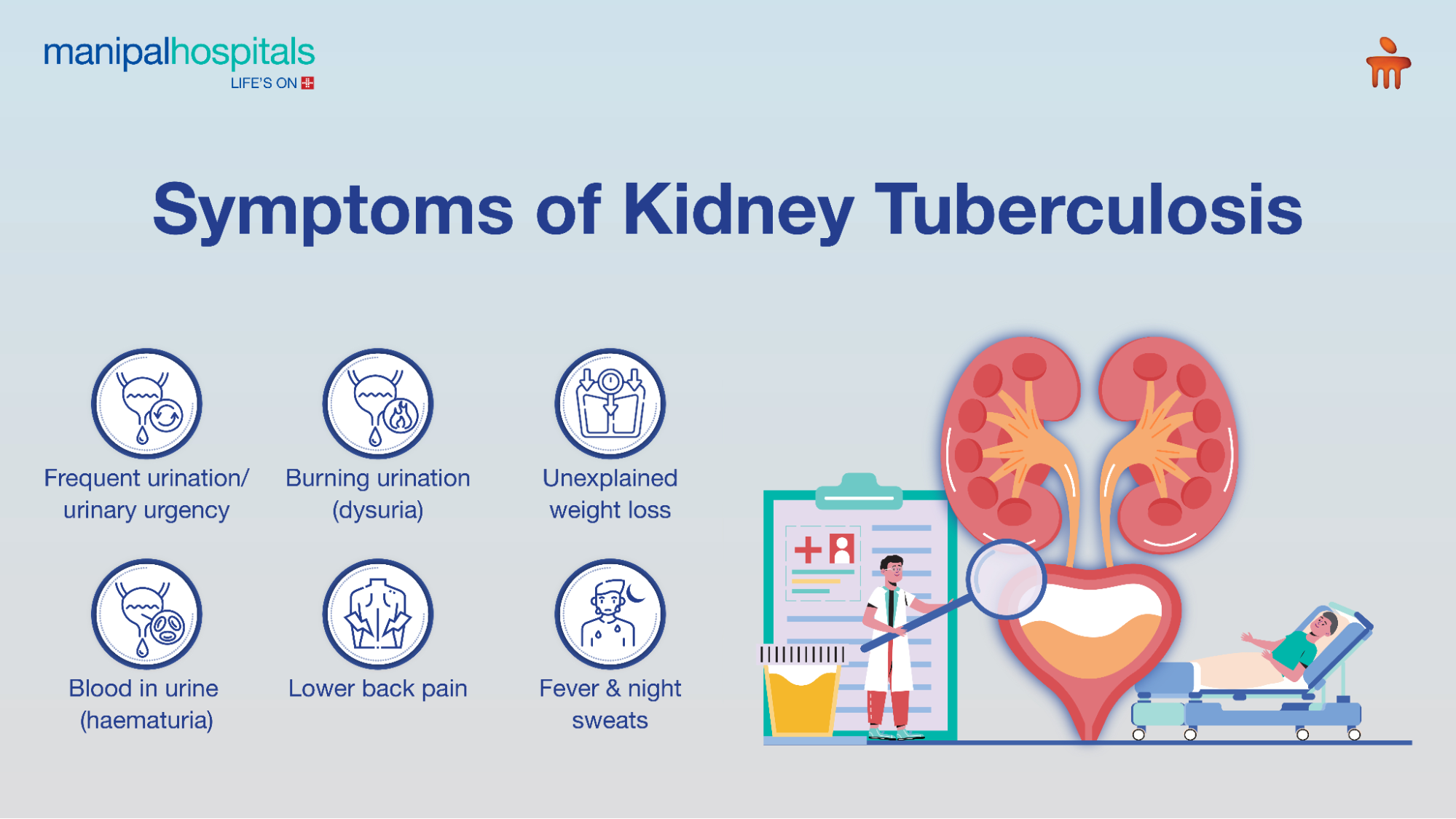
Kidney tuberculosis can be hard to detect early because symptoms are often mild and develop slowly and are often similar to a regular UTI. Some symptoms include:
.
-
Pain or burning while passing urine.
-
Blood in the urine (visible or detected in tests).
-
Fever and night sweats.
Why Early Detection Matters
Kidney tuberculosis can cause lasting damage if left untreated. Over time, it may lead to:
-
Scarring and narrowing of urinary passages
-
Blockage of urine flow
-
Reduced kidney function
-
Permanent kidney damage
The earlier it is diagnosed, the better the chances of preserving kidney health and avoiding complications.
When to See a Doctor
It’s important to seek medical advice if you notice:
-
Blood in your urine
-
Urinary symptoms that don’t go away with treatment
-
Persistent fever or night sweats
-
A previous history of tuberculosis or close contact with someone who has TB.
-
Weight loss along with urinary problems.
Treatment for Tuberculosis
Kidney tuberculosis is treatable, but it requires long-term medication to fully clear the infection. Treatment usually lasts several months and involves a combination of medicines that work together to kill the bacteria.
Key Aspects of Treatment:
-
Long-term therapy: Typically 6 to 9 months or longer, depending on severity
-
Regular monitoring: Doctors may check kidney function and overall response to treatment
-
Follow-up tests: Imaging and urine tests help track recovery
In Advanced Cases:
If the disease has caused significant damage, procedures or surgery may be needed to:
-
Remove blockages
-
Repair affected areas
-
In rare cases, remove a severely damaged kidney.
Conclusion
Kidney tuberculosis is not very common, but it’s important to be aware of it, especially when urinary symptoms don’t improve as expected. Because it develops slowly and mimics other conditions, it can easily be overlooked. Staying alert to persistent symptoms and seeking timely medical care can help ensure early treatment and better outcomes.
At Manipal Hospitals, the experts at the Department of Nephrology offer comprehensive evaluation, accurate diagnosis, and evidence-based management of kidney diseases, including complex conditions such as renal tuberculosis. With advanced diagnostic tools and individualised treatment plans, specialists focus on preserving kidney function, controlling disease progression, and improving long-term renal health and patient outcomes.
FAQ's
The kidney form itself is not directly contagious. However, the underlying pulmonary TB infection can spread through the air.
Yes, it is usually curable with appropriate and complete anti-tubercular treatment.
Diagnosis may involve urine tests, imaging studies, and laboratory detection of TB bacteria.
If untreated or diagnosed late, it can lead to scarring and reduced kidney function.
Individuals with weakened immunity, prior TB infection, or prolonged exposure to TB are at higher risk.
Share this article on: