


 7 Min Read
Sudden pain in the arch of the foot can occur even in the absence of an obvious injury. What may initially present as a mild or transient discomfort could, in fact, represent an underlying pathological condition. Such symptoms should not be disregarded, as they may indicate biomechanical strain, inflammation, or other musculoskeletal abnormalities requiring clinical evaluation.
Foot arch pain is not just a minor discomfort that can be ignored. In many cases, it is linked to a condition called plantar fasciitis, one of the most common causes of heel and foot pain worldwide. It develops due to repeated stress and small tears in the tissue that supports the arch of the foot. If left untreated, it can progress into chronic pain and even start affecting the way a person walks.
Synopsis
What is Foot Arch Pain and Why Does It Happen?
Pain in the arch of the foot is a common problem that many people experience, even without any obvious injury. The arch is the curved middle part of your foot that helps support body weight and absorb shock when you walk or run.
In most cases, this pain is related to a condition called plantar fasciitis, where the thick band of tissue (plantar fascia) that supports your foot becomes irritated or develops tiny tears due to repeated stress. While often not dangerous, ignoring it for a long time can lead to persistent pain and difficulty in walking comfortably.
Common Causes of Foot Arch Pain
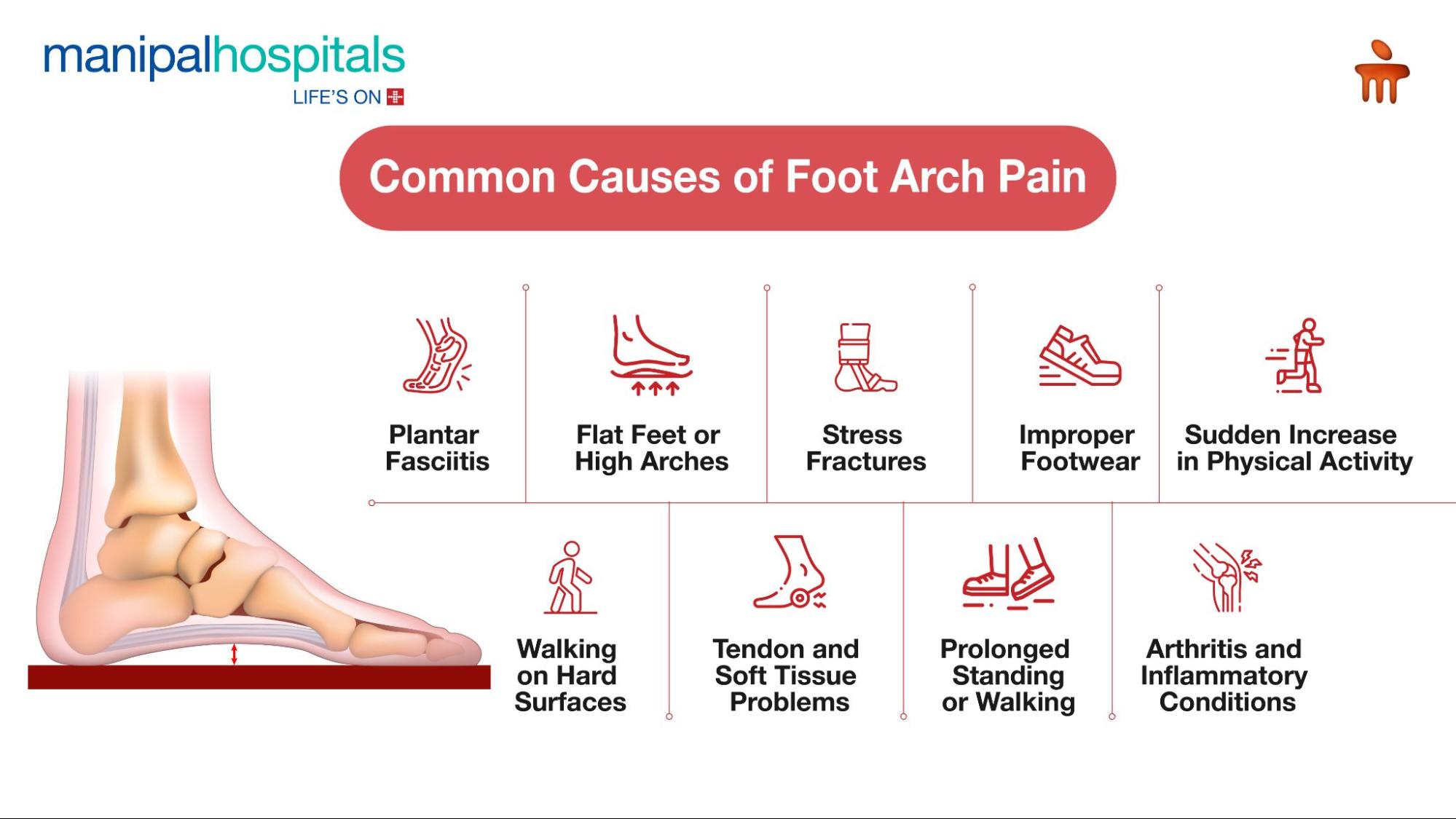
Arch pain in the foot can arise from a range of musculoskeletal and biomechanical conditions, even in the absence of an acute injury. Clinically, the most common and relevant causes include:
-
Plantar Fasciitis (Most Common Cause) - Plantar fasciitis is characterised by microtears and inflammation of the plantar fascia due to repetitive overload. It is commonly associated with prolonged standing, running, or altered foot biomechanics.
-
Flat Feet (Pes Planus) or High Arches (Pes Cavus) - In pes planus, collapse of the medial longitudinal arch leads to increased strain on supporting soft tissues. In contrast, pes cavus results in excessive arch height, reducing shock absorption and increasing stress transmission to the plantar structures.
-
Overuse and Prolonged Weight-Bearing - Extended periods of standing or walking, particularly in occupational settings, can result in cumulative mechanical stress on the plantar arch, leading to pain and fatigue-related inflammation.
-
Inappropriate Footwear - Footwear lacking adequate arch support, cushioning, or stability may contribute to abnormal load distribution across the foot, predisposing to chronic strain injuries.
-
Sudden Increase in Physical Activity - Abrupt escalation in walking, running, or exercise intensity without appropriate training may overload the plantar fascia and foot muscles.
-
Hard Walking Surfaces - Frequent ambulation on rigid surfaces such as concrete increases ground reaction forces, thereby increasing stress on the plantar arch.
-
Tendon and Soft Tissue Disorders - Conditions such as posterior tibial tendon dysfunction or flexor tendon overuse can lead to medial arch pain due to impaired structural support of the foot.
-
Stress Fractures - Repetitive microtrauma, particularly in the bones on the bridge of the foot, may result in stress fractures and cause persistent or activity-related arch pain.
-
Inflammatory and Degenerative Arthritic Conditions - Inflammatory arthritis (e.g., rheumatoid arthritis) or degenerative joint disease affecting the midfoot joints can contribute to chronic arch discomfort, stiffness, and swelling.
Symptoms of Foot Arch Pain
Foot arch pain may have accompanying symptoms depending on the underlying cause. Some of them include:
-
Localised Pain in the Medial Arch - Patients typically report sharp, stabbing, or dull aching pain along the medial aspect of the foot arch. The intensity may vary from mild discomfort to significant pain affecting daily ambulation.
-
Post-Static Dyskinesia (Morning Pain) - A characteristic feature is pain during the first few steps after periods of rest, particularly in the morning or after prolonged sitting. This is commonly seen in inflammatory conditions such as plantar fasciitis.
-
Pain with Prolonged Weight Bearing - Symptoms often worsen with extended periods of standing, walking, or physical activity due to cumulative mechanical stress on the plantar structures.
-
Soft Tissue Tightness and Stiffness - Patients may experience tightness in the plantar fascia, heel, or intrinsic foot muscles, often associated with reduced flexibility of the foot and ankle.
-
Activity-Related Pain Pattern - Pain may temporarily improve with mild movement as tissues warm up, but tends to recur or worsen with continued activity or at the end of the day.
-
Radiation of Discomfort - In some cases, pain may radiate towards the heel, midfoot, or along the medial border of the foot, depending on tendon or fascial involvement.
-
Tenderness on Palpation - Clinical examination may reveal localised tenderness along the plantar fascia, navicular region, or associated tendon structures.
-
Mild Swelling or Inflammation (in select cases) - In more advanced or inflammatory conditions, mild swelling or warmth may be present.
-
Altered Gait Mechanics - Patients may unconsciously adopt a different gait to reduce pain, which can lead to secondary strain in the ankle, knee, or lower back over time.
Treatment for Pain in Arch of Foot
Treatment usually starts with simple and non-surgical methods.
-
Rest and Activity Changes - Reducing standing for long periods of time, walking, or high-impact activities helps the foot recover.
-
Ice Therapy - Applying ice for 10–15 minutes can reduce pain and inflammation.
-
Stretching Exercises - Gentle stretching of the foot and calf muscles improves flexibility and reduces strain.
-
Proper Footwear - Supportive shoes with good arch support and cushioning are very important for recovery.
-
Physiotherapy - In some cases, doctors may recommend physiotherapy to strengthen foot muscles and improve walking pattern.
-
Insoles or Arch Supports - Special insoles help distribute pressure evenly across the foot.
-
Medicines (if needed) - Pain-relief medicines may be advised for short-term relief in some cases.
Home Care and Supportive Measures for Pain in Arch of Foot
Along with medical care, simple home-based practices can make a big difference in managing foot arch pain. These measures help reduce strain, improve comfort, and support faster recovery by allowing the foot to rest and heal naturally.
-
Rest and reduce pressure: Avoid long hours of standing, walking, or high-impact activities to prevent further strain on the arch.
-
Ice application: Apply an ice pack wrapped in a cloth for 10–15 minutes to help reduce pain and inflammation.
-
Foot stretching exercises: Gentle stretching of the foot, toes, and calf muscles helps release tightness and improve flexibility.
-
Massage therapy: Lightly massaging the arch of the foot can improve blood circulation and reduce stiffness.
-
Proper footwear at home and outside: Wearing cushioned, supportive footwear even at home helps reduce unnecessary pressure on the arch.
-
Avoid walking barefoot on hard surfaces: This prevents additional impact stress on the already sensitive arch area.
When to See a Doctor
Medical evaluation is recommended if arch pain is persistent, worsening, or affecting daily activities. Early consultation helps in identifying underlying causes and preventing progression to chronic foot conditions.
See a doctor if you experience:
-
Pain persists beyond 7–10 days despite rest and home care
-
Increasing pain during walking, standing, or weight-bearing activities
-
Swelling, redness, or tenderness in the arch or heel region
-
Difficulty in walking or an altered gait pattern
-
History of trauma or sudden onset of severe pain
-
Recurring episodes of arch pain
Conclusion
Arch of the foot pain should not be ignored, as it may indicate underlying strain or imbalance in the foot. With early care, proper footwear, rest, and simple home measures, most cases can be managed effectively. If the pain persists or worsens, it is important to seek medical advice for proper diagnosis and treatment.
At Manipal Hospitals, our experienced specialists at the Department of Orthopaedics provide comprehensive evaluation, accurate diagnosis, and effective treatment for foot arch pain to ensure long-term relief and improved mobility.
FAQ's
Foot arch pain is most commonly caused by overuse, long hours of standing or walking, improper footwear, and foot structure issues like flat feet or high arches.
Morning pain happens because the tissues in the foot tighten during rest, and the first few steps after waking put sudden pressure on the arch, leading to pain or stiffness.
Yes, wearing shoes without proper arch support or cushioning can increase strain on the foot, resulting in discomfort and long-term arch pain.
For persistent foot arch pain, it is best to consult an orthopaedic specialist. Treatment usually includes proper diagnosis, physiotherapy, orthotic (arch support) insoles, pain management, and lifestyle modifications to reduce strain and improve foot function.
Share this article on:






