8 Min Read
Most people associate a heart attack with unhealthy eating, smoking, diabetes, or high cholesterol. While these are important risk factors, emotional stress is also known to affect heart health. Long working hours, financial pressure, poor sleep, emotional trauma, and constant anxiety can gradually place extra strain on the cardiovascular system over time.
Doctors recognise that severe emotional stress can contribute to heart attacks, especially in people with existing cardiovascular risks. Greater awareness can help us identify warning signs and make informed choices to reduce the risk of heart attacks.
This blog explores the intricate biological relationship between emotional strain and cardiac health, detailing how stress causes heart attack. By understanding these mechanisms, you can take proactive steps toward both mental well-being and physical health.
Synopsis
- How Stress Affects the Heart and Body
- How Does Stress Increase Heart Attack Risk?
- Warning Signs of Stress Affecting the Heart
- Can Emotional Shock Trigger a Heart Attack?
- Other Factors That Increase Heart Attack Risk
- How Do Lifestyle Habits Change Under Stress?
- Managing Stress to Protect Heart Health
- When Do Stress Symptoms Need Medical Attention?
- Why Preventive Heart Care Matters?
- Recovery After a Heart Attack
- Conclusion
How Stress Affects the Heart and Body
Stress is the body’s natural response to pressure or challenging situations. When a person feels anxious, stressed, or emotionally overwhelmed, the body releases hormones such as adrenaline and cortisol. These hormones can temporarily increase heart rate, blood pressure, breathing rate, and blood sugar levels.
For short periods, this response helps the body react quickly. But when stress continues for a long time, the body remains in a constant state of strain, which may gradually affect blood vessels and increase pressure on the heart.
Stress can also influence daily habits and overall health. People dealing with long-term stress are more likely to:
-
Have poor sleep
-
Smoke or consume alcohol more often
-
Exercise less
-
Eat unhealthy foods
-
Develop anxiety or depression
Over time, these changes can increase the chances of high blood pressure and other health problems that may affect the heart and raise the risk of a heart attack.
How Does Stress Increase Heart Attack Risk?
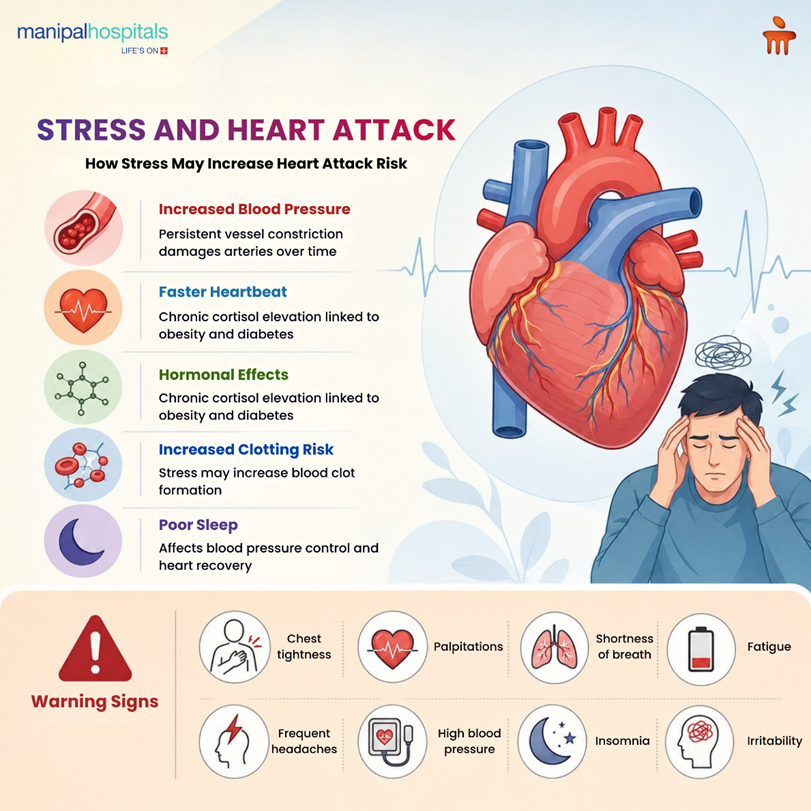
Many patients ask doctors exactly how stress causes heart attack problems. Several biological mechanisms may explain this connection.
Increased Blood Pressure
The hormones associated with stress may cause constriction of blood vessels, leading to increased blood pressure. A consistent increase in blood pressure can gradually damage the arteries over time.
Heartbeat Acceleration
Long-term stress results in a faster heartbeat due to extra workload on the heart, hence requiring more oxygen.
Effects Associated with Hormones
Cortisol levels are linked to obesity and diabetes.
Increased Clotting Risk
Some studies suggest stress may increase blood clot formation, which can trigger a heart attack if a coronary artery becomes blocked.
Sleep Disturbance
Poor sleep linked with stress affects blood pressure regulation and heart recovery.
Understanding how stress causes heart attack complications highlights why emotional health is now considered an important part of preventive cardiology care.
Warning Signs of Stress Affecting the Heart
Often, people overlook the early symptoms of stress until they worsen considerably. Nonetheless, one’s body can sometimes give out signals early on. Symptoms might include:
-
Constant fatigue
-
Constriction in the chest area
-
Heart palpitations
-
Shortness of breath
-
Insomnia
-
Frequent headaches
-
Irritability
-
Hypertension
Some patients experiencing a heart attack due to stress may initially dismiss symptoms as anxiety or exhaustion, delaying medical evaluation. Although these symptoms don’t necessarily imply a heart attack, they must not be overlooked, especially in people who have underlying heart conditions. Women, diabetic patients, and the elderly frequently experience a heart attack without classic crushing chest pain, presenting instead with isolated shortness of breath, unexplained profound fatigue, or atypical jaw/back pain.
Can Emotional Shock Trigger a Heart Attack?
Intense emotional distress may, under certain circumstances, lead to heart-related conditions. Situations such as loss, accidents, financial constraints, or sudden discoveries can exert substantial strain on the heart.
Doctors recognise a condition called stress cardiomyopathy (Takotsubo cardiomyopathy), also known as “broken heart syndrome," where severe emotional shock temporarily weakens the heart muscle. It can mimic a heart attack on an ECG and causes identical chest pain; however, it is physically distinct because there are no blocked coronary arteries.
Instead, a massive surge of stress hormones literally "stuns" the heart muscle, causing a temporary ballooning of the left ventricle.
While all forms of stress do not necessarily culminate in heart disorders, people with preexisting heart conditions could find themselves at greater risk during moments of intense emotional tension. The link between stress and heart attacks is hence corroborated.
Other Factors That Increase Heart Attack Risk
Stress alone is rarely the only cause of a heart attack. It often acts alongside other cardiovascular risk factors.
|
Risk Factor |
Effect on Heart Health |
|
Damages artery walls |
|
|
Diabetes |
Increases blood vessel damage |
|
Smoking |
Reduces oxygen supply |
|
High cholesterol |
Contributes to artery blockage |
|
Obesity |
Increases cardiac workload |
|
Chronic stress |
Raises hormonal and inflammatory strain |
People with multiple risk factors may face a higher chance of a heart attack due to stress and unhealthy lifestyle patterns combined.
How Do Lifestyle Habits Change Under Stress?
Stress affects behaviour as much as biology. Many individuals develop unhealthy coping habits without fully recognising their long-term impact.
-
Poor Eating Habits: Stress often increases cravings for processed foods high in salt, sugar, and unhealthy fats.
-
Reduced Physical Activity: Busy schedules and mental exhaustion may reduce exercise levels.
-
Increased Smoking or Alcohol Intake: Some people turn to tobacco or alcohol to manage emotional strain, increasing cardiovascular risk further.
-
Irregular Sleep: Stress frequently disrupts sleep quality, affecting blood pressure and overall recovery.
Doctors addressing stress and heart attack prevention often focus not only on medical treatment but also on healthier coping strategies.
Managing Stress to Protect Heart Health
Reducing stress does not mean eliminating every challenge from life. Instead, it involves developing healthier responses to pressure and emotional strain.
-
Regular Physical Activity: Exercise supports circulation, lowers stress hormones, and improves mood.
-
Healthy Sleep Routine: Consistent sleep helps regulate blood pressure and supports heart recovery.
-
Balanced Diet: Nutritious meals rich in vegetables, fruits, whole grains, and lean protein support cardiovascular health.
-
Mindfulness and Relaxation: Meditation, breathing exercises, and yoga may help reduce emotional tension.
-
Social Support: Spending time with supportive family and friends often improves emotional resilience.
Understanding how stress causes heart attack risk encourages many people to take mental well-being more seriously as part of heart care.
When Do Stress Symptoms Need Medical Attention?
Some symptoms require urgent medical evaluation because they may indicate a developing heart attack rather than stress alone.
Seek immediate medical care if symptoms include:
-
Chest pain or pressure
-
Pain spreading to the arm, jaw, or back
-
Severe breathlessness
-
Sudden sweating
-
Dizziness
-
Nausea
-
Loss of consciousness
A heart attack due to stress may sometimes present suddenly, particularly in people with pre-existing cardiovascular disease. Patients should never assume chest discomfort is “just stress” without proper medical assessment.
Why Preventive Heart Care Matters?
Modern cardiology increasingly focuses on prevention rather than waiting for severe disease to develop. Preventive strategies may include:
-
Blood pressure monitoring
-
Cholesterol management
-
Diabetes control
-
Smoking cessation
-
Stress reduction programmes
-
Weight management
-
Regular exercise
Doctors also encourage patients to discuss emotional health openly during consultations because stress and heart attack risk are now recognised as closely connected.
Patients seeking heart attack treatment in Whitefield should also ask cardiologists about preventive screening and long-term lifestyle guidance. For expert evaluation and care, consult an experienced cardiologist in Whitefield.
Recovery After a Heart Attack
Recovery after a heart attack involves more than physical healing alone. Emotional recovery is equally important.
Many patients experience:
-
Anxiety
-
Fear of recurrence
-
Sleep problems
-
Depression
-
Reduced confidence
Cardiac rehabilitation programmes often include counselling, supervised exercise, dietary support, and stress management techniques. Addressing stress and heart attack recovery together helps improve both emotional well-being and long-term cardiovascular outcomes.
Conclusion
It has been acknowledged today that stress plays a crucial role in increasing heart attack risk in modern medicine. Although stress alone might not be the sole factor causing a heart attack, it certainly has a considerable influence on various aspects, such as high BP, sleep patterns, lifestyles, etc. The awareness about how stress increases heart attack risk helps patients understand their warning signals and focus on both psychological and physical health.
If you require any information on heart attack treatment in Whitefield, Bangalore, then visit our cardiologists at Manipal Hospital Whitefield.
FAQ's
Although stress does not alone cause a heart attack, continuous stress can definitely contribute to increased heart risks because of the influence on blood pressure, sleep, and hormones.
Symptoms may include chest pain, breathlessness, palpitations, sweating, dizziness, fatigue, or pain spreading to the arm, neck, jaw, or back during emotional strain.
Stress may cause high blood pressure, increased heart rate, inflammation, and poor lifestyle choices such as smoking, improper diet, and disturbed sleeping habits.
Absolutely. Stress reduction through physical activities, sound sleep, meditation, good food, and emotional well-being may greatly benefit cardiovascular health.
Patients seeking heart attack treatment in Whitefield should consult experienced cardiology specialists for emergency cardiac care, preventive evaluation, rehabilitation support, and personalised treatment recommendations.
Share this article on: