8 Min Read
It is a chilling realisation, but the pattern of cardiac health is changing rapidly in 2026. For decades, the general assumption was that heart issues were a "future problem," something to worry about in one's 50s or 60s. However, the reality in modern emergency rooms tells a different story. We are seeing a significant rise in the incidence of heart attacks in young adults, with people in their 20s and 30s experiencing life-threatening cardiac events. What’s changed in everyday life? Long hours, irregular meals, rising diabetes, weight gain, and constant stress are putting early strain on the heart. The body does send signals, but heart attack symptoms in younger people can feel vague or easy to brush off.
That delay matters because early recognition can change outcomes completely, and knowing what to look for could be the difference between a close call and something far more serious. In this blog, we talk about the issue, the cause, and remedies.
Synopsis
What Happens During a Heart Attack
A heart attack begins when blood flow to a part of the heart muscle drops or stops. The heart needs a steady supply of oxygen through the coronary arteries, and when that supply is interrupted, the muscle starts to be affected. Many heart attack symptoms begin during this stage, even if they don’t feel intense right away. Here is what happens:
-
Fatty deposits, called plaques, build up along the artery walls over time
-
A plaque can rupture suddenly and expose its inner surface
-
The body forms a blood clot at that site
-
The clot blocks blood flow, either partially or completely
-
The affected part of the heart muscle doesn’t get enough oxygen
-
Damage can begin within minutes, with irreversible injury developing if blood flow is not restored promptly
Symptoms of a Heart Attack
Some symptoms require immediate medical attention and should not be ignored. If they appear, seeking emergency care right away is important. Many of these warning signs of heart attack are often dismissed in younger adults because they may not feel severe or obvious.
-
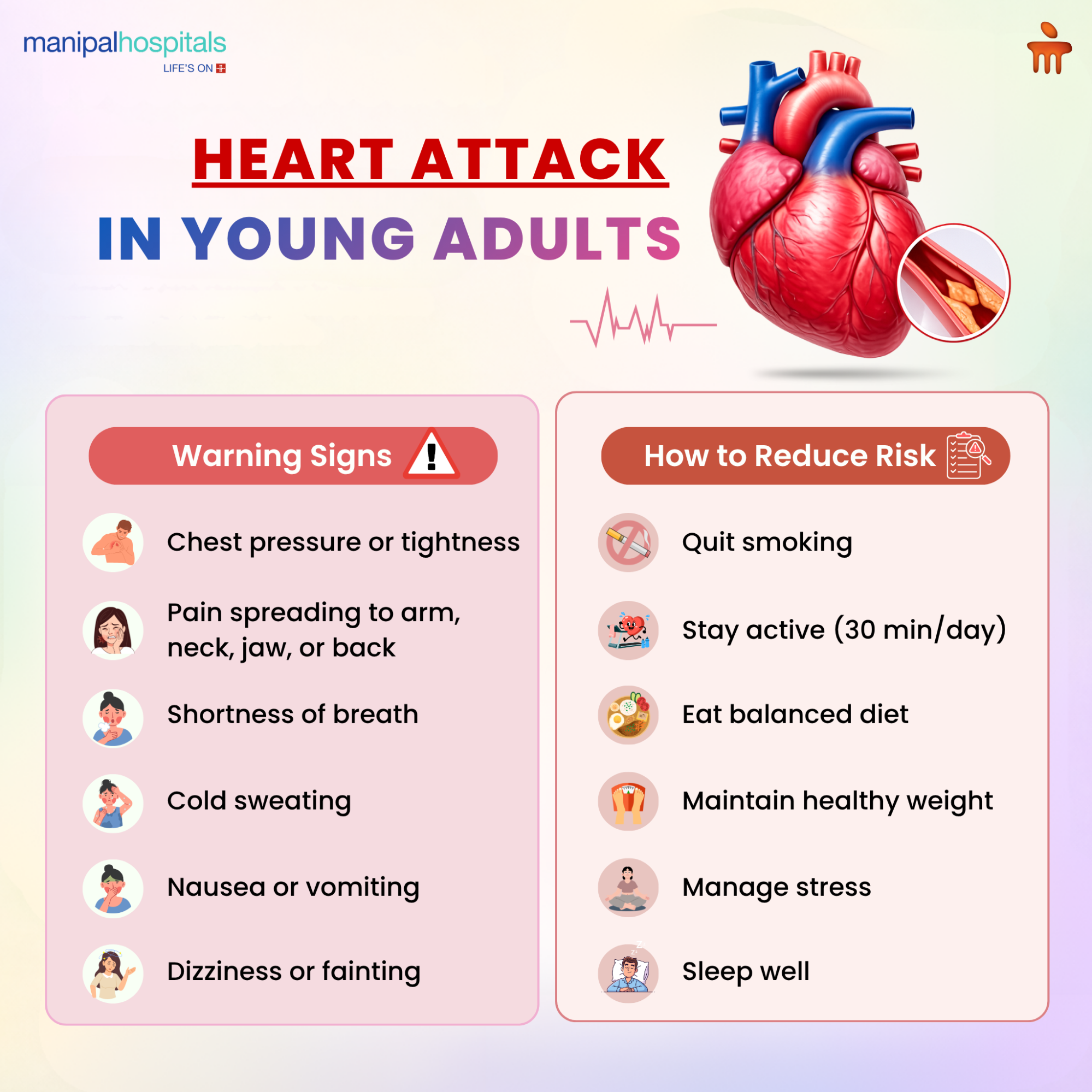
Chest discomfort that feels like pressure, tightness, or a squeezing sensation rather than sharp pain
-
Pain spreading to the left or right arm, neck, jaw, shoulders, or upper back
-
Shortness of breath, even without clear chest pain
-
Sudden cold sweating without physical exertion
-
Nausea, vomiting, or a sensation similar to severe acidity
-
Lightheadedness, dizziness, or a feeling of near fainting
Some symptoms may appear differently, especially in women, which can delay seeking care:
-
Unusual, persistent fatigue that feels out of proportion to activity
-
Discomfort in the jaw, neck, or upper back instead of the chest
-
An indigestion-like feeling that does not improve with routine medication
Any combination of these symptoms, even if mild, should be treated as urgent. Delaying care can increase the risk of serious complications.
Early Warning Signs of Heart Conditions
The body often gives subtle signals before a major cardiac event. These early signs of heart attack can appear days or even weeks in advance, but they rarely feel urgent. Many people mistake them for stress, acidity, or fatigue. Recognising these warning signs of a heart attack early can help prevent a serious emergency in Whitefield.
-
Mild chest discomfort that comes and goes, especially during walking, climbing stairs, or physical activity.
-
A feeling of heaviness or tightness in the chest that improves with rest.
-
Unusual fatigue that does not match your daily routine or sleep.
-
Breathlessness during normal activities that previously felt effortless.
-
A noticeable drop in stamina or ability to exercise.
-
Sleep disturbances, such as waking up feeling uneasy or short of breath.
Causes of Heart Disease in Young Adults
A heart attack in young adults has many different causes, from genetics to lifestyle factors. Here are the most common reasons:
-
Smoking and vaping: Damage the inner lining of arteries, increase plaque buildup, and raise the risk of blood clots.
-
Sedentary lifestyle and poor diet: Lack of physical activity and high intake of processed or sugary foods lead to weight gain, high cholesterol, and poor insulin response.
-
Diabetes and insulin resistance: High blood sugar damages blood vessels and accelerates plaque formation.
-
High blood pressure: Puts continuous strain on artery walls, making them less flexible and more prone to blockage.
-
Abnormal cholesterol levels: High LDL and low HDL contribute to fat buildup in arteries over time.
-
Chronic stress: Affects hormones, blood pressure, and lifestyle habits, increasing heart risk.
-
Substance use: Drugs like cocaine can cause coronary artery spasm and increase clot risk, reducing blood flow to the heart.
-
Family history: Genetic factors can increase the likelihood of early heart disease.
-
Poor sleep: Irregular or insufficient sleep affects metabolism, blood pressure, and overall heart health.
How to Reduce the Risk of Heart Disease in Young Adults
Small, consistent changes can significantly lower the risk of heart disease in young adults. These habits are practical and easy to include in daily life:
|
Habit |
Benefit |
|
Quit smoking |
Reduces clotting risk over time, with early benefits beginning within weeks |
|
Stay physically active |
Helps maintain heart health with at least 30 minutes of moderate activity most days |
|
Follow a balanced diet |
Reduces saturated fats, increases fibre, and limits excess sugar |
|
Maintain a healthy weight |
Improves blood pressure, cholesterol, and insulin response |
|
Manage stress |
Helps control hormone levels and reduces strain on the heart |
|
Prioritise sleep |
Supports heart function, hormone balance, and blood pressure control |
Treatment for Conditions That Increase Risk
Managing underlying conditions early lowers the chances of future heart problems. Regular checkups and timely intervention are very helpful.
-
Control blood pressure: Use prescribed medications and regular monitoring to keep levels within a healthy range.
-
Manage diabetes: Maintain stable blood sugar levels and track HbA1c to prevent long-term vessel damage.
-
Treat high cholesterol: Medications like statins may be used based on individual risk levels.
-
Use antiplatelet therapy (if advised): Helps reduce the risk of clot formation in high-risk individuals.
-
Undergo routine screening: Tests such as ECG, stress test, and lipid profile help detect early changes.
-
Seek preventive consultation: Especially important if there is a family history or multiple risk factors.
-
Schedule regular heart checkups: Supports early detection and timely management.
Conclusion
A heart attack in young adults is no longer uncommon, and waiting for clear or severe symptoms can delay the right care. The signs are often there earlier, just not always recognised or taken seriously. Acting on those early changes can prevent long-term damage.
If there are risk factors such as high blood pressure, diabetes, or a family history, it’s important to get evaluated as soon as possible. A timely heart checkup in Whitefield at Manipal Hospitals can help detect issues before they turn into emergencies. Consult our cardiologists in Whitefield or book an appointment with a cardiologist for a comprehensive cardiac evaluation and personalised treatment plan.
FAQ's
Yes, early signs may appear days or weeks before, such as mild chest discomfort, fatigue, or breathlessness. Because they seem mild, they are often ignored until a sudden event occurs.
Heart pain feels like chest pressure spreading to the arm or jaw with sweating or breathlessness. Acidity causes burning after meals, while panic attacks involve rapid heartbeat and anxiety without exertion.
Yes. Physical fitness does not eliminate risk completely. Factors like smoking, high cholesterol, family history, or undiagnosed conditions can still lead to heart problems, even in people who exercise regularly.
If there are no known risk factors, basic screening every few years is reasonable. With risk factors like diabetes, high blood pressure, or family history, more frequent checks and earlier evaluation are recommended.
Seek immediate care if there is chest pressure, pain spreading to the arm or jaw, shortness of breath, cold sweating, or dizziness. Even if symptoms feel mild, it’s safer to get evaluated without delay.
Share this article on: