7 Min Read
Some heart attacks may not present with severe chest pain. In many patients, especially those with diabetes or older adults, silent heart attack symptoms appear mild and unrelated to the heart, so they are often ignored or mistaken for fatigue or acidity. Despite the absence of obvious pain, damage to the heart muscle still occurs due to reduced blood flow. Because these subtle changes are not easily recognised as heart attack warning signs, diagnosis is often delayed and detected later during routine tests. In some cases, people continue their daily routine without realising anything is wrong. This delay in recognition increases the risk of complications and affects long-term heart health.
Moving from the myth of the "dramatic collapse" to the reality of subtle signals is the first step in protecting yourself. This blog explores why these quiet events happen, the specific ways silent heart attack symptoms manifest in different people, and how you can stay proactive. By learning to recognise the heart attack warning signs, you can ensure that your heart receives the attention it needs before a minor issue turns into a major crisis.
Synopsis
What is a Silent Heart Attack?
A silent heart attack is a type of heart attack that occurs without the typical severe chest pain most people expect. It happens when blood flow to the heart is reduced or blocked, causing damage to the heart muscle. The difference lies in how it is recognised. In many cases, it is not identified at the time because silent heart attack symptoms are mild or not clearly linked to the heart, leading to delayed diagnosis.
The underlying cause remains the same as a typical heart attack, usually involving reduced blood flow in the coronary arteries due to plaque build-up. Even if it goes unnoticed, the heart muscle continues to be affected.
Many cases are discovered later during routine tests, such as an ECG or imaging scan.
Silent Heart Attack Symptoms That May Be Overlooked
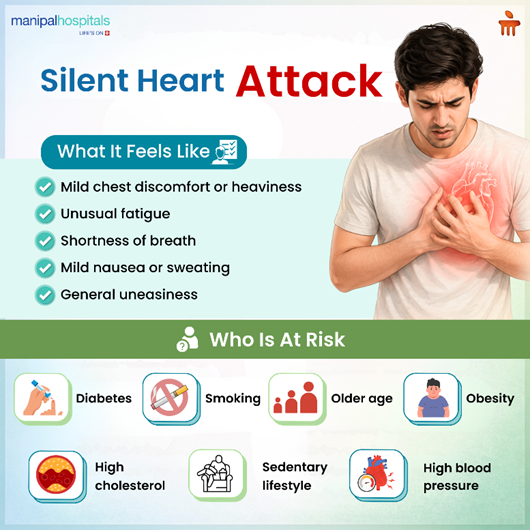
Silent heart attack symptoms are often mild and easily ignored. They may not appear severe or clearly related to the heart, which is why many people miss them.
-
Mild chest discomfort: A feeling of pressure, tightness, or heaviness rather than sharp pain
-
Unusual fatigue: Feeling tired without a clear reason, even after rest
-
Shortness of breath: Difficulty breathing during routine activities or at rest
-
Pain in upper body areas: Discomfort in the jaw, neck, back, or shoulders
-
Nausea or indigestion-like feeling: Often mistaken for acidity or stomach issues
-
Cold sweats: Sudden sweating without physical exertion
-
Lightheadedness or dizziness: Feeling faint or unsteady
These symptoms may come and go or feel mild, but they still indicate reduced blood flow to the heart. Recognising these early can help prevent serious complications.
Silent vs Immediate Heart Attack
Not all heart attacks look the same in real life. The difference often lies in how clearly the body signals a problem. In one case, symptoms are noticeable right away. In the other, signs of a heart attack are faint and often ignored, causing delays in treatment.
|
Feature |
Silent Heart Attack |
Typical Heart Attack |
|
Symptom intensity |
Mild, vague discomfort, fatigue, or breathlessness |
Severe chest pain, often described as pressure or heaviness |
|
Awareness level |
Often not recognised as a heart problem |
Clearly felt as something serious and urgent |
|
Time to diagnosis |
Detected later during routine tests or after complications |
Diagnosed immediately or within hours of symptom onset |
|
Risk of complications |
Higher due to delayed detection and untreated damage |
Lower if treated quickly |
|
Treatment delay |
Common, as symptoms are ignored or misinterpreted |
Minimal, as patients seek help early |
What Causes Silent Heart Attacks?
A silent heart attack happens for the same reason as a regular heart attack. The blood supply to a part of the heart gets reduced or blocked. The most common cause is atherosclerosis, where fatty deposits build up inside the coronary arteries over time. As this plaque grows, it narrows the vessel and restricts blood flow. When the blockage becomes significant, the heart muscle does not get enough oxygen, and injury begins.
In many patients, early heart attack warning signs are either weak or not recognised at all.
-
In diabetes, nerve damage can reduce the ability to feel pain, so the usual chest discomfort may not be strong.
-
Some blockages develop slowly, allowing the body to adjust, which makes symptoms less dramatic.
-
The brain may interpret signals as fatigue, acidity, or general discomfort instead of a heart problem.
Even though the symptoms are mild, the process inside the heart remains the same. Lack of oxygen continues to damage the muscle, which can affect heart function later if not identified.
Who is at Risk?
Certain groups are more likely to experience a silent heart attack, where symptoms are mild or not clearly linked to the heart. In these cases, heart attack symptoms in women and heart attack symptoms in men can appear very different, which often delays recognition.
-
Diabetes: Long-standing diabetes can affect nerve signals, reducing the typical chest pain even during a heart attack.
-
Older adults: Symptoms may be less specific, such as fatigue, breathlessness, or general weakness.
-
High blood pressure: Ongoing pressure damages blood vessels and increases the risk of blockages.
-
High cholesterol: Leads to plaque buildup in arteries, reducing blood flow to the heart.
-
Smoking: Damages blood vessels and accelerates plaque formation.
-
Sedentary lifestyle: Low physical activity is linked to poor heart health.
-
Obesity: Associated with multiple risk factors, including diabetes and high blood pressure.
-
Gender differences: Women are more likely to experience fatigue, nausea, or back pain, while men are more commonly reported to experience chest discomfort.
How Silent Heart Attacks Are Treated
Management of a silent heart attack focuses on restoring blood flow, protecting the heart muscle, and preventing future cardiac events.
-
Blood thinners: Help prevent clot formation and reduce the risk of further blockage in the coronary arteries
-
Statins: Lower LDL cholesterol and stabilise plaque, reducing the chance of artery blockage
-
Beta blockers: Slow the heart rate and lower blood pressure, decreasing strain on the heart
-
ACE inhibitors: Improve blood flow and support heart function after damage
Procedures for severe blockage:
-
Angioplasty: A minimally invasive procedure to open blocked arteries and restore blood flow
-
Stent placement: Keeps the artery open after angioplasty and prevents re-narrowing
-
Bypass surgery: Redirects blood flow around blocked arteries in complex cases
This combination of medications and procedures forms the standard approach to silent heart attack treatment, helping prevent complications and future heart problems.
Conclusion
A heart attack does not always come with clear, severe pain. Many patients experience silent heart attack symptoms that feel mild and easy to ignore. That is where the risk lies. When early signs are missed, the heart continues to be damaged without timely care.
Spotting subtle signs like unexplained tiredness, breathlessness, or discomfort matters. Better to see a doctor promptly if anything feels off, rather than waiting. Early evaluation helps prevent complications and supports better recovery.
At Manipal Hospitals Whitefield, patients have access to timely diagnosis and heart attack treatment in Whitefield. Seek immediate help if you suspect you have experienced any of the symptoms.
FAQ's
Yes, it can. Not every heart attack causes severe chest pain. Some patients may only notice tiredness, slight breathlessness, or mild discomfort in the chest or upper body. Because it feels minor, it is often overlooked.
In most cases, patients do not realise it at the time. Often, it is discovered later during routine tests. Symptoms like unexplained fatigue or breathlessness may only be understood afterwards.
Yes, women often report symptoms like fatigue, nausea, back pain, or jaw discomfort instead of clear chest pain. Because these do not immediately point to the heart, they can be missed or delayed.
Yes. Even if it was not recognised at the time, the heart muscle may have been damaged. This increases the risk of heart failure, rhythm problems, or another heart attack in the future.
If you notice new or unexplained symptoms like breathlessness, chest discomfort, or unusual fatigue, it is better to get checked. Waiting for severe pain is not necessary. Early evaluation helps prevent further complications.
Share this article on: