8 Min Read
Cervical cancer is a top health issue for Indian women, but it's also one of the most preventable. Most of these cases are caused by persistent infections with high-risk strains of the human papillomavirus, which is incredibly common. In fact, most individuals will encounter it at some stage in their lives through simple skin-to-skin contact during intimacy.
While the body is usually great at clearing the virus on its own, certain high-risk strains can linger, potentially leading to cervical, vaginal, or vulvar cancers years down the line. This is why the HPV vaccine for women is such a game-changer; it targets the root cause before the damage even begins. In this article, we talk about all you need to know about the vaccine.
Synopsis
What is the HPV Vaccine?
The human papillomavirus vaccine helps protect against certain types of HPV that can lead to serious health problems. Some strains are linked to cancers, especially cervical cancer, while others cause genital warts. High-risk types include HPV 16 and 18, and types 6 and 11 are commonly linked to warts.
Different formulations of the vaccine are available, covering a varying number of HPV types, with broader coverage offering better protection. The vaccine works by helping the body develop antibodies to help the immune system respond to the virus.
It is important to understand that HPV vaccination does not treat an existing infection or reverse cell changes. However, it can still provide protection against HPV types a person has not yet encountered.
Who Can Take the HPV Vaccine?
The HPV vaccination is recommended for girls and women at different stages of life, but timing plays a role in how much protection you get. The HPV vaccine age limit eligibility depends on individual risk factors.
-
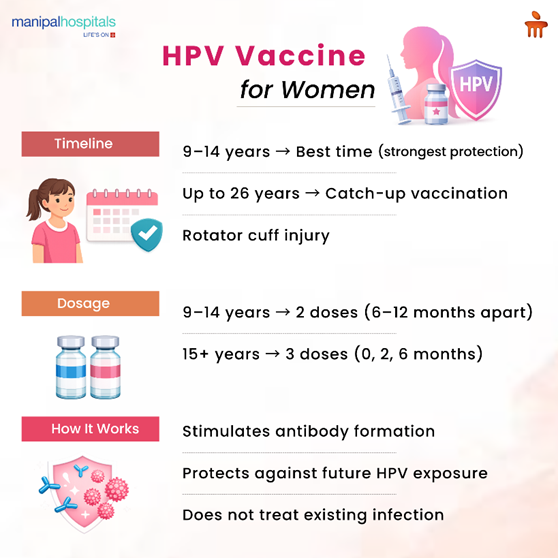
9 to 14 years: This is the recommended time to take the vaccine. The immune response is stronger, and protection is higher when given before any exposure.
-
Up to 26 years: Catch-up vaccination is advised if it was not taken earlier. It still offers good protection.
-
27 to 45 years: The vaccine can be taken after speaking with a doctor. The benefit depends on prior exposure to HPV types.
It can be given to girls who are not sexually active, as well as women who are sexually active. Even if someone has been exposed to one type of HPV, the vaccine can still protect against other types included in it.
Who Should Not Take the HPV Vaccine?
The HPV vaccine side effects are mild in most people, but there are some situations where the vaccine should be avoided or delayed.
-
Severe allergy: Anyone who has had a serious allergic reaction to a previous dose should not take it again.
-
Allergy to components: People with a known allergy to components like yeast, used in some vaccines, should avoid them.
-
Pregnancy: The vaccine is not advised during pregnancy. If a dose is taken without knowing, there is no evidence of harm, but the remaining doses are postponed until after delivery.
-
Moderate or severe illness: If someone is unwell, vaccination is delayed until recovery.
-
Breastfeeding: It is safe to take the vaccine while breastfeeding.
-
Minor illness: A mild cold or low fever is not a reason to skip vaccination.
HPV Vaccination Schedule
The HPV vaccination is given in doses over a few months. Completing the full schedule is important. Missing a dose does not mean starting again. The remaining doses can be taken as soon as possible while maintaining the recommended minimum intervals between them.
The number of doses depends on age.
-
9 to 14 years: Two doses are enough. The second dose is given 6 to 12 months after the first.
-
15 years and above: Three doses are needed. These are given at 0, 2, and 6 months.
When Does the HPV Vaccine Work?
The effectiveness of the HPV vaccine depends on timing, completion of doses, and follow-up care. The table below explains how protection develops and what to expect:
|
Aspect |
Explanation |
|
Best time to take the vaccine |
The vaccine is most effective when taken before exposure to the virus, which is why early vaccination is important. |
|
How protection develops |
After each dose, the body gradually builds immunity, with full protection developing a few weeks after completing all doses. |
|
Duration of protection |
Studies show long-lasting protection, typically ranging from 6 to over 10 years, with no early decline in effectiveness. |
|
Effect on existing infection |
The vaccine does not treat or clear an existing HPV infection or reverse changes already present. |
|
Need for screening |
Routine screening, such as Pap smear tests, remains important to detect early cervical changes even after vaccination |
Risks and Side Effects of the HPV Vaccine
The HPV vaccine is generally safe, but some people may experience mild side effects after vaccination.
-
Pain, redness, or slight swelling at the injection site
-
Mild fever, headache, or feeling tired for a short time
-
Dizziness or fainting can happen soon after the shot, so a short observation period is advised
-
A severe allergic reaction is very rare but needs immediate medical care
-
The HPV vaccine side effects have been studied in large groups and continue to be monitored over time
-
There is no credible evidence linking the vaccine to infertility or hormonal problems.
-
The protection it offers against serious disease is much greater than the small risk of side effects
Conclusion
HPV is a common infection, but it can be prevented with the right steps taken early. The HPV vaccination plays an important role in lowering the risk of cervical and other related cancers in women. Taking it at the recommended age gives better protection, though it can still help later depending on individual risk.
The HPV vaccine for women is part of routine preventive care and should not be delayed without reason. Access to HPV vaccination in Whitefield is available at Manipal Hospitals, Whitefield where you can discuss your timing and eligibility. It is best to speak with gynaecologist in Whitefield, who can guide you based on your age, health, and exposure risk.
FAQ's
The HPV vaccine is best given between ages 9 and 14, when the immune response is strongest. It can still be taken up to age 26 and, in some cases, up to age 45 after medical advice.
Yes, it can still be taken. Being sexually active does not mean exposure to all HPV types. The vaccine can still protect against strains you have not come in contact with, so it continues to offer benefits even later.
The HPV vaccine is highly effective in preventing cervical cancer by protecting against major HPV types. It works best before exposure but still offers significant protection even when taken later.
Serious side effects are very rare. Most people only experience mild reactions like pain at the injection site or slight fever. Severe allergic reactions can occur but are uncommon. The vaccine has been studied widely and continues to show a strong safety record.
Yes, Pap smear screening is still needed after vaccination. The vaccine does not cover all HPV types or treat existing changes, so regular screening helps detect early abnormalities in the cervix.
Share this article on: