7 Min Read
Sleep is more about feeling rested the next day. It is a time when the body is actively repairing itself, and the heart gets a chance to slow down and recover. During the deeper stages of sleep, your heart rate and blood pressure drop. This allows the heart to rest from its constant workload. From a medical perspective, the role of sleep in maintaining heart function is very clear. Without adequate rest, even the most disciplined diet and exercise routine can struggle to protect your heart. During deep sleep, your heart rate and blood pressure are intended to decrease, providing your cardiovascular system with a much-needed respite from the day's demands. When this cycle is disrupted, the body stays in a state of high alert, which can lead to long-term damage.
Understanding the connection between your pillow and your pulse is vital for long-term wellness. This blog explores the biological mechanisms behind rest, how sleep deprivation affects your arteries, and the practical steps you can take to protect your heart health every night. By prioritising your sleep, you are giving your heart the fuel it needs to keep beating strong for decades to come.
Synopsis
How Sleep Affects Heart Health
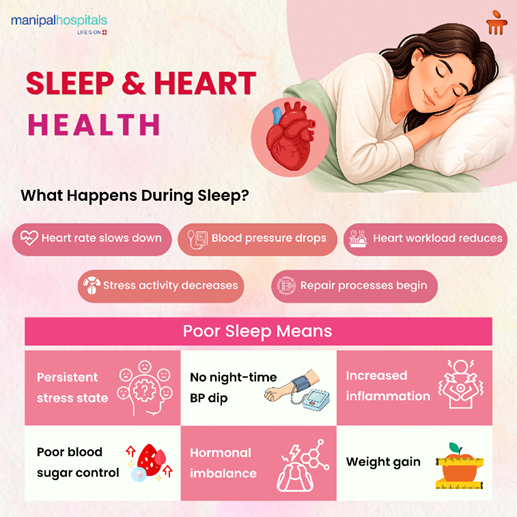
When you fall asleep, the heart does not keep working at the same pace. It slows down and moves into a resting state, allowing the body to recover. During deeper stages of sleep, heart rate and blood pressure drop, which reduces the overall workload on the heart and gives it time to rest.
Sleep plays an important role in maintaining balance across key systems that support heart health. When sleep is consistent and of excellent quality, the body shifts into a relaxed state where stress levels reduce, blood vessels relax, and recovery processes take place.
-
Blood pressure regulation: Healthy sleep allows blood pressure to dip at night. Poor or disturbed sleep prevents these processes, keeping pressure levels higher for longer.
-
Heart rate control: Sleep helps stabilise heart rate, while lack of sleep keeps the heart more active and under strain.
-
Stress response: Inadequate sleep keeps the body in a stressed state, increasing pressure on the heart.
-
Inflammation: Poor sleep can increase inflammation, which affects blood vessels and contributes to plaque buildup.
-
Hormonal balance: Sleep supports hormones that regulate metabolism and appetite. Imbalance can increase the risk of obesity, diabetes, and heart disease.
When sleep is regularly disrupted, these protective processes do not work properly. Over time, these effects can increase the risk of high blood pressure, heart disease, and other cardiovascular problems.
How Poor Sleep Affects Heart Health
Poor sleep builds up over time, affecting the heart, blood vessels, and metabolism. Sleeping less than 7 hours, especially under 6, is linked to a higher risk of heart disease, while excessive sleep is also associated with increased risk.
When the body does not fully enter recovery mode, stress levels remain high, and blood pressure does not settle at night, gradually increasing strain on the heart.
|
What Changes |
What Happens in the Body |
Impact on the Heart |
|
Persistent state of stress |
Increased sympathetic activity, reduced recovery |
Higher heart rate and ongoing cardiovascular strain |
|
Blood pressure pattern disrupted |
No proper nighttime dip in blood pressure |
Increased risk of hypertension |
|
Elevated night-time blood pressure |
Continuous load on blood vessel walls |
Increased strain on the heart |
|
Inflammation builds up |
Damage to the inner lining of blood vessels |
Higher risk of plaque buildup |
|
Blood sugar control is affected |
Reduced insulin sensitivity |
Increased risk of diabetes and heart disease |
|
Hormonal imbalance |
Increased hunger and calorie intake |
Weight gain and added cardiac load |
Sleep Disorders That Can Impact Your Heart
Sleep disorders can quietly affect heart health by keeping the body in a state of stress and preventing proper recovery. When sleep is disturbed, the role of sleep in supporting the heart is disrupted, increasing long-term risk.
-
Insomnia: Difficulty sleeping keeps stress levels high, which can raise blood pressure over time.
-
Obstructive Sleep Apnea (OSA): Repeated pauses in breathing lower oxygen levels and cause frequent spikes in heart rate and blood pressure.
-
Central Sleep Apnea: Irregular breathing reduces oxygen supply and adds strain, especially in people with existing heart conditions.
-
Restless Legs Syndrome (RLS): Frequent awakenings reduce sleep quality, affecting recovery and blood pressure control.
-
Circadian Rhythm Disorders: Irregular sleep patterns disturb hormonal balance and blood pressure regulation.
-
Narcolepsy: Disrupts normal sleep cycles, reducing overall rest and recovery.
How Much Sleep Does the Heart Need?
Getting the right amount of sleep is one of the simplest ways to support how to improve heart health, but it is often overlooked. Adults need about 7 to 9 hours of sleep each night for proper cardiovascular recovery. Sleeping less than the recommended amount keeps the body in a stressed state, while sleeping too long is also linked with poorer heart outcomes. Large population data show that both short and excessive sleep are associated with lower heart health scores.
Signs Your Sleep May Be Affecting Your Heart
Sleep issues don’t always show up clearly. They often appear as small, repeated patterns that are easy to ignore. Over time, they can signal that the body is not getting proper recovery.
-
Persistent daytime fatigue: You wake up and go through the day still feeling drained, as if your body never fully rested.
-
Broken or light sleep: Waking up multiple times or feeling like you never slept deeply.
-
Loud snoring or gasping: Often noticed by others, these can point to disturbed breathing during sleep.
-
Morning headaches: A heavy or foggy feeling on waking, which may be linked to poor sleep or unstable blood pressure.
How to Improve Sleep for Better Heart Health
Improving sleep is an important part of improving heart health. The focus should be on consistent habits that support long-term recovery.
-
Fix your sleep timing: Go to bed and wake up at the same time every day, including weekends, to maintain a stable sleep rhythm.
-
Reduce stimulation before bed: Limit screen use 30–60 minutes before sleep and avoid caffeine or alcohol in the evening.
-
Create a sleep-friendly environment: Keep your bedroom dark, quiet, and slightly cool to support deeper sleep.
-
Address underlying health issues: Treat conditions like sleep apnea, anxiety, or chronic illness that may disrupt sleep.
-
Consider professional support: Cognitive behavioural therapy for insomnia (CBT-I) can help improve long-term sleep patterns.
Conclusion
Sleep is not optional when it comes to protecting your heart. The role of sleep goes deeper than rest. It affects blood pressure, metabolism, and how the heart functions day to day. When sleep is disturbed, these systems stop working in balance.
If you are noticing ongoing sleep issues or early symptoms, it is important to get it checked. Timely care and proper evaluation can prevent complications. For those looking for heart health treatment in Manipal Hospitals, Whitefield, a complete approach that looks at both sleep and cardiac health can help manage risk early and more effectively. Talk to our experts at Manipal Hospitals today.
FAQ's
It does more than make you tired. When sleep is disrupted for days or weeks, the body cannot recover properly. Blood pressure stays elevated, stress builds up, and the condition gradually puts strain on the heart.
Most people don’t notice it early. You may feel low on energy or that sleep isn’t refreshing. Along with rising BP, weight gain, or unstable sugars, sleep may be the underlying issue.
Not really. More sleep is not always better sleep. Very long sleep hours can also be linked with health issues. What helps the heart is steady, good-quality sleep, not just time spent in bed.
Yes, and sometimes the change is quite noticeable. Better sleep helps bring blood pressure under control, improves how the body handles sugar, and reduces overall strain on the heart.
If sleep has been off for a while, or if there is loud snoring, choking at night, or constant tiredness during the day, it’s better not to ignore it. Getting it checked early can prevent bigger issues later.
Share this article on: