7 Min Read
Waking up once at night to urinate can be normal. But if it happens regularly, it can disturb sleep and leave you feeling tired. Frequent urination at night, or nocturia, is not a disease but a sign that something needs attention. For many men, the condition is often linked to prostate problems in men, especially as the prostate enlarges with age and affects bladder emptying. However, the prostate is not the only cause. Fluid balance, bladder function, sleep quality, and conditions like diabetes can also play a role. Identifying the exact cause is important for managing the problem effectively and knowing when to seek medical advice.
This blog will look at the biological changes that occur as men age, the specific symptoms of prostate issues, and the lifestyle adjustments that can help you manage the situation. By moving from a place of frustration to a place of informed action, you can find the right path toward better sleep and long-term health.
Synopsis
What Is Nocturia?
Getting up at night to urinate occasionally is common, especially after drinking fluids before bed. But when it happens regularly, it can disturb sleep. Nocturia causes can vary, and the term simply refers to waking one or more times at night to pass urine.
-
Waking once occasionally may not be a concern
-
Waking two or more times regularly may need attention
-
The body may produce more urine at night
-
The bladder may not hold urine for long enough
-
It can affect both men and women
Understanding the cause is important, as it can differ from person to person.
Causes of Frequent Urination at Night
Causes of frequent urination at night can come from different parts of the body. In some people, the issue starts with how much urine is produced at night. In others, it is linked to bladder function or even sleep quality.
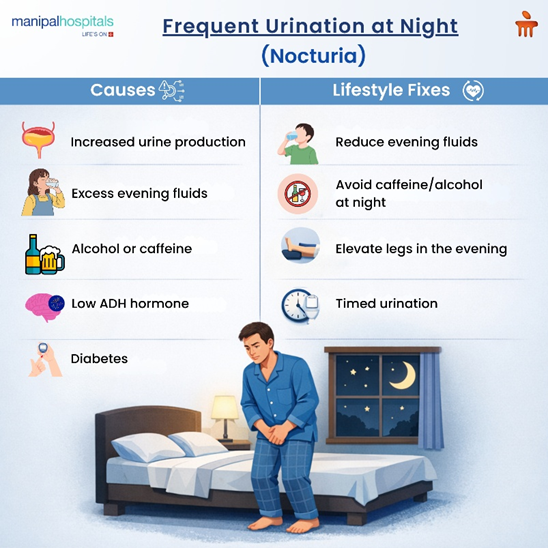
Increased Night time Urine Production
When the body produces more urine than expected during sleep, it leads to repeated waking. Drinking large amounts of water in the evening plays a role. Alcohol and caffeine also increase urine output.
Hormonal balance also plays a part. A drop in antidiuretic hormone at night reduces the body’s ability to concentrate urine. Conditions like diabetes mellitus increase urine production due to excess glucose. Diabetes insipidus affects water regulation directly. In older adults, fluid accumulation in the lower limbs during the day can shift back into circulation when lying down, increasing urine formation at night.
Bladder Causes
Sometimes the issue is not how much urine is made, but bladder storage capacity. An overactive bladder can trigger sudden urges even when the volume is small. Reduced bladder capacity also leads to frequent emptying. Urinary tract infections irritate the bladder lining. This irritation leads to the constant urge to pass urine, including at night.
Sleep-Related Causes
Sleep problems can also be part of the picture. In sleep apnea, breathing repeatedly stops and starts during sleep. That triggers the release of a hormone that increases urine production. Light or broken sleep can make a person more aware of the urge to urinate. In some cases, the person wakes up first, then decides to pass urine rather than having their bladder wake them.
Medications
Certain medicines increase urine output. Diuretics are the most common example. If taken later in the day, their effect continues into the night. Some blood pressure medications can also contribute, depending on timing.
Age-Related Changes
With age, the bladder loses some of its flexibility. It cannot stretch and hold urine the same way. Hormonal changes also affect how the body manages fluids. These changes together make nighttime urination more common over time.
Is Nocturia a Sign of Prostate Problems?
Many men connect nighttime urination with prostate trouble, and that concern is understandable. The prostate sits just below the bladder and surrounds the urethra, which is the tube that carries urine out of the body. When the prostate enlarges, a condition called benign prostatic hyperplasia (BPH), it starts to interfere with how urine passes.
As the prostate enlarges, it begins to press against the urethra, narrowing the passage through which urine flows. This restriction slows down the stream and prevents the bladder from emptying completely. A small amount of urine stays behind after each visit to the toilet, and over time, this leftover urine creates a repeated urge to pass urine, which becomes more noticeable at night.
Along with nocturia, other symptoms of prostate issues often appear together:
-
Weak or slow urine stream
-
Difficulty starting urination
-
Dribbling at the end
-
Feeling that the bladder has not emptied fully
-
Sudden urgency to pass urine
How Nocturia Is Diagnosed
Finding the cause of nighttime urination usually starts with simple checks. A doctor looks at daily habits, fluid intake, sleep patterns, and medical history to understand possible reasons.
|
Step |
What It Involves |
|
Medical history |
Questions about daily routine, fluid intake, sleep patterns, and medications |
|
Voiding diary |
Tracking fluid intake and urination over a few days to identify patterns |
|
Physical examination |
Basic check-up, including prostate examination in men |
Tests That May Be Recommended
-
Urine test to check for infection
-
Blood sugar test to detect diabetes
-
PSA test if prostate issues are suspected
-
Ultrasound to assess the bladder and prostate
-
Sleep study if sleep disturbance is suspected
Management and Treatment
Treatment depends on the underlying cause of nocturia. Once identified, management becomes more targeted.
Lifestyle Measures
Simple routine changes can help, especially in mild cases:
-
Reducing fluid intake in the evening
-
Avoiding caffeine and alcohol at night
-
Elevating the legs in the evening to reduce fluid buildup
-
Following a regular urination schedule (bladder training)
Medical Treatment
When a medical condition is behind it, treatment is directed at that condition.
-
Better control of diabetes reduces excess urine formation
-
Medicines may be given to calm an overactive bladder
-
Desmopressin may be used in selected cases to reduce urine production at night
-
Antibiotics are used if there is an infection
Prostate Treatment
If the prostate is involved, the focus shifts to improving urine flow.
-
Alpha-blockers help relax the muscles around the prostate
-
5-alpha reductase inhibitors work over time to reduce prostate size
-
Surgery is considered if symptoms are severe or not improving
Sleep-Related Treatment
Sleep problems also need to be addressed. Treating sleep apnea can reduce nighttime urine production and improve overall sleep.
Conclusion
Waking up at night to urinate is something many people deal with, but it is easy to overlook until it starts disturbing sleep every single night. Frequent urination at night is not always as simple as it seems. The prostate can be one reason, but there are several others that need to be considered before drawing conclusions about the underlying cause. At Manipal Hospital Whitefield, care is focused on finding the cause using advanced procedures and offering the right treatment for frequent urination at night in Whitefield. Consult our urologist in Whitefield today.
FAQ's
Waking up once in the night can happen, especially if you had fluids before bed. If it happens two or more times every night, it is worth paying attention to. Sleep starts getting disturbed at that point.
Yes, it can. Drinking a lot of water, tea, or coffee in the evening can increase urine production during sleep. Cutting down on fluids closer to bedtime often reduces nighttime visits to the bathroom.
No, not necessarily. While the prostate can be a factor in men, many other conditions can cause it, including bladder issues, diabetes, sleep problems, or even certain medicines.
In many mild cases, yes. Adjusting fluid timing, avoiding caffeine at night, and following a regular bathroom routine can help. If there is an underlying condition, it still needs proper treatment.
If it happens every night, disrupts your sleep, or comes with other symptoms like pain, urgency, or excessive thirst, it is better to get it checked. Early evaluation makes your condition easier to manage.
Share this article on: