8 Min Read
Heart disease remains one of the top causes of death in the world and impacts millions of lives each year. Heart disease is an umbrella term encompassing a range of conditions that impair the structure and function of the heart. These include constricted blood vessels, irregular heart rhythms, cardiac muscle problems, or congenital defects. Some cardiac diseases develop slowly. Others might appear unexpectedly and can be life-threatening if not treated soon. Modern lifestyle habits such as unhealthy eating, smoking, stress, lack of physical activity, and poor sleep have significantly increased the risk of cardiovascular problems.
Recognising heart disease symptoms early on and seeking timely treatment can help reduce serious complications and support long-term heart health. This blog explores the common types of heart disease, their symptoms, treatment options, and practical ways to support your heart health.
Synopsis
What is heart disease?
Heart disease is a group of disorders that affect the heart and blood vessels. It can also interfere with the heart’s ability to adequately pump blood to the rest of the body. Some heart illnesses are mild and may be managed, but others can cause serious problems such as a heart attack, stroke, or heart failure. Cardiac disease can develop slowly over many years or suddenly from blocked blood flow or abnormal cardiac rhythms.
Common Signs of Heart Disease
Heart disease symptoms might vary based on the type and severity of the disease. In other people, symptoms may not appear until the condition is advanced. Common symptoms may include:
-
Heartburn or indigestion
-
Shortness of breath
-
Excessive sweating
-
Palpitations (fast or irregular heartbeat)
-
Pain in the jaw, neck, arms or back
-
Dizziness, syncope
-
Fatigue or weakness
-
Swelling of the legs, ankles or feet
-
Upset stomach or nausea
Chest pain (angina) is one of the most recognisable symptoms. But women may encounter unusual symptoms such as tiredness, nausea, or shortness of breath.
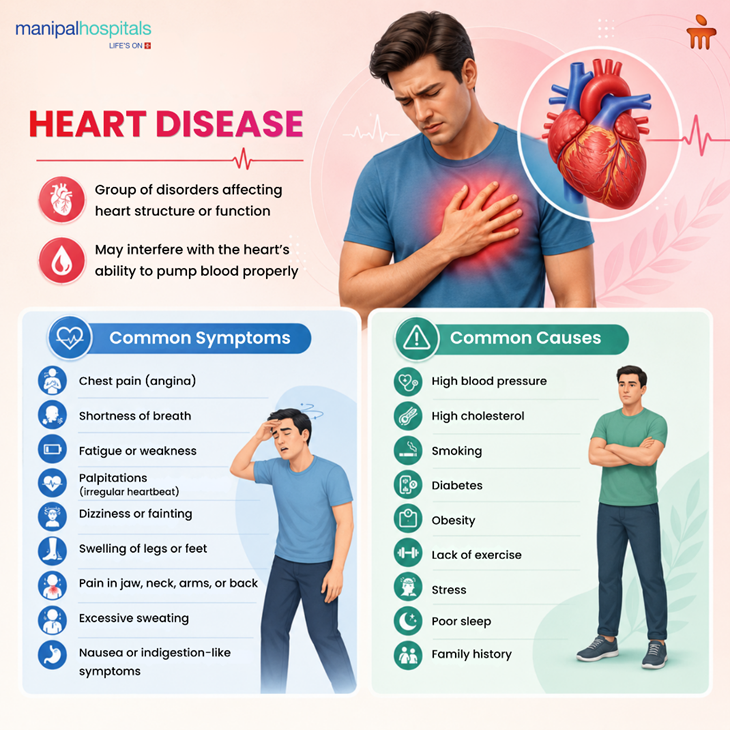
Causes of Heart Disease
-
Family History: If you have close relatives who have had heart disease, you may be at increased risk. There are many heart disease causes. Some are lifestyle, some are hereditary, and some are age-related.
-
High Blood Pressure: Long-term high blood pressure can harm the arteries, making it hard for blood to flow freely. This may lead to hypertensive heart disease.
-
High Cholesterol: Too much cholesterol can build up on the inside of arteries, making them narrower and increasing the risk of a heart attack.
-
Smoking: Smoking damages blood vessels and decreases oxygenation and thus greatly raises the risk of cardiovascular disease.
-
Diabetes: Too much sugar in the blood can damage blood vessels and nerves that help regulate heart function.
-
Obesity: Carrying too much body weight strains the heart and leads to high blood pressure, diabetes, and high cholesterol.
-
Lack of Physical Activity: Sitting for long periods weakens the heart and increases the risk of obesity and high blood pressure.
-
Stress: Long-term stress can raise blood pressure and lead to life-threatening conditions.
Different Types of Heart Diseases
Heart disease covers several medical conditions that affect different parts of the heart.
|
Condition |
Definition |
Symptoms |
|
Coronary Artery Disease |
This condition is the most common type of heart disease. This condition occurs when the arteries that transport blood to the heart grow narrowed or clogged from the accumulation of plaque. |
|
|
Heart failure |
Heart failure occurs when the heart cannot pump blood efficiently. This doesn’t mean that the heart has stopped beating altogether |
|
|
Arrhythmia |
Arrhythmias are irregular heartbeats, which may be excessively slow, too fast, or irregular. Some arrhythmias can be dangerous, causing you to have a stroke or sudden cardiac arrest. Some are not dangerous. |
|
|
Congenital Cardiac Disease |
These are heart issues present at birth. They may affect heart valves, chambers, or blood vessels. |
|
|
Heart Valve Disease |
The heart valves control the flow of blood within the heart. Damaged or restricted valves can affect circulation and strain the heart. |
|
|
Cardiomyopathy |
A disorder of the heart muscle that makes it difficult for the heart to pump blood. |
|
Heart Disease Risk Factors
Some factors raise your risk of having heart disease, and managing these risk factors can considerably reduce the chances of developing cardiac issues. The usual risk factors include:
-
Aging
-
High blood pressure (hypertension)
-
Diabetes mellitus (DM)
-
Obesity
-
Lack of physical activity
-
Poor diet choices
-
Heavy alcohol consumption and tobacco use
-
Stress and sleep issues like Obstructive Sleep Apnea (OSA)
How is heart disease diagnosed?
There are various diagnostic procedures used by doctors to measure the condition of a person’s heart.
-
Electrocardiogram (ECG): ECG measures electrical activity in the heart and is used to detect irregular rhythms.
-
Echocardiogram (ECHO): This is an ultrasound test that displays detailed views of the anatomy and motion of the heart.
-
Stress Test (TMT): A stress test evaluates how well the heart works during physical activity.
-
Blood Tests: Helps detect cholesterol levels, inflammation, and symptoms of heart disease.
-
Coronary Angiography: This imaging technique checks for blocked or narrowed arteries.
Early diagnosis is of importance in the prevention of major consequences. If you have symptoms or risk factors, consult a cardiologist in Whitefield, Bangalore, for proper evaluation and timely care.
Heart Disease Treatment Options
The care of cardiac disease depends on the kind, severity, and general health status of the patient.
Lifestyle Changes: Changes in harmful lifestyle habits are usually the first line of treatment.
-
Eating a balanced diet
-
Exercising frequently
-
Giving up smoking
-
Coping with stress
-
Maintaining a healthy weight
-
Reduce alcohol intake
Medications: Your doctor may recommend drugs to:
-
Lower blood pressure
-
Reduce cholesterol
-
Prevent blood clotting
-
Regulate heart rhythm
-
Enhance heart performance
Coronary Angioplasty and Stenting: A minimally invasive technique to unblock clogged arteries with balloons and stents.
-
Coronary Artery Bypass Graft Surgery (CABG): Bypass surgery provides a new conduit for blood to flow around the blocked arteries.
-
Pacemakers and Implantable Devices: Some people with aberrant cardiac rhythms may need electronic devices to regulate heartbeats.
-
Cardiac Rehabilitation: Cardiac rehabilitation programmes include exercise, education, and counselling to help recover from heart-related events.
-
Preventing Heart Disease: Healthy habits and frequent health checks help prevent many cases of heart disease.
-
Embrace a heart-healthy diet: Choose foods that are high in fruits, vegetables, whole grains, lean protein, and healthy fats. Cut down on processed foods, added sugar, and salt.
-
Get Regular Health Screenings: Screenings can catch high blood pressure, cholesterol, or diabetes early.
When Should You Seek Emergency Medical Help?
Emergency medical attention is necessary if someone experiences:
-
Sudden chest ache
-
Sudden breathlessness
-
Syncope (Fainting)
-
Pain that spreads to the arms or jaw
-
Sudden weakness or numbness
-
Early therapy can save lives and avoid chronic heart damage
Conclusion
Heart disease is a severe health problem worldwide, but many cases are preventable or treatable if detected early and treated properly. People can learn about the symptoms, causes, and types of heart disease to make informed decisions about their health. To keep your heart healthy, it’s vital to make healthy lifestyle choices, exercise regularly, eat a balanced diet, and manage stress. Timely diagnosis and appropriate treatment options such as medications, procedures, or surgery can enhance quality of life and reduce complications.
If you are looking for heart disease treatment in Whitefield, Bangalore, visit our top cardiologists at Manipal Hospitals Whitefield, who can help you manage life-threatening cardiovascular issues.
FAQ's
The early warning signs include chest pain, trouble breathing, fatigue, dizziness, a fast heart rate, and swelling in the legs. If you see any of these signs, you should see a doctor so you can avoid significant cardiac problems later on.
Yes. There are some cases where heart diseases can arise without presenting any signs in their early stages. It is, therefore, important to conduct regular medical examinations, monitor your blood pressure, and test for cholesterol levels.
Smoking harms blood vessels, decreases oxygen supply, raises blood pressure, and promotes plaque formation in arteries. All these significantly increase the chances of heart attacks, strokes, and other heart-related diseases.
You can improve mild cases of heart disease with healthy lifestyle changes such as diet, exercise, and quitting smoking. In more severe instances, medication, treatment, and even surgery are required.
Adults should be checked for their heart every 1 to 2 years and more frequently if they are diabetic, hypertensive, obese, a smoker, or have a family history of cardiovascular disease or similar problems.
Share this article on: