7 Min Read
Most people think that diabetes only affects blood sugar levels. In reality, the condition can quietly damage several organs, especially the heart. Diabetes and heart disease are closely connected. High levels of glucose result in damage to the blood vessels, inflammation, and irregular blood flow. In the long run, there could be risks of heart attacks, strokes, and heart failures, among others.
Understanding the link between diabetes and heart disease can help people recognise symptoms early and seek timely treatment. This reduces any preventable risks and complications associated with such diseases. In this blog, you will learn about how diabetes influences heart health, emergency complications that arise, key risk factors, management strategies, and measures that promote heart wellness for people with diabetes.
Synopsis
- How Are Diabetes and Heart Disease Connected?
- What Are the Main Causes of Diabetes & Heart Disease?
- Warning Signs That Should Never Be Ignored
- How Do Blood Sugar Changes Affect the Heart?
- Living with Diabetes and Heart Disease
- Emergency Complications Linked to Diabetes and Heart Disease
- Preventing Heart Disease in Diabetic Individuals
- Conclusion
How Are Diabetes and Heart Disease Connected?
Diabetes does not only affect blood sugar levels. Over time, high blood sugar can damage blood vessels and make it harder for blood to flow properly through the body. This puts extra pressure on the heart and increases the risk of heart-related problems.
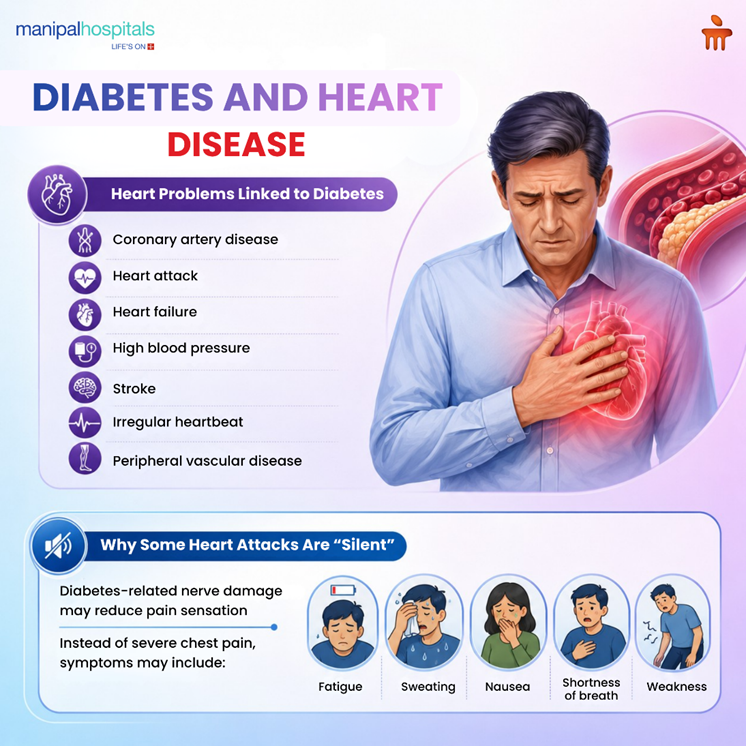
People with diabetes and heart disease often also have high blood pressure and unhealthy cholesterol levels, which can further affect cardiovascular health. Diabetes can slowly damage the heart and blood vessels, even before noticeable symptoms appear. High blood sugar affects the inner lining of arteries, leading to reduced blood flow and increased strain on the heart over time.
This may increase the risk of:
-
Coronary artery disease
-
Heart failure
-
Stroke
-
Irregular heartbeat
-
Peripheral vascular disease
People with diabetes can sometimes have silent heart attacks, where the symptoms are mild or different from typical heart attack signs. Instead of severe chest pain, a person may experience sweating, nausea, weakness, or shortness of breath. In some cases, diabetes-related nerve damage can make it harder to recognise heart-related pain, delaying emergency treatment. This is why diabetes and heart disease are closely linked and why regular health check-ups are important even when a person feels healthy.
What Are the Main Causes of Diabetes & Heart Disease?
It’s very important to be aware of the main reasons for diabetes and heart disease, as it can help individuals reduce preventable risk factors before serious complications appear. Several lifestyle habits and medical conditions contribute to both disorders simultaneously:
|
Risk Factor |
Impact on Diabetes |
mpact on Heart Health |
|
Obesity |
Increases insulin resistance |
Puts extra strain on the heart |
|
Smoking |
Reduces glucose control |
Damages arteries |
|
Physical inactivity |
Worsens metabolism |
Reduces cardiovascular fitness and circulation |
|
High cholesterol |
Alters fat metabolism |
Causes plaque buildup |
|
Hypertension |
Complicates blood sugar control |
Increases heart strain |
|
Poor dietary habits |
Elevates glucose levels |
Raises cardiovascular risk |
|
Chronic stress |
Raises stress hormone levels |
Contributes to hypertension |
Another point to take into account is the history of the family. People with diabetes and a family history of heart conditions are more likely to develop them. Ageing, insomnia, alcohol intake and poor stress management are factors that could adversely affect the link between diabetes and heart diseases.
Warning Signs That Should Never Be Ignored
Cardiac emergencies linked to diabetes can progress rapidly. Recognising symptoms early may prevent life-threatening complications.
Seek urgent medical help if any of the following symptoms occur:
-
Chest pressure or heaviness
-
Pain radiating to the back, jaw, or arm
-
Severe unexplained fatigue
-
Sudden shortness of breath
-
Dizziness or fainting
-
Sweating without physical exertion
-
Rapid heartbeat
-
Swelling in the feet or ankles
Many emergency admissions involving diabetes and heart disease occur because patients delay evaluation, assuming the symptoms are temporary or harmless. People with long-standing diabetes should remain particularly alert because cardiovascular symptoms may not always follow classic patterns.
How Do Blood Sugar Changes Affect the Heart?
Both extremely high and extremely low blood sugar levels can create dangerous cardiovascular situations. High glucose leads to increased inflammation and increased risk of blood clots, which, in the long run, might lead to blocked arteries and heart attacks.
On the other hand, low glucose levels, also called hypoglycaemia, might affect the cardiovascular system as well. Hypoglycaemic patients might have irregular heartbeats, feel disoriented, have shakes, or even faint.
While diagnosing diabetes and heart disease, physicians will often consider:
-
HbA1c levels
-
Blood pressure
-
Kidney function
-
Cholesterol profile
-
Weight and waist circumference
-
ECG findings
Regular health assessments allow doctors to detect early cardiovascular damage before emergency intervention becomes necessary.
Living with Diabetes and Heart Disease
Patients often worry about life expectancy with heart disease and diabetes after receiving a diagnosis. The answer depends on several factors, including disease severity, treatment adherence, and lifestyle choices.
Poorly controlled diabetes combined with cardiovascular disease may reduce overall survival because of complications such as stroke, kidney failure, and repeated heart attacks. However, many individuals continue to live productive lives for years when they manage their conditions properly.
Several factors influence life expectancy with heart disease and diabetes:
-
Blood sugar control
-
Regular exercise
-
Healthy body weight
-
Smoking cessation
-
Timely cardiac treatment
-
Controlled cholesterol levels
Emergency Complications Linked to Diabetes and Heart Disease
Diabetes and heart disease together can increase the risk of serious medical emergencies.
-
Heart Attack: Diabetes can damage arteries and increase plaque buildup, raising the risk of blocked blood flow to the heart.
-
Heart Failure: Over time, the heart may weaken and struggle to pump blood properly, causing fatigue and breathlessness.
-
Stroke: Damaged blood vessels can increase the risk of blood clots and an interrupted blood supply to the brain.
-
Sudden Cardiac Arrest: Diabetes may increase the risk of heart rhythm disturbances and severe heart disease, which in rare situations may contribute to sudden cardiac arrest.
-
Diabetic Ketoacidosis (DKA): Severe insulin deficiency can trigger diabetic ketoacidosis, placing extra stress on the cardiovascular system.
If you have diabetes along with heart-related symptoms or risk factors, consult an experienced cardiology doctor in Whitefield, Bangalore for timely diagnosis, preventive care, and specialised treatment.
Preventing Heart Disease in Diabetic Individuals
Although the risks are significant, preventive care can greatly reduce complications associated with diabetes and heart conditions.
-
Maintain Healthy Blood Sugar Levels: Consistent glucose control lowers inflammation and protects blood vessels from long-term damage.
-
Follow a Balanced Diet: Eating vegetables, fruits, fibre, lean protein, and healthy fats supports heart health and blood sugar management.
-
Exercise Regularly: Walking, cycling, and moderate physical activity improve circulation and insulin sensitivity.
-
Stop Smoking: Smoking damages arteries and increases cardiovascular risk.
-
Attend Regular Health Check-Ups: Routine screenings help detect complications early.
Preventive measures are especially important because early intervention can help avoid many emergencies involving diabetes and heart disease.
Conclusion
You should never ignore the link between diabetes and heart disease because both conditions can quietly progress for years before causing serious emergencies. Knowledge about the impact of diabetes on the heart will enable patients to detect signs early and obtain appropriate treatment. Appropriate lifestyle modifications, blood sugar regulation, periodic testing, and seeking medical help when there is any suspicion of heart-related issues can greatly reduce future problems.
For an integrated approach to diabetic management and heart check-ups, visit Manipal Hospital Whitefield, Bangalore.
FAQ's
Yes. Diabetes damages blood vessels, speeding up the buildup of plaque inside arteries, increasing the long-term risk of heart attacks, poor circulation, and other cardiovascular emergencies.
Diabetes can damage the nerves that allow you to feel pain. Some people experience mild symptoms like sweating, fatigue, or breathlessness instead of severe chest pain.
Diabetes can damage the nerves that allow you to feel pain. Some people experience mild symptoms like sweating, fatigue, or breathlessness instead of severe chest pain.
Yes. Better blood sugar control may reduce inflammation, protect blood vessels, and lower the risk of heart-related complications over time.
Fresh vegetables, fruits, whole grains, lean proteins, nuts, and healthy fats support heart health and blood sugar control and lessen the load on the cardiovascular system and bad cholesterol buildup.
Yes. It helps in better blood circulation, helps in maintaining weight, increases insulin sensitivity, and reduces the risks of heart diseases.
Share this article on: