7 Min Read
Back pain often makes itself felt as soon as you try to sleep. After a long day, you lie down hoping rest will ease the ache, but as soon as you settle, the pain in the lower back can feel louder. Nights can become restless—turning from side to side, shifting pillows, or waking up stiff and sore the next morning.
Understanding the right sleeping posture for lower back pain can make a real difference. With a few thoughtful tweaks, from pillow placement to mattress choice, you can reduce strain and let the spine rest in a more natural position.
This blog explains the science behind sleep posture and lower back health, shows the best sleeping position for back pain, and offers practical advice on how to sleep with back pain comfortably through the night.
Synopsis
- Why Sleep Posture Matters for Lower Back Health
- Best Sleeping Positions for Lower Back Pain
- Sleeping Positions That Can Worsen Lower Back Pain
- Practical Adjustments That Improve Night-Time Back Support
- Mattress and Pillow Considerations for Lower Back Support
- When Night-Time Back Pain Signals an Underlying Issue
- Conclusion
Why Sleep Posture Matters for Lower Back Health
During the day, your spine adapts to movement and activity. At night, the body shifts into recovery mode. Muscles relax, spinal discs rehydrate, and the nervous system slows down. If the body is poorly aligned during sleep, recovery is less effective.
The lower back, or lumbar spine, normally curves inward. When a sleeping position flattens that curve too much or bends it sharply, the surrounding muscles must work to stabilise the area. Over hours, this tension creates morning stiffness or lingering discomfort.
Keeping a neutral spine is essential. A supportive sleeping position for back pain lines up the head, shoulders, hips, and pelvis. That reduces pressure on joints, prevents muscle strain, and helps you wake up feeling less restricted.
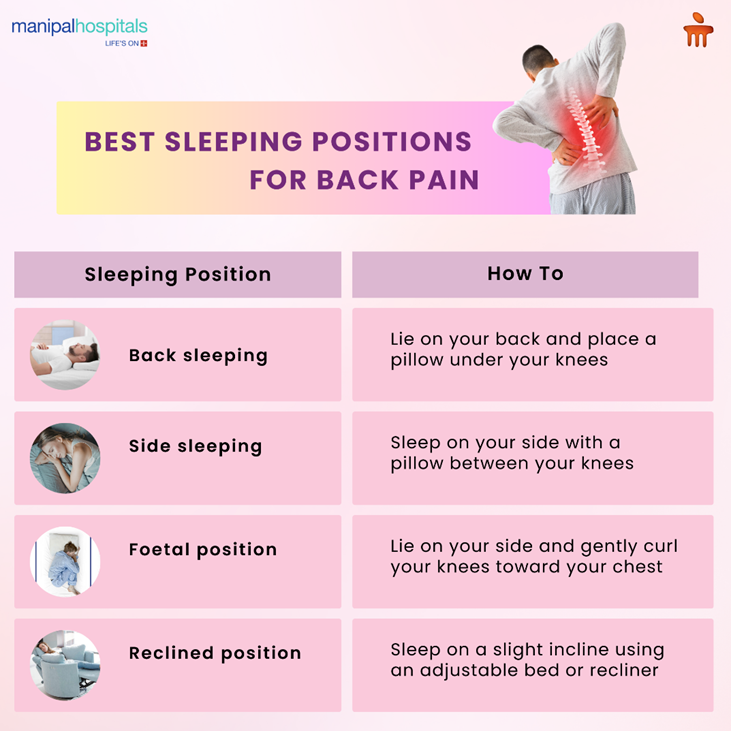
Best Sleeping Positions for Lower Back Pain
Not every posture supports the spine equally. Some keep the body aligned naturally, while others add strain. The right sleeping positions for lower back pain spread weight evenly and honour the spine’s curves.
-
Sleeping on the Back with Knee Support
Sleeping on one's back is often the most balanced posture for spinal alignment. Placing a small pillow or a rolled towel under the knees helps preserve the natural curve of the lower back. This stops the lumbar spine from flattening fully against the mattress. With proper head and neck support, this position spreads body weight evenly across the back. Many physiotherapists favour this as a reliable best sleeping position for back pain, especially for people who wake up stiff.
-
Side Sleeping with a Pillow Between the Knees
Side sleeping is another good option, especially when done with supportive props. A pillow between the knees prevents the top leg from pulling the pelvis forward. Without that support, the lower spine can twist during the night. The knee pillow keeps the hips aligned and reduces pressure on the lumbar area. For those who naturally sleep on their side, this position is often the most comfortable of the sleeping positions for lower back pain.
-
Foetal Position for Spinal Decompression
Gently curling into a foetal position can relieve pressure on spinal discs. Drawing the knees slightly toward the chest opens the spaces between the vertebrae. This may ease tension caused by disc irritation or nerve compression. The trick is to keep the posture relaxed rather than tightly curled.
-
Reclined Sleeping Position
Some people find relief by sleeping slightly reclined, using an adjustable bed or a supportive recliner. A gentle incline shifts weight away from the lower spine and lowers pressure on spinal joints. Clinicians sometimes recommend this position for conditions like spinal stenosis.
Sleeping Positions That Can Worsen Lower Back Pain
Just as some positions protect the spine, others add unnecessary strain. Many people fall into these habits without realising the impact.
Common positions that aggravate back pain include:
-
Sleeping on the stomach forces the neck to twist and flattens the natural spinal curve.
-
Twisted side positions: when one leg is extended and the other bent forward, creating pelvic rotation.
-
Sleeping without pillow support leads to uneven spinal alignment.
-
Staying tightly curled for long periods can increase lower back muscle tension.
Avoiding these postures can improve your overall sleeping posture for lower back pain.
Practical Adjustments That Improve Night-Time Back Support
Finding the right position is only part of the solution. Small changes in your sleep environment can make a noticeable difference.
Consider the following practical changes:
-
Choose the right pillow height so the neck stays aligned with the spine.
-
Use knee or leg pillows to keep the pelvis level.
-
Keep the mattress supportive but not overly firm.
-
Avoid very thick pillows that push the head forward.
-
Aim for a consistent sleep posture when possible.
These simple strategies support a stable sleeping position for back pain, allowing muscles and joints to rest properly.
Mattress and Pillow Considerations for Lower Back Support
Sleep surfaces play a larger role in spinal health than many people realise. An unsuitable mattress or pillow can undo the benefits of even the best sleeping position for back pain. Below is a comparison of sleep support features and how they influence spinal comfort.
|
Sleep Support Factor |
Recommended Characteristics |
Why It Matters for Back Health |
|
Mattress firmness |
Medium to medium-firm |
Supports spinal curves without excessive sinking |
|
Mattress material |
Memory foam or hybrid designs |
Adapts to body contours while distributing weight |
|
Pillow height |
Neutral height based on sleeping position |
Keeps neck aligned with spine |
|
Lumbar support |
Slight contouring in the mattress or pillow |
Prevents collapse of the lower back curve |
|
Edge support |
Reinforced mattress edges |
Maintains posture when shifting positions |
|
Breathable materials |
Temperature-regulating fabrics |
Prevents night-time restlessness from overheating |
|
Pillow shape |
Contoured or ergonomic |
Helps maintain cervical spine alignment |
|
Mattress lifespan |
Replacement every 7-10 years |
Prevents sagging that disrupts spinal support |
Choosing supportive sleep surfaces can significantly influence long-term sleeping positions for lower back pain and improve sleep quality overall.
When Night-Time Back Pain Signals an Underlying Issue
Occasional discomfort after physical exertion is common. But persistent pain that regularly wakes you up needs medical attention.
Lower back pain that worsens at night may point to structural problems such as disc herniation, joint inflammation, or nerve irritation. In those cases, posture adjustments alone may not solve the problem. Seek professional evaluation if you notice:
-
Pain radiating down the legs.
-
Persistent numbness or tingling.
-
Back stiffness that lasts for hours after waking.
-
Pain that limits daily movement.
-
Night pain with unexplained weight loss or fever.
A clinician in whitefield may recommend physiotherapy, posture-correcting exercises, or imaging tests to find the cause. Identifying the root problem helps decide the safest way to sleep with back pain while protecting spinal health.
Conclusion
Quality sleep supports recovery, especially when the body is already dealing with discomfort. Poor alignment can quietly worsen lower back pain night after night, while a supportive sleeping position for back pain allows the spine to rest and heal. Small changes, such as placing a pillow under the knees, using leg support while side sleeping, or adjusting mattress firmness, can significantly reduce lumbar strain. These tweaks encourage healthier sleeping positions for lower back pain and make it easier to rest without waking stiff or sore. If nighttime discomfort continues despite improving your sleeping posture for lower back pain, seek medical advice at Manipal Hospital Whitefield.
FAQ's
Yes. Repeatedly sleeping in positions that strain the spine can contribute to muscle imbalance and joint irritation over time. Months or years of poor alignment may worsen existing conditions or trigger chronic discomfort. Keeping the spine aligned during sleep reduces unnecessary pressure on the lumbar area and helps prevent cumulative damage.
The body needs several nights to adapt to a new sleep posture. Some people notice improvement within a week, especially if they use correct pillow support. If the pain stems from structural issues such as disc degeneration, posture changes may ease symptoms but not remove the underlying cause.
Rarely. The neck needs gentle elevation to stay aligned with the rest of the spine. Without proper support, the cervical spine can tilt and affect alignment down the back. A suitable pillow is usually helpful.
Gentle stretching before sleep can relax tight muscles around the spine and hips. Movements that release tension in the hamstrings, hip flexors, and lower back often help. Keep stretches gentle and controlled rather than forceful.
Body weight influences how pressure is distributed across the spine during sleep. People with higher body weight may compress the mattress more deeply, which can affect alignment. Choosing supportive mattresses and correct pillow placement helps preserve a healthier posture overnight.
Share this article on: