9 Min Read
We all experience headaches at some point in time but often brush them off, thinking they're normal. But if you also have high blood pressure, it’s natural to wonder, could the two be connected?
Headaches can sometimes occur when blood pressure becomes very high, but most people with hypertension do not experience symptoms. For example, some patients notice a dull headache early in the morning and assume it’s due to poor sleep, only to later find their blood pressure is elevated.
In this blog, Dr. Kumar Kenchappa, experienced cardiologists in Hebbal, Bangalore explains how to manage your symptoms and protect your long-term health by learning what a hypertension headache is, what causes it, and how to treat it.
Synopsis
- What Is a Hypertension Headache?
- What Causes Hypertension Headaches?
- Signs of a Hypertension Headache
- When Is a Hypertension Headache Dangerous?
- How to Reduce Hypertension Headaches
- How to Treat Hypertension Headache
- Hypertension vs Other Headaches
- Interesting Facts About Hypertension Headaches
- When Should You See a Doctor?
- Conclusion
What Is a Hypertension Headache?
Let's start with a question that a lot of people have: What is a hypertension headache? It is a type of headache that happens when blood pressure rises a lot above normal levels.
Key features:
-
Often occurs with severe high blood pressure
-
Usually felt at the back of the head
-
Could feel like it's throbbing or pulsing
-
It can get worse when you wake up
Understanding this can help you decide when it’s serious and can help you tell it apart from other types of headaches, like migraines or tension headaches.
What Causes Hypertension Headaches?
Hypertension headaches are usually linked to a significant rise in blood pressure, especially when it is not well controlled. Some common causes include:
-
Very high blood pressure (hypertensive crisis)
-
Sudden spikes in blood pressure
-
Stress and anxiety
-
Missing or not taking prescribed medications regularly
-
Excess salt intake
-
Certain medicines, such as ibuprofen or naproxen (NSAIDs)
In most cases, these headaches occur when blood pressure remains uncontrolled over time.
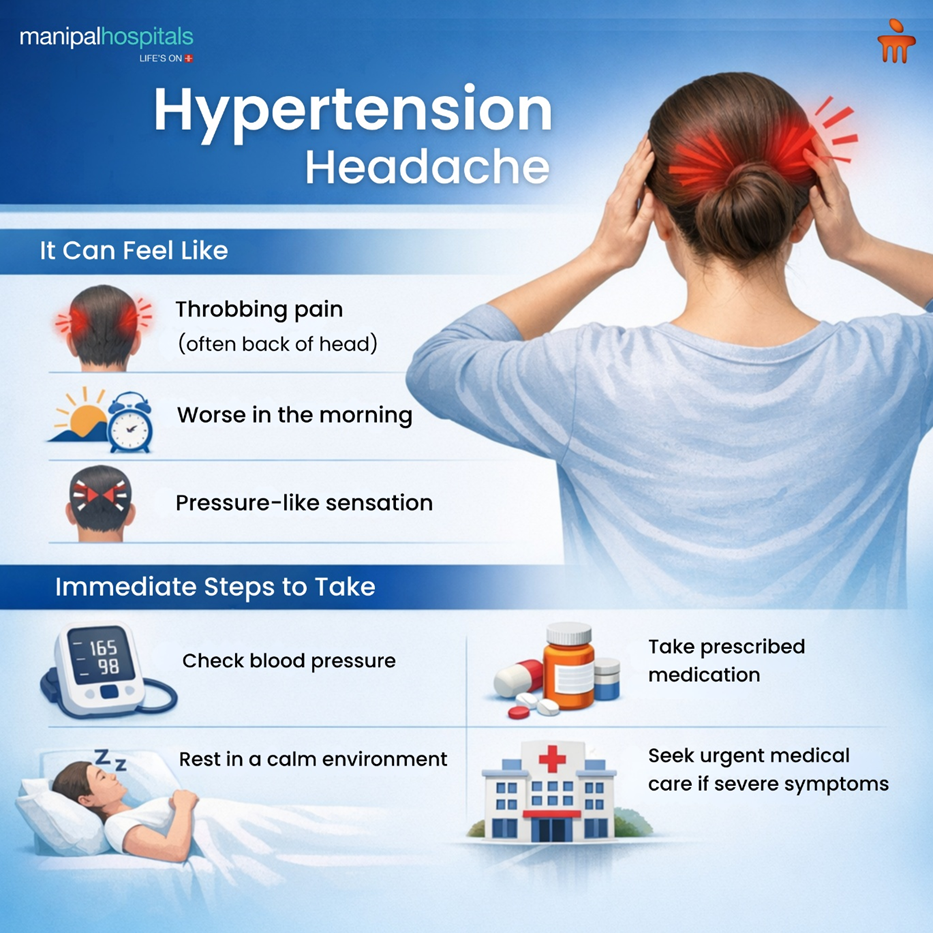
Signs of a Hypertension Headache
Knowing the signs early can help you understand the headache type and when to get help.
Common symptoms:
-
Persistent or throbbing headache
-
Pressure-like pain
-
Feeling dizzy
-
Blurred vision
-
Abdomen pain
-
Nausea or vomiting
-
Heart palpitations
Warning signs of severe cases:
-
Shortness of breath
-
Headache with confusion
-
Severe headache with vision loss
These signs could mean that your headache is severe and needs to be treated right away.
When Is a Hypertension Headache Dangerous?
When a headache from high blood pressure (usually above 180/120 mmHg) happens, it becomes dangerous.
Seek emergency care if:
-
The headache comes on suddenly and feels extremely intense
-
You experience sudden vision loss or severe blurring
-
There is trouble speaking or understanding words
-
One side of the body feels weak, numb, or difficult to move
-
You feel confused, disoriented, or unusually drowsy
This may be a warning sign of a serious condition, which needs immediate treatment for a hypertensive headache.
How to Reduce Hypertension Headaches
One of the most common questions people with high blood pressure ask is how to get rid of headaches.
Immediate relief tips:
-
Rest in a quiet, dark room
-
Stay hydrated
-
Take prescribed medications
-
Avoid stress triggers
Long-term relief plans:
-
Control blood pressure consistently
-
Follow a low-salt diet
-
Exercise regularly
-
Maintain a healthy weight
-
Avoid smoking and alcohol
These steps can help provide quick relief during an episode caused by high blood pressure, which is important to keep them from coming back.
How to Treat Hypertension Headache
Managing blood pressure is the main goal of treating these types of headaches.
Medical hypertension headache treatment options:
-
Antihypertensive medications
-
Diuretics
-
Calcium channel blockers
-
ACE inhibitors
Supportive care:
-
Pain relief (only under medical advice)
-
Stress management techniques
-
Regular monitoring
Do NOT self-medicate with painkillers repeatedly without checking blood pressure. A good treatment for hypertension headaches gets to the bottom of the problem instead of just treating the symptoms.
Hypertension vs Other Headaches
Here’s a simple comparison to help you tell the difference between hypertension and other headaches.
|
Feature |
Hypertension Headache |
Migraine |
Tension Headache |
|
Cause |
High blood pressure |
Neurological |
Muscle tension |
|
Pain type |
Throbbing |
Pulsating |
Dull |
|
Location |
Back of the head |
One side |
Forehead |
|
Severity |
Moderate–severe |
Severe |
Mild–moderate |
This comparison helps patients understand what a headache from high blood pressure is.
Interesting Facts About Hypertension Headaches
-
Not all high blood pressure causes headaches
-
Headaches usually occur in severe cases
-
Controlling BP reduces headache frequency
-
Lifestyle changes can significantly help
These facts show how important it is to know how to stop headaches caused by high blood pressure.
When Should You See a Doctor?
If your headaches are happening often or feel different from usual, it’s better not to ignore them. You should consider seeing a doctor if:
-
Headaches become frequent or more intense over time
-
Blood pressure remains high despite medication
-
Symptoms like dizziness, blurred vision, or chest discomfort appear
-
The headache feels sudden and severe
-
Medication is not providing relief
-
You notice changes in speech, weakness, or confusion
Getting checked early can help prevent complications and ensure the right treatment.
Conclusion
A headache from high blood pressure can be a sign that your blood pressure isn't under control. You can better manage your symptoms if you know what a hypertension headache is, what causes it, and how to treat it. Making changes to your lifestyle, taking medication, and keeping an eye on your blood pressure can all help you get rid of these headaches, with access to specialised cardiology care at Manipal Hospitals, Hebbal, supporting effective heart health management.
Consult our experienced Cardiologists at Manipal Hospital Hebbal, to receive timely care that helps manage symptoms for hypertension and headaches and prevents a serious problem. With the right treatment and a few lifestyle changes, most people can control their blood pressure, and those headaches become far less frequent.
FAQ's
A hypertensive headache happens when your blood pressure rises a lot, causing a throbbing pain at the back of your head. Learning the warning signs can help you decide when to see a doctor.
No. Caffeine can help with tension headaches, but it is a stimulant and can temporarily raise your blood pressure, which may make a hypertensive headache worse.
Resting, staying hydrated, and taking your prescribed medicine can help relieve headaches caused by high blood pressure. Making healthy lifestyle changes and exercising regularly also provides long-term benefits.
Yes. Morning headaches may also be linked to sleep disorders like sleep apnea, which spikes blood pressure. Proper treatment for snoring or apnea can relieve these headaches.
If you have very high blood pressure, headaches from high blood pressure can be dangerous. They could mean a hypertensive crisis, which needs immediate medical attention to avoid problems like stroke or heart damage.
Share this article on: