7 Min Read
Coronary artery disease occurs due to the formation of plaque inside the arteries that deliver blood to the heart. Over time, such plaques narrow these passages and restrict proper blood circulation to the organ, resulting in insufficient oxygen levels. It may manifest as angina, fatigue, chest pain, or even a heart attack. With recent advances in the field of cardiology, numerous procedures can be performed without the need for open-heart surgery and enable quick patient recovery.
One such effective method for treating blocked coronary arteries includes balloon angioplasty. A minimally invasive procedure, this treatment often eases patients' minds and gives them a greater sense of confidence during the procedure and throughout the healing and recovery phases.
In this blog, a leading interventional cardiologist at Hebbal, Bangalore, explains what balloon angioplasty is, when it should be used, how cardiac specialists perform the procedure, the recovery process associated with balloon angioplasty, and the necessary precautions to be taken.
Synopsis
- What Is Balloon Angioplasty?
- When Is Balloon Angioplasty Recommended?
- Understanding the Balloon Angioplasty Procedure
- Benefits Beyond Opening a Blocked Artery
- Factors Affecting Treatment Selection
- What to expect during the recovery process?
- Changes in Your Lifestyle to Protect The Arteries
- Risks Associated with This Medical Procedure
- Conclusion
What Is Balloon Angioplasty?
Once an artery is restricted by plaque build-up, there is little room left for free flow of blood through it. With the progression of the condition, heart performance may be affected, and the patient may develop some symptoms both during physical exercise and when resting.
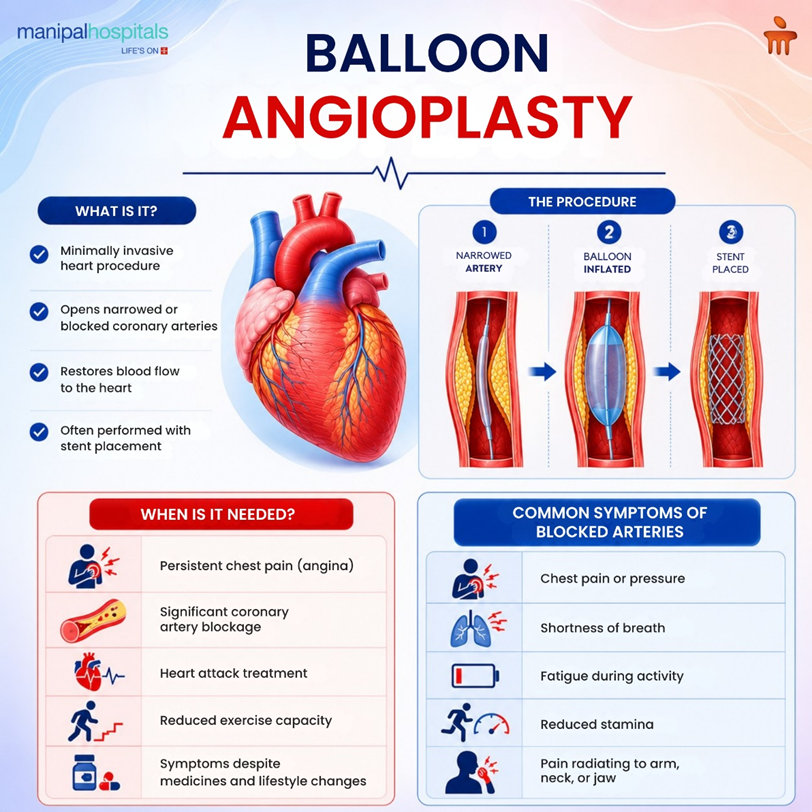
A balloon angioplasty procedure aims at expanding the blocked or narrowed artery. For this purpose, doctors use a special inflatable balloon which is attached to the catheter. It is inserted into a vein or an artery and moved down until it reaches the narrowed artery. Then it inflates for several minutes, pushing the plaque away from the wall of the artery.
Very often the implantation of a stent takes place during the angioplasty. The tiny mesh-like tube will help the artery remain expanded and will reduce chances of further narrowing.
When Is Balloon Angioplasty Recommended?
This is not a necessary procedure as soon as a blockage is detected. To recommend it to a patient, the doctor will consider the severity of narrowing and its influence on heart performance, as well as the development of symptoms.
Angioplasty is usually performed:
-
For persistent chest pain due to insufficient blood flow to the heart;
-
In case of considerable narrowing revealed with coronary angiography;
-
In cases of heart attacks in which it becomes necessary to restore circulation
-
Lessened ability to exercise associated with coronary artery disease
-
The blockages not responding sufficiently to drug therapy and changes in lifestyle
The objective should be not only to alleviate the condition but also to improve blood flow to the heart muscles. Consult the best heart doctors in Hebbal for expert evaluation and personalised treatment recommendations.
Understanding the Balloon Angioplasty Procedure
Hearing that you need a heart procedure can feel intimidating. Knowing the steps involved often makes the experience far less overwhelming. The balloon angioplasty procedure is usually performed in a specialised cardiac catheterisation laboratory.
Before the Procedure
Before treatment, you may undergo:
-
Blood tests
-
Electrocardiogram (ECG)
-
Echocardiogram
-
Coronary angiography
-
Medication review
You are typically asked to avoid eating or drinking for several hours before the procedure.
During the Procedure
The procedure usually involves the following steps:
-
Local anaesthesia is administered to the arm or groin.
-
A catheter is inserted into a blood vessel.
-
Using X-rays, the catheter is guided through the artery to the affected area.
-
A balloon is then passed through the catheter to the narrowed area.
-
The balloon is inflated for a few seconds.
-
The balloon and catheter are withdrawn when there is improved blood flow.
Most procedures take between 30 minutes and two hours, depending on the complexity of the blockage.
Benefits Beyond Opening a Blocked Artery
Many people focus only on the immediate goal of improving blood flow. But the benefits often extend well beyond this.
Effective therapy can assist in:
-
Reducing instances of chest pain
-
Increasing physical endurance
-
Improving general well-being
-
Reducing chances of subsequent heart injury
-
Allowing for quicker recovery time when compared to traditional surgery
-
Minimising time spent in the hospital
Many patients experience marked improvements in symptoms just days after the procedure.
Factors Affecting Treatment Selection
Determining the optimal treatment depends on an extensive evaluation. Blockages act differently from one another, and several things affect the decision of the cardiologist.
Coronary Blockage Characteristics and Treatment Approach
|
Clinical Factor |
Why It Matters |
|
Location of blockage |
Some artery locations are easier to treat with catheter-based procedures than others |
|
Number of affected arteries |
Single-vessel disease may require a different strategy than multiple blocked arteries |
|
Length of narrowing |
Longer segments may need additional stents or alternative treatment planning |
|
Degree of calcium build-up |
Heavy calcification can make artery expansion more challenging |
|
Previous heart procedures |
Earlier stents or bypass surgery may influence future treatment choices |
|
Heart-pumping function |
Reduced heart function may require additional precautions during treatment |
|
Presence of diabetes |
Diabetes can affect long-term outcomes and treatment planning |
These factors contribute to the development of a treatment program that suits your particular case and not one that is the same for everybody else.
What to expect during the recovery process?
Balloon angioplasty recovery time is typically much faster than most people think. It is usually advisable for patients to walk about after several hours from the procedure.
There will likely be some soreness and bruising at the catheter insertion point in the initial days. You may experience tiredness as your body adapts to the procedure.
To help you recover, please follow these steps:
-
Take medication as prescribed
-
Drink plenty of fluids, as recommended by your doctor
-
Do not lift any heavy objects for a few days
-
Make sure you visit all appointments
-
Be alert for unusual swelling and bleeding at the insertion point
-
Engage in physical activities gradually and according to instructions
While recovery timelines vary from person to person, most individuals return to the workplace and their normal lives in less than a week.
Changes in Your Lifestyle to Protect The Arteries
The treatment may improve blood circulation; however, it cannot change the predisposition of the body to form plaques in your arteries. The long-term outcome will largely depend on your habits and behavior.
They include:
-
Eating right
-
Maintaining proper cholesterol levels
-
Keeping your blood pressure under control
-
Effectively controlling diabetes
-
Quitting smoking
-
Being physically active
-
Having a healthy body weight
Cardiac rehabilitation programmes may be beneficial in providing you the necessary support during recovery and as prevention.
Risks Associated with This Medical Procedure
As is the case with all medical procedures, there is always a certain risk involved. Although the risks of developing complications are low, they still exist.
Possible complications include:
-
Bleeding from the catheter insertion point
-
Injury of a blood vessel
-
Reaction to contrast dye
-
Development of blood clots
-
Atrial fibrillation
-
Artery reclosure
-
In rare cases, heart attack or stroke
Your medical team monitors you constantly during the treatment process to identify any complications and address them right away.
Conclusion
Modern cardiac care has transformed the treatment of coronary artery disease, allowing many people to regain their quality of life without major surgery. Balloon angioplasty remains one of the most effective methods for restoring blood flow in selected patients and can provide significant relief from symptoms when combined with ongoing heart-healthy habits.
If your doctor has recommended a balloon angioplasty procedure, understanding the treatment process can help you feel more informed and prepared. For expert cardiac evaluation and advanced treatment options, including balloon angioplasty in Hebbal, consult our experienced cardiology expert at Manipal Hospital Hebbal.
FAQ's
Yes. Some individuals may develop new blockages in different arteries years later or occasionally experience narrowing in a previously treated area. If appropriate, repeat treatment may be considered after careful evaluation.
Most people remain awake throughout treatment. Local anaesthesia is used to numb the insertion site, and mild sedatives may be given to help you stay relaxed while still being able to communicate with the medical team.
Many patients can travel within a short period after treatment, particularly if recovery is uncomplicated. However, you should always discuss your travel plans with your cardiologist, especially after treatment for a recent heart attack.
Modern coronary stents do not typically trigger airport metal detectors. They are made from materials designed for medical use and generally do not interfere with security screening systems.
Cardiac rehabilitation is strongly encouraged for many people because it combines supervised exercise, nutritional guidance, risk-factor management, and education. Participation often improves long-term heart health and reduces future cardiovascular risks.
Share this article on: