7 Min Read
Kidney pain can be unsettling, especially when it appears suddenly or becomes intense enough to interfere with daily activities. Unlike general back discomfort, pain arising from the kidneys often signals an underlying problem that needs attention, ranging from infections and kidney stones to urinary tract blockages and other medical conditions. Understanding the cause is important because the right approach to relief depends on what is triggering the pain.
While some episodes improve with simple supportive measures, others require prompt medical evaluation to prevent complications. Knowing which remedies are genuinely helpful and which practices may worsen the situation can make a significant difference in both comfort and recovery.
Through this blog, we explain common causes of kidney pain, practical ways to ease discomfort safely, warning signs that should never be ignored, treatment options, and habits that support long-term kidney health.
Synopsis
Understanding What Kidney Pain Feels Like
Before focusing on relief, it helps to recognise how kidney pain typically presents. The kidneys are located towards the back of the upper abdomen, just below the rib cage on either side of the spine. Common kidney pain symptoms include:
-
A deep, aching discomfort in the side or lower back
-
Pain that may spread towards the abdomen, groin, or genital area
-
Fever and chills when an infection is present
-
Burning during urination
-
Blood in the urine
-
Frequent or urgent urination
-
Nausea and vomiting
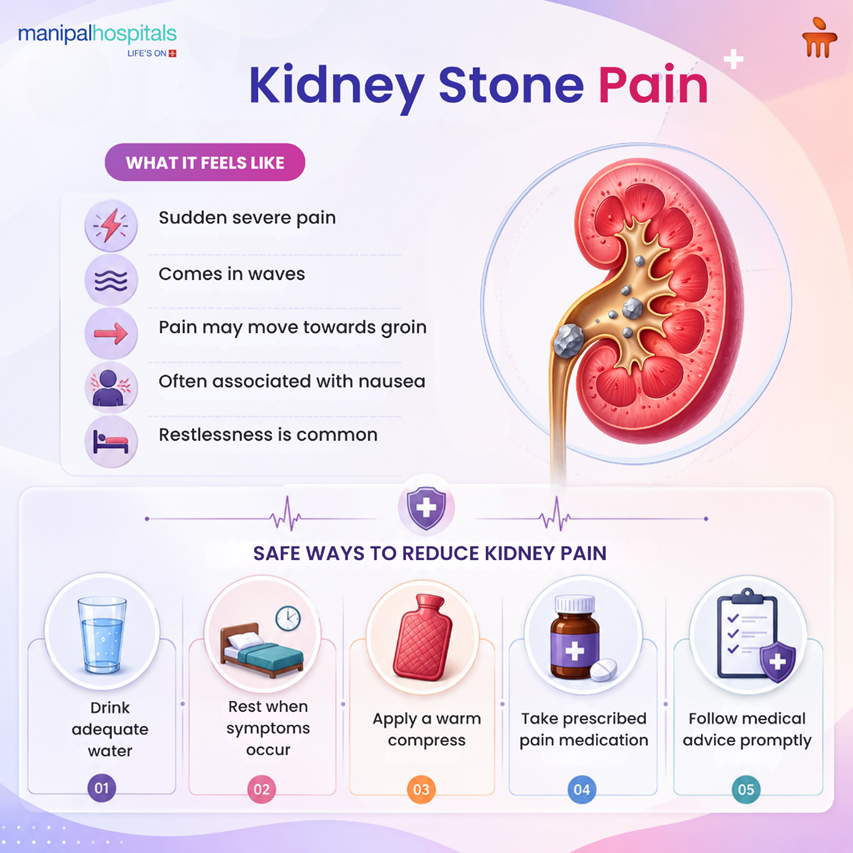
The nature of the pain often provides clues about the underlying cause. For example, kidney stones frequently cause sharp waves of severe pain, while infections tend to produce a more constant ache accompanied by systemic symptoms such as fever.
Common Causes of Kidney Pain
Pain originating from the kidneys is not a disease itself. It is usually a symptom of another condition affecting the urinary system.
Some of the most common causes include:
-
Kidney Stones: Hard mineral deposits can develop inside the kidneys and may cause significant discomfort when moving through the urinary tract. The pain often comes in intense episodes and can be accompanied by urinary symptoms.
-
Kidney Infections: A kidney infection occurs when bacteria travel from the lower urinary tract into the kidneys. Without timely treatment, the infection can damage kidney tissue and spread to the bloodstream.
-
Urinary Tract Obstruction: Blockages caused by enlarged prostate glands, strictures, tumours, or stones can prevent urine from flowing normally, leading to pressure and pain within the kidney.
-
Kidney Cysts and Structural Disorders: Certain people develop fluid-filled cysts or congenital abnormalities that alter kidney function and occasionally result in discomfort.
Safe Ways to Ease Kidney Pain
Finding relief starts with addressing the source of the problem rather than simply masking symptoms. Several measures may help reduce discomfort while you seek appropriate medical care.
-
Stay Adequately Hydrated: Proper hydration helps maintain urine flow and may assist the passage of small stones. Drinking water throughout the day is generally beneficial, but you should avoid excessive fluid intake unless your doctor advises otherwise.
-
Use Heat Carefully: A warm compress or heating pad applied to the affected area can help relax nearby muscles and reduce the sensation of pain. The heat should be warm, not too hot, to avoid skin injury.
-
Rest and Avoid Strenuous Activity: Physical exertion can sometimes intensify discomfort, particularly when a stone is moving through the urinary tract. Gentle rest allows the body to recover without placing additional stress on the kidneys.
-
Take Prescribed Pain Medication: If discomfort is significant, your healthcare provider may recommend specific pain-relieving medications. Always follow professional advice regarding dosage and duration.
For people seeking answers on how to reduce kidney pain, it is important to remember that symptom relief alone is not enough. Identifying and treating the underlying cause remains essential.
What Should You Avoid?
Many people try home remedies before seeking medical guidance. Unfortunately, some approaches can delay treatment or worsen the condition.
Avoid the following:
-
Ignoring persistent or worsening pain
-
Self-prescribing antibiotics
-
Using herbal supplements without medical approval
-
Taking excessive doses of over-the-counter painkillers
-
Restricting fluids unnecessarily
-
Delaying medical evaluation because symptoms temporarily improve
These mistakes can increase the risk of complications and make future treatment more difficult.
Kidney Stone Pain: Practical Measures That May Help
Kidney stones are among the most common causes of severe kidney discomfort. Although treatment depends on the stone's size and location, certain supportive strategies may improve comfort.
For temporary kidney stone pain relief, doctors may recommend:
-
Maintaining steady hydration
-
Walking gently if tolerated
-
Using prescribed medications that help relax the urinary tract
-
Following dietary recommendations based on stone type
-
Monitoring urine output and symptoms
Larger stones often require medical procedures, so severe or recurring pain should never be managed solely at home.
When Kidney Pain Requires Urgent Medical Attention
Not every episode of discomfort is an emergency, but certain symptoms require immediate evaluation.
Seek urgent medical care if you experience:
-
Severe pain that develops suddenly
-
High fever with chills
-
Inability to pass urine
-
Persistent vomiting
-
Significant blood in the urine
-
Confusion or extreme weakness
-
Pain during pregnancy
Prompt treatment can prevent kidney damage and reduce the risk of serious complications.
A Helpful Guide to Kidney-Friendly Daily Habits
Everyday choices influence long-term kidney health. The following habits may lower the risk of future kidney-related problems.
|
Daily Habit |
Why It Matters |
|
Maintain healthy blood pressure |
High blood pressure can gradually damage kidney blood vessels |
|
Limit excess salt intake |
Helps reduce fluid retention and kidney strain |
|
Stay physically active |
Supports circulation and metabolic health |
|
Manage blood sugar levels |
Reduces the risk of diabetic kidney disease |
|
Avoid smoking |
Improves blood flow to the kidneys |
|
Attend routine health checks |
Allows early detection of kidney-related issues |
|
Maintain a healthy weight |
Lowers the likelihood of several kidney disorders |
|
Review medications regularly |
Certain medicines may affect kidney function over time |
These preventive measures are often overlooked, yet they play a valuable role in preserving kidney function throughout life.
Conclusion
Experiencing kidney pain can be distressing, but understanding the possible causes and taking the right steps can help you respond with confidence. Safe measures such as hydration, rest, appropriate pain management, and timely medical evaluation can provide relief while addressing the underlying problem. At the same time, avoiding self-medication and delaying treatment is equally important.
If your symptoms persist, worsen, or are accompanied by warning signs, professional assessment should not be postponed. For expert evaluation and advanced kidney pain treatment in Hebbal, Bangalore, consult the urology specialists at Manipal Hospital Hebbal. Early diagnosis often leads to faster recovery, better symptom control, and improved long-term kidney health.
FAQ's
Yes. Severe dehydration can reduce blood flow to the kidneys and increase the concentration of minerals in the urine, creating conditions that may trigger discomfort or contribute to stone formation. Rehydration is important, but persistent pain still requires medical assessment.
Certain sleeping positions may make existing pain feel more noticeable, particularly if pressure is placed on the affected side. However, the sleeping position itself is rarely the underlying cause of true kidney pain.
You should avoid forceful, unprovoked neck cracking or aggressive chiropractic adjustments if you have been diagnosed with spinal wear and tear. Because the space around your spinal cord and nerve roots is already narrowed by bone spurs, sudden or violent twists can compress the delicate nerves or damage localised blood vessels, leading to increased pain or neurological weakness.
Stress does not directly cause kidney disease, but it can increase muscle tension and heighten the perception of pain. Because stress-related discomfort can resemble kidney pain, a medical evaluation is helpful when symptoms persist.
No. Some kidney conditions may cause pain without obvious urinary changes, particularly in the early stages. This is one reason persistent flank or back pain should not be ignored, even if urination seems normal.
Regular consumption of high-sugar or highly caffeinated energy drinks may contribute to dehydration and place additional stress on the kidneys over time. Moderation and adequate water intake are important for maintaining healthy kidney function.
Share this article on: