7 Min Read
A cracking sound in joints is something most people experience at some point in life. It may happen when you stand up from a chair, stretch after sitting for a long time, climb stairs, or rotate your neck. For many, these sounds are simply an interesting quirk of the body, while some genuinely enjoy the feeling, especially after being in the same position for a long time. For others, they can be a source of concern, especially when the noises become too frequent or are accompanied by discomfort.
In most cases, joint sounds are completely harmless and occur as a natural part of movement. However, there are situations where persistent cracking, particularly when associated with pain, swelling, stiffness, or reduced mobility, may indicate an underlying joint condition that deserves medical attention.
Understanding the difference between normal joint noises and warning signs can help you make informed decisions about your health. In this blog, a top orthopaedic expert in Hebbal, Bangalore, explains the common causes of joint cracking, explores the science behind these sounds, highlights symptoms that should not be ignored, and discusses ways to maintain healthy joints as you age.
Synopsis
- Why Do Joints Make Cracking Sounds?
- The Most Common Reason for Cracking Sound in Joints
- When Is Joint Cracking Considered Normal?
- Signs That Should Not Be Ignored
- Conditions That Can Cause Problematic Joint Cracking
- What Different Joint Sounds Can Tell You
- Can Joint Cracking Be Prevented?
- When Should You See a Doctor?
- Conclusion
Why Do Joints Make Cracking Sounds?
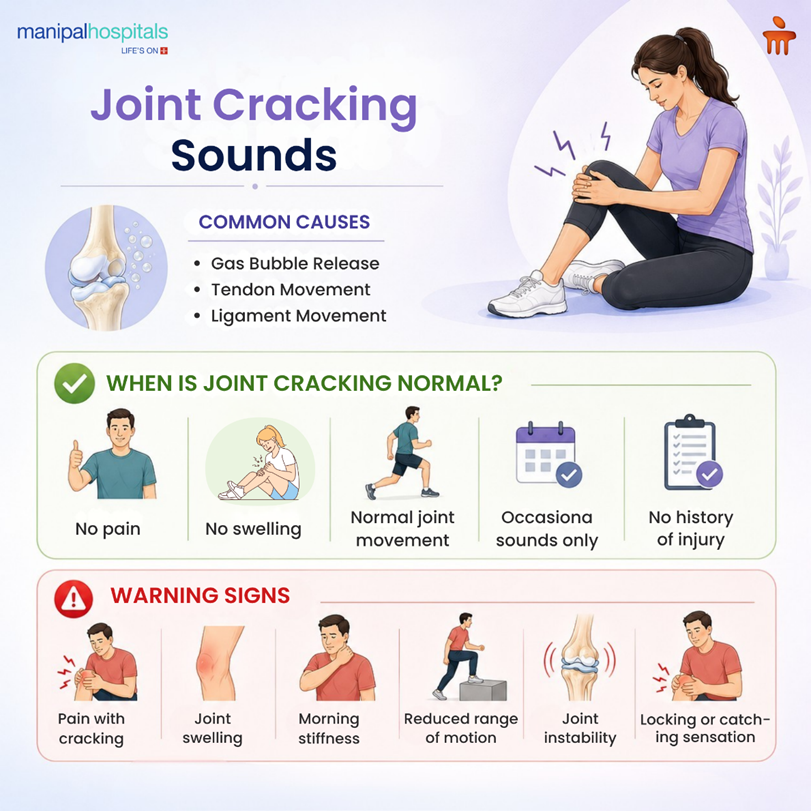
Many people wonder why joints crack even when there is no injury or pain. The answer often lies in the normal mechanics of how joints function. Joints are surrounded by a lubricating fluid called synovial fluid. This fluid contains dissolved gases such as oxygen, nitrogen, and carbon dioxide. During movement, pressure changes inside the joint can cause tiny gas bubbles to form and collapse, producing the familiar popping or cracking sound.
Other harmless reasons include:
-
Tendons briefly snap over nearby bones during movement
-
Ligaments tighten and then release as a joint changes position
-
Natural movement of joint surfaces during stretching
-
Changes in posture after remaining in one position for an extended period
These sounds alone are usually not a cause for concern and do not damage healthy joints.
The Most Common Reason for Cracking Sound in Joints
Joint sounds can arise from several different mechanisms, and not all of them indicate disease. Understanding the specific source often provides reassurance.
The most common reason for cracking sounds in joints is the release of gas bubbles within the synovial fluid. This process, known as cavitation, is responsible for the familiar pop heard when knuckles are cracked.
Other potential causes include:
-
Tendon Movement: As muscles contract and relax, tendons may shift slightly over bony structures. This can create a clicking sensation, particularly around the knees, shoulders, and ankles.
-
Ligament Adjustment: Ligaments help stabilise joints. During certain movements, they may stretch and then return to their normal position, creating a brief snapping sound.
-
Age-Related Joint Changes: With age, cartilage gradually becomes less smooth. This can increase friction between joint surfaces, making sounds more noticeable during movement.
When Is Joint Cracking Considered Normal?
Hearing occasional pops or clicks can feel unusual, but many healthy joints produce sounds throughout daily life. The key factor is whether other symptoms are present.
A cracking sound in joints is generally considered harmless when:
-
It occurs without pain
-
There is no swelling around the joint
-
Joint movement remains normal
-
The sound is occasional rather than progressively worsening
-
There is no history of significant injury
Athletes, dancers, and people with naturally flexible joints may notice joint sounds more frequently without any underlying problem.
Signs That Should Not Be Ignored
While most joint noises are harmless, certain accompanying symptoms may suggest a structural or inflammatory issue. Paying attention to these warning signs is important because early treatment often prevents further joint damage.
Seek medical evaluation if joint cracking occurs alongside:
-
Persistent or worsening pain
-
Swelling or warmth around the joint
-
Morning stiffness lasting more than 30 minutes
-
Locking or catching sensations during movement
-
Reduced range of motion
-
Joint instability or giving way
-
Recent trauma or sports injury
When these symptoms are present, the sounds may be related to cartilage damage, ligament injuries, arthritis, or other joint disorders. If you are experiencing persistent joint concerns, visit the best orthopaedic hospital in Hebbal for a thorough evaluation and expert treatment guidance.
Conditions That Can Cause Problematic Joint Cracking
Not every case of cracking bones and joints is harmless. Certain medical conditions can produce recurring noises along with other symptoms.
-
Osteoarthritis: This is the most common form of arthritis. As cartilage wears down, joint surfaces become rougher, leading to grinding or crackling sensations known as crepitus.
-
Meniscus Injuries: The knee contains cartilage cushions called menisci. Tears in these structures may cause clicking, locking, or popping during movement.
-
Rheumatoid Arthritis: This autoimmune condition causes inflammation of the joint lining. Over time, swelling and joint damage can alter movement patterns and produce unusual sounds.
-
Shoulder Impingement: When tendons become irritated within the shoulder joint, movement may produce clicking or snapping sensations, often accompanied by discomfort.
What Different Joint Sounds Can Tell You
Not all noises have the same meaning. The type of sound can sometimes offer clues about what is happening inside the joint.
|
Type of Sound |
Common Cause |
Typical Location |
What It May Suggest |
|
Single pop |
Gas bubble release |
Fingers, knees, spine |
Usually normal |
|
Clicking |
Tendon movement |
Knee, shoulder, hip |
Often harmless if painless |
|
Snapping |
Ligament movement |
Hip, ankle, wrist |
May occur during stretching |
|
Grinding |
Cartilage wear |
Knee, hip |
Possible degenerative changes |
|
Repetitive crackling |
Surface irregularities |
Arthritic joints |
May require assessment |
|
Locking with a pop |
Mechanical obstruction |
Knee |
Potential cartilage or meniscus issue |
Understanding these differences can help you recognise when monitoring is sufficient and when professional advice is needed.
Can Joint Cracking Be Prevented?
If the sounds occur naturally and without symptoms, there is usually no need to eliminate them. However, maintaining joint health can reduce unnecessary strain and lower the risk of future problems.
Helpful habits include:
-
Maintaining a healthy body weight
-
Staying physically active
-
Strengthening muscles around major joints
-
Performing regular flexibility exercises
-
Using proper technique during sports and exercise
-
Staying hydrated throughout the day
-
Avoiding prolonged periods of inactivity
These measures support cartilage health and improve overall joint function.
When Should You See a Doctor?
Many people search for answers about why cracking sounds in joints become more noticeable over time. While ageing can contribute, a sudden change in joint behaviour should not be ignored.
Arrange a medical consultation if:
-
Cracking starts after an injury
-
Symptoms interfere with daily activities
-
Pain persists despite rest
-
Swelling develops repeatedly
-
You experience joint weakness or instability
Early evaluation can identify treatable conditions before they become more advanced. Looking for expert care? Consult the best orthopaedic doctors in Hebbal for a comprehensive joint assessment and personalised treatment plan.
Conclusion
A cracking sound in joints is often a normal part of how the body moves and functions. In many cases, the sounds result from harmless pressure changes, tendon movement, or ligament adjustments. However, when joint noises are accompanied by pain, swelling, stiffness, or reduced mobility, they may indicate an underlying condition that requires attention.
Understanding the reason for cracking sounds in joints can help you distinguish between normal body mechanics and symptoms that warrant medical evaluation. If you notice persistent changes or concerning symptoms, seeking timely advice from an orthopaedic specialist at Manipal Hospital, Hebbal can provide clarity, reassurance, and appropriate treatment when needed.
FAQ's
No. Multiple scientific studies have found no evidence that habitual knuckle cracking causes arthritis. While it may temporarily reduce grip strength in some individuals immediately afterwards, it does not appear to damage healthy joints or increase arthritis risk.
Cold temperatures can affect muscle flexibility and make joint tissues feel stiffer. This may increase awareness of existing joint sounds, although the weather itself does not directly cause the cracking noises.
Vitamin deficiencies are not a common direct cause of joint cracking. However, inadequate levels of nutrients such as vitamin D may affect bone and muscle health, potentially contributing to discomfort or reduced joint function over time.
Yes. Individuals who exercise frequently often move their joints through a greater range of motion, making natural tendon and ligament movements more noticeable. Painless cracking during activity is usually considered normal.
Stress can lead to increased muscle tension, particularly around the neck, shoulders, and jaw. Tight muscles may alter movement patterns and make clicking or popping sounds more noticeable, even when the joints themselves are healthy.
Share this article on: