7 Min Read
Breast cancer is not a single disease with a one-size-fits-all treatment approach. It encompasses several distinct types and subtypes, each with its own unique biological characteristics and behaviour and, hence, response to therapy. As a result, treatment plans can vary considerably and are typically tailored to the individual patient, considering factors such as age, general health, comorbidities, and perceived ability to tolerate the treatment offered along with the cancer subtype, stage, and tumour biology.
One of the many treatment methods is hormone therapy for breast cancer, especially in the case of hormone receptor-positive breast cancer. Such a therapy helps block the hormones that promote tumour growth and prevent their recurrence.
Being aware of the different treatment options and the various aspects related to the treatment process is key to overcoming difficulties associated with the condition. Information about why a specific treatment method was chosen, how it affects the body, and what awaits the patient in the course of the treatment provides him with greater confidence in recovery.
In this blog, an experienced surgical oncologist in Hebbal, Bangalore, explains crucial aspects of hormone therapy for breast cancer, including what it involves, who can benefit from it the most, the different treatment options, the possible side effects, and everything caregivers need to consider for long-term care.
Synopsis
- What is Hormone Therapy?
- Who is an Ideal Candidate for Hormone Therapy?
- Types of Hormone Therapy Used in Breast Cancer
- How Long Does Treatment Continue?
- Treatment Planning: Factors That Influence the Choice of Therapy
- Hormone Therapy Side Effects
- How to Live Well While Receiving Treatment
- Conclusion
What is Hormone Therapy?
Breast cancer cells sometimes carry receptors that use the hormones, oestrogen or progesterone, to grow and multiply. When these receptors are present, the cancer is known as hormone receptor-positive breast cancer. This type of cancer accounts for about two-thirds of all breast cancers diagnosed worldwide.
Hormone therapy for cancer treatment works by blocking the body's ability to produce certain hormones or preventing cancer cells from using them to multiply. This slows down or stops cancer growth. Unlike chemotherapy, which directly attacks and kills rapidly dividing cells, hormone therapy tends to control the disease but does not eliminate it completely.
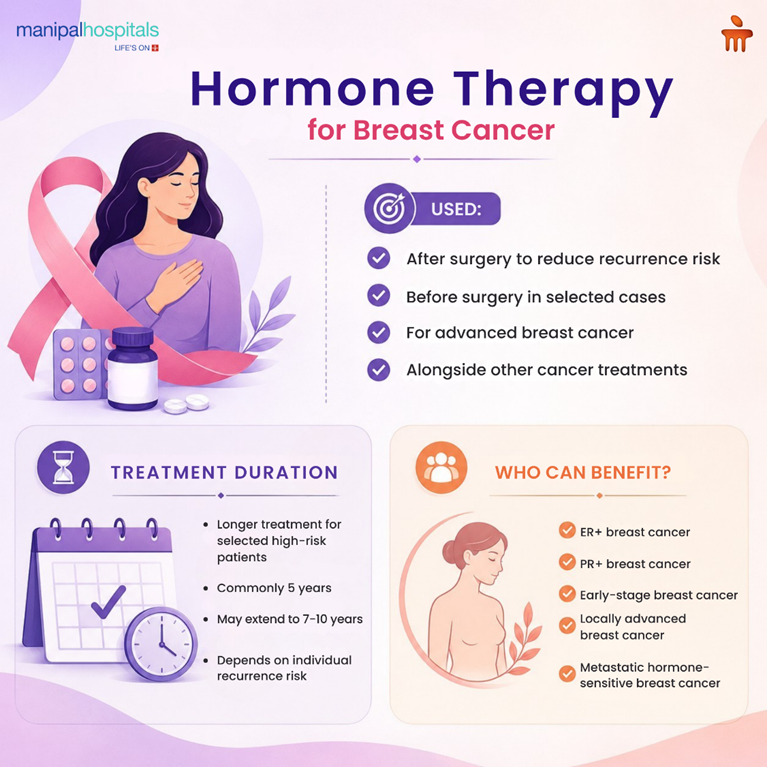
Hormone therapy is commonly recommended after surgery to lower the risk of cancer returning. In some situations, it may also be used before surgery or for advanced breast cancer that has spread beyond the breast.
Who is an Ideal Candidate for Hormone Therapy?
Not every breast cancer responds to hormones. Before recommending treatment, doctors perform specialised tests on tumour tissue to determine whether hormone receptors are present.
You may be advised to receive hormone therapy for breast cancer if:
-
Your tumour is oestrogen receptor-positive (ER-positive)
-
Your tumour is progesterone receptor-positive (PR-positive)
-
You have early-stage breast cancer with a risk of recurrence
-
You have locally advanced disease
-
You have metastatic breast cancer that remains hormone-sensitive
The decision also depends on factors such as age, menopausal status, overall health, and previous treatments received. However, it does not benefit women whose tumours do not express hormone receptors (hormone receptor-negative tumours).
Types of Hormone Therapy Used in Breast Cancer
Several treatment options are available, and the most suitable choice depends largely on whether you have reached menopause.
Selective Oestrogen Receptor Modulators (SERMs): They work by blocking the oestrogen receptor on the breast cancer cell. SERM drugs are normally used for women before they undergo menopause. Some well-studied drugs have proven to be effective in minimising recurrences and increasing survival rates among patients with hormone-sensitive breast cancer.
Aromatase Inhibitors (AIs): After menopause, most oestrogen is produced in fatty tissues rather than the ovaries. Aromatase inhibitors reduce this production.
Ovarian Suppression Therapy: Since the ovaries are the main source of estrogen in the body, reducing hormone production by suppressing ovarian function may be beneficial for many younger women. This goal can be achieved through medications or, less commonly, surgery. Ovarian suppression is sometimes combined with other forms of hormone therapy to enhance treatment efficacy.
SERMs and AIs are pills that are taken by mouth.
How Long Does Treatment Continue?
Unlike chemotherapy, which is usually completed within months, hormone therapy for cancer treatment may continue for a much longer period.
Treatment duration commonly ranges from:
-
5 years for most early-stage cancers
-
Longer courses, typically 7 to 10 years, may be advised for individuals with a higher risk of cancer recurrence
-
Longer periods in selected advanced cancer cases
The exact timeline is determined after carefully balancing the benefits of continued protection against potential long-term effects.
Treatment Planning: Factors That Influence the Choice of Therapy
Selecting the most appropriate approach involves more than simply identifying hormone receptors on cancer cells. Multiple factors are taken into consideration to personalise treatment and maximise benefit to ensure the best outcomes.
|
Factor Considered |
Why It Matters |
|
Menopausal status |
Determines which medications are most effective |
|
Tumour size and lymph nodal involvement |
Larger tumours with involved lymph nodes are likely to be advanced in stage and more aggressive in biology, with a potentially greater recurrence risk of cancer |
|
Previous cancer treatments |
Influences compatibility with future therapies |
|
Family history |
May indicate inherited cancer risk factors requiring further evaluation and screening. |
|
Age and existing medical conditions |
The perceived ability to tolerate therapy is important for medication safety and monitoring. |
|
Bone health |
Certain medications can affect bone density |
|
Fertility goals |
Particularly relevant for younger women |
This comprehensive evaluation allows oncologists to create a treatment plan that aligns with both effective cancer control and minimising the impact on quality of life and a patient's overall well-being.
Hormone Therapy Side Effects
Like any medical treatment, hormone therapy can cause side effects. However, experiences vary considerably from person to person.
The common side effects caused by hormone therapy include the following:
-
Hot flashes
-
Stiff joints
-
Changes in mood
-
Tiredness
-
Decreased sex drive
Some types of therapies could also interfere with bone density and blood clots for certain people. Follow-up visits help address these issues promptly. Many of these side effects can be effectively managed by adopting lifestyle modifications or with medications and are reversible after stopping treatment.
How to Live Well While Receiving Treatment
Although hormonal treatment is well tolerated by most patients, a prolonged period of therapy could become stressful both physically and mentally. During such times, small changes in everyday life could make a huge impact on one’s life.
Strategies that may help include:
-
Leading an active lifestyle through exercises
-
Taking a balanced, healthy diet
-
Maintaining a healthy body weight
-
Avoiding alcohol intake
-
Getting adequate sleep
-
Going for the recommended follow-ups
-
Reporting any new symptoms to your physician
Seeking support from your loved ones, peers, therapists, and breast cancer support groups will also guide you throughout the process of breast cancer hormone treatment.
Conclusion
In cases of hormone receptor-positive breast cancer, hormone therapy is among the most effective interventions for lowering recurrence rates and enhancing survival outcomes by inhibiting the action of hormones that promote the growth of cancers.
If you are contemplating hormone therapy for cancer treatment and need professional insights, it is ideal to consult a breast cancer specialist today. For consultations on hormone therapy for breast cancer in Hebbal, Bangalore, consult our experienced oncologists at Manipal Hospital Hebbal for accurate clinical information, support, and care that you need.
FAQ's
Yes. Some treatments can temporarily or permanently affect ovarian function, depending on your age and the type of therapy used. If future pregnancy is important to you, discuss fertility preservation options before starting treatment. Techniques such as egg or embryo freezing may be considered in appropriate cases.
Pregnancy is generally not recommended during treatment because certain medications may harm a developing baby. Reliable contraception should be used throughout treatment and for the period advised by your doctor after stopping medication.
The effects develop gradually. Hormone-blocking medications begin working soon after initiation, but the benefits are usually measured over months and years through reduced recurrence risk rather than immediate symptom changes.
Routine imaging schedules vary based on your individual situation. Many people do not require frequent scans unless new symptoms arise. Follow-up care usually includes clinical examinations, mammograms, and periodic assessment of treatment-related health concerns.
Stopping treatment without medical advice is not recommended. The protective effect depends on completing the prescribed duration. If side effects become difficult to manage, speak with your oncologist, as alternative medications or supportive treatments may help.
Share this article on: