7 Min Read
It can be scary to suddenly feel a sharp pain in your lower back or side. You bend, sit, or lie down, but nothing helps. The pain keeps coming in waves. That’s often how renal colic begins. Kidney stones are often the cause of renal colic, but the pain comes from a blockage in the urinary tract. Many people first mistake it for back pain until the intensity suddenly escalates. Unlike muscle pain, this doesn’t improve when you rest. In many cases, remaining still can actually make the sensation feel more prominent.
Through this blog a top urologist in Hebbal, explains the signs, causes, and treatment options that can help you spot renal colic early and get the help you need right away.
Synopsis
What Is Renal Colic Pain?
Renal Colic Pain occurs when a blockage in the urinary tract prevents the normal passage of fluid. This process usually begins when minerals in the urine crystallise to form solid deposits known as kidney stones. When a stone moves from the kidney into the narrow ureter, it can become physically lodged, creating a urinary tract obstruction.
This blockage causes urine to accumulate, which increases the physical pressure within the kidney and the ureter. In response, the smooth muscles of the ureter contract rhythmically in an attempt to move the obstruction. These strong, involuntary contractions result in the intense, intermittent discomfort characteristic of renal colic pain. The severity of the sensation is generally determined by the size of the stone and the specific degree of the blockage.
How Does Renal Colic Feel?
Renal colic has a very different pattern from other kinds of pain.
-
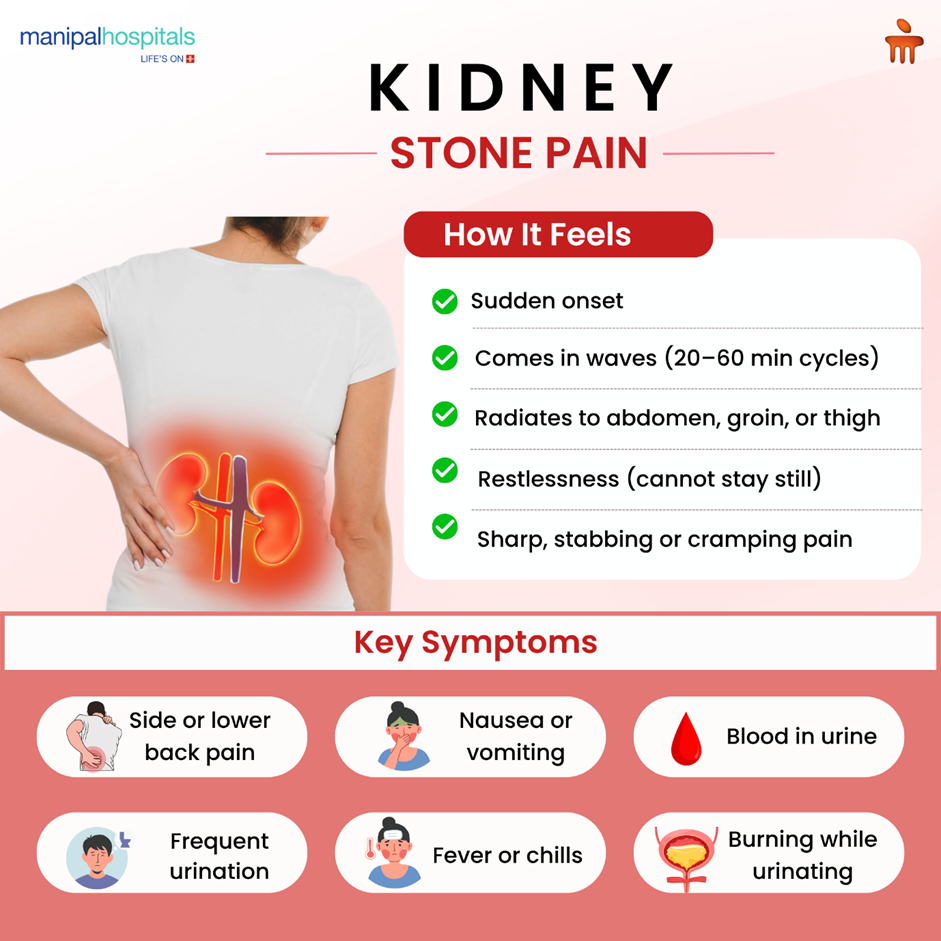
Sudden onset: Pain starts suddenly, usually without a clear cause.
-
Very intense: It can feel like a stabbing, sharp, or cramping pain.
-
Wave-like pattern: Pain comes and goes, occurs in waves lasting 20 to 60 minutes
-
Radiating pain: It usually moves from the back to the abdomen, groin, or thighs.
-
Restlessness: Patients often can't stay still and keep changing positions, unlike with back pain.
Many patients say that the pain is so bad that it stops them from doing things right away.
Common Symptoms of Renal Colic
Renal colic may come with other symptoms that are important clues, in addition to pain.
-
Lower back or side pain, usually felt below the ribs on one side.
-
Nausea and vomiting can happen due to severe pain and autonomic response.
-
Blood in urine (haematuria)
-
Increased urinary frequency
-
You may feel pain when you urinate (dysuria).
-
Fever and chills, which could be signs of an infection and a blockage.
It can be hard to recognise the signs early on because not all of them show up at the same time. This is why many people end up in emergency care.
What Causes Renal Colic Pain?
Renal colic is not a condition by itself; it’s a sign that something is blocking urine flow.
-
Kidney Stones: The most common cause; hard mineral deposits stop urine from flowing and cause pain right away.
-
Ureter Blockage: Pain can happen if something blocks the ureter, like a narrowing or pressure from the outside.
-
Blood Clots or Debris: Clots or pieces of tissue may block the flow of urine, but this is very rare.
-
Abnormalities in Structure: Changes in the urinary tract that are present at birth or that happen after birth can affect how urine drains.
-
Hyperparathyroidism: increases calcium levels and contributes to stone formation
Urinary tract infections may coexist, but are not a primary cause of renal colic pain. Knowing what caused the problem helps doctors figure out the best way to treat it.
Renal Colic vs Regular Back Pain
This comparison helps patients know when they need to see a doctor right away for pain.
|
Feature |
Renal Colic Pain |
Back Pain |
|
Onset |
Sudden and severe |
Gradual or after strain |
|
Nature of pain |
Sharp, cramping, wave-like |
Dull, aching |
|
Movement effect |
No relief with movement |
Improves with rest |
|
Location |
Side, flank, radiates to the groin |
Lower back area |
|
Associated symptoms |
Nausea, blood in urine |
Muscle stiffness |
|
Urgency |
May require emergency care |
Often self-limiting |
Diagnosing Renal Colic
When you seek help for renal colic pain, the medical team’s first priority is to confirm the presence of a urinary tract obstruction and rule out other life-threatening conditions like a ruptured aneurysm or ectopic pregnancy. The diagnostic tools used are:
-
Imaging: A non-contrast CT scan is the gold standard. It allows doctors to see the exact size, location, and density of the kidney stones.
-
Urinalysis: Testing a urine sample helps check for microscopic blood, crystals, or signs of bacteria that might suggest an infection is complicating the blockage.
-
Blood Work: Clinicians look for elevated white blood cell counts (indicating infection) and check kidney function markers like creatinine to ensure the kidneys aren't being damaged by the pressure of the backup.
Treatment Options for Renal Colic
The goal of treatment is to relieve pain and find the root cause.
Medical Treatment for Stones
If the stone is small (usually less than 5mm), there is a good chance it will pass on its own.
-
Pain Control: Non-steroidal anti-inflammatory drugs (NSAIDs) are often more effective than opioids for this specific pain because they reduce the inflammation and pressure within the ureter.
-
Alpha-Blockers: These medications help relax the muscles in the wall of your ureter, essentially "widening the pipe" to help the stone slide through more easily.
-
Aggressive Hydration: Drinking plenty of water (as long as you aren't vomiting) provides the necessary pressure to flush the stone out.
Surgical or Procedural Treatment
|
Procedure |
What It Does |
When It Is Used |
|
ESWL (Shock Wave Therapy) |
Breaks stones into smaller pieces |
For moderate-sized stones |
|
Ureteroscopy |
Removes or breaks stones using a scope |
For stones stuck in the ureter |
|
Percutaneous Nephrolithotomy |
Removes large stones directly |
For large or complex stones |
|
Stent placement |
Keeps urine flowing |
When the blockage is severe |
When Should You Visit the Doctor
Renal colic often starts suddenly and can be very intense. If your pain is severe, or you have a fever, chills, ongoing vomiting, trouble urinating, or you see blood in your urine, get medical help right away. These symptoms could mean a stone is blocking your urine or causing an infection, which can damage your kidneys if not treated.
The pain usually comes and goes until the stone passes or is removed. Getting help early can relieve your pain and prevent serious problems, helping to keep your kidneys healthy. Paying attention to your symptoms and seeking care quickly is important.
Conclusion
If you have renal colic pain, it points towards problems to be looked at, like kidney stones. The pain can come on suddenly and be severe, but most cases can be managed well with the right care. If the discomfort lingers or warning signs appear, you can reach out to our urology experts at Manipal Hospital at Hebbal, a trusted kidney specialist in Hebbal, Bangalore, to get clarity and direction. Early evaluation helps preserve your kidney function for the years ahead.
FAQ's
Renal colic pain can last anywhere from a few minutes to several hours and often comes in waves. The length of time it takes depends on the size and location of the stone and whether it passes on its own.
Yes, but not as often. Other causes of similar pain include urinary tract obstruction, infections, or structural problems. This is why it's important to get the right diagnosis.
Men are more likely to get renal colic, especially between the ages of 30 and 50. However, lifestyle and diet can raise the risk for both men and women.
Diet is a big part of it, but it's not the only thing. Hydration, genetics, and metabolic disorders also affect the risk of stone formation and recurrence.
Not always. You can treat mild cases at home with medicine and fluids, but if the pain is severe, you have an infection, or you have large stones, you may need to go to the hospital for treatment or surgery.
Share this article on: