7 Min Read
:_Symptoms,_Causes_Treatment.webp "Understanding TIA: Causes, Symptoms & Treatment Options")
The body sometimes gives a warning, but not very loudly. It may be easy to ignore a sudden weakness in the arm, a short time when it's hard to speak, or a moment when your vision is blurry. You might brush it off as a bad day or lack of sleep. But your body could be trying to tell you something important. In some cases, these short-lived symptoms could be a sign of something more serious, like a transient ischaemic attack (TIA).
A TIA is often called a 'mini-stroke'. It usually doesn’t cause permanent damage, but that doesn’t make it harmless. In fact, it’s often the body’s first warning sign that a more serious stroke could follow.
Through this blog, a top neurologist in Hebbal, Bangalore, helps you understand what a transient ischaemic attack is, what its causes are, and how to treat it, including how to deal with recurrent transient ischaemic attacks.
Synopsis
- What Is Transient Ischaemic Attack?
- Symptoms You Should Not Ignore
- What Causes a Transient Ischaemic Attack
- Who Is at Higher Risk of TIA?
- Recurrent Transient Ischaemic Attacks
- How Is a TIA Diagnosed?
- Transient Ischaemic Attack Treatment
- Comparison of Symptoms and Action
- When Should You Seek Medical Help?
- Conclusion
What Is Transient Ischaemic Attack?
A transient ischaemic attack (TIA) is a temporary interruption in blood flow to the brain. It is similar to a stroke, but the blockage is brief, and symptoms usually resolve within a short time.
Even though the symptoms go away, the brain is briefly deprived of oxygen. This is why doctors treat a TIA as a medical emergency and recommend immediate evaluation. Understanding what a transient ischaemic attack is important, as it can be an early warning sign of a future stroke.
Note: A TIA is often called a mini-stroke. It does not usually cause permanent brain damage, unlike a stroke. However, it is a serious warning sign, and the risk of stroke is highest in the first few days after a TIA.
Transient ischemic attacks (TIAs) are very common, with around 500,000 cases estimated each year. However, many cases go unnoticed because symptoms are temporary, difficult to detect after they end, or mistaken for other conditions.
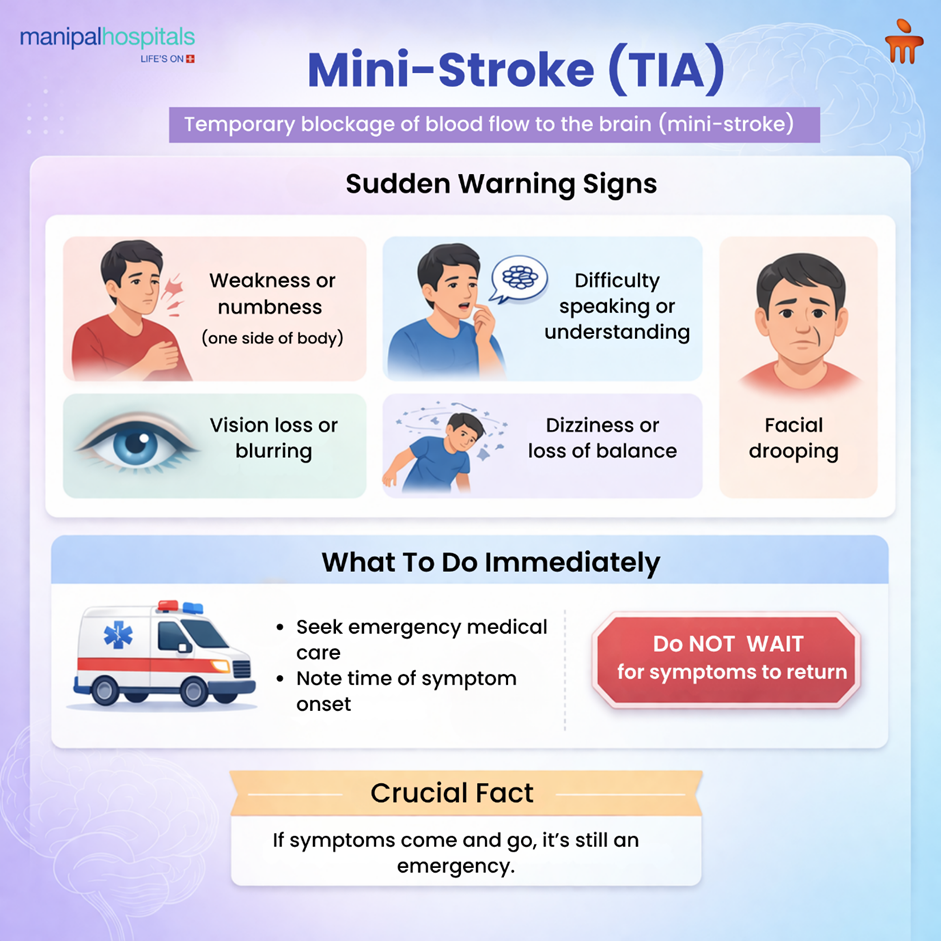
Symptoms You Should Not Ignore
TIA symptoms usually last a few minutes but can persist for up to 24 hours. Common signs include the following:
-
Sudden weakness or numbness on one side of the body
-
Difficulty speaking or understanding speech (aphasia)
-
Paralysis or one-sided weakness (hemiplegia)
-
TIA usually causes monocular vision loss (amaurosis fugax)
-
Dizziness or loss of balance (vertigo)
-
Loss of muscle control on one side of the face
The symptoms may disappear quickly, which is precisely why many people ignore them. Recognising them early lets you get treatment for a transient ischemic attack right away, which lowers the risk of having a stroke in the future.
What Causes a Transient Ischaemic Attack
To stop transient ischaemic attacks, you need to know what causes them. A temporary blockage in a blood vessel that supplies blood to the brain is the most common cause. Transient ischaemic attack causes the following:
-
Blood clots formed in the arteries (thrombosis)
-
Fatty deposits (atherosclerosis) that narrow blood vessels
-
Irregular heart rhythms like atrial fibrillation
-
High blood pressure damages the arteries
These conditions temporarily reduce blood flow to the brain and can lead to a transient ischaemic attack.
Who Is at Higher Risk of TIA?
Some things make it more likely that you will have a TIA, which shows how important it is to get treatment for a transient ischaemic attack right away:
-
Age above 55
-
Smoking
-
High blood pressure (hypertension)
-
Type 2 Diabetes
-
High cholesterol
-
Excess weight gain or obesity
-
Sedentary lifestyle
Taking care of these risk factors can help stop TIAs and recurrent transient ischaemic attacks. It is important to note that the stroke risk is highest in the first 24-48 hours after a TIA. That’s what makes it concerning.
A TIA is a medical emergency because it often warns that a stroke might happen soon. The risk of stroke is highest within the first few days after a TIA, making early treatment essential.
Recurrent Transient Ischaemic Attacks
Having one transient ischaemic attack (TIA) makes another more likely. Repeated episodes are especially serious because they greatly increase the risk of a full stroke. These recurrences often signal ongoing vascular blockage or poorly controlled risk factors like high blood pressure, diabetes, or smoking. They highlight the urgent need for medical intervention, regular follow-up, and strict adherence to treatment plans to protect against long-term damage.
How Is a TIA Diagnosed?
Doctors do tests to confirm the diagnosis and find the underlying causes of a transient ischaemic attack, even if the symptoms have gone away.
Common tests include:
-
Brain imaging (CT or MRI)
-
Carotid ultrasound to check blood flow
-
ECG to detect heart rhythm abnormalities
-
Blood tests for cholesterol and sugar levels
Early diagnosis makes it possible to treat transient ischaemic attacks quickly, which lowers the chance of problems later on.
Transient Ischaemic Attack Treatment
Transient ischaemic attack treatment aims to prevent stroke and address underlying causes. Treatment options include the following:
-
Medications: Aspirin, statins, blood thinners, antiplatelet drugs, and blood pressure medicines help your blood flow well and stop harmful clots from forming.
-
Lifestyle changes: Eating a healthy, balanced diet, staying active, and quitting smoking make your heart and blood vessels stronger.
-
Management of conditions: Controlling blood pressure, diabetes, and cholesterol lowers your chance of having another attack.
-
Surgical options: Sometimes, doctors perform procedures to improve blood flow to the brain.
Effective treatment for transient ischaemic attacks greatly lowers the risk of having another one.
Comparison of Symptoms and Action
This table shows common TIA symptoms and what actions you should take if they occur.
|
Symptom |
What It Causes |
What to Do |
|
Sudden weakness |
Reduced blood flow to the brain |
Seek emergency care |
|
Speech difficulty |
Brain ischaemia |
Immediate evaluation |
|
Vision changes |
Temporary blockage |
Urgent medical check |
|
Dizziness |
Circulatory issue |
Do not ignore symptoms |
|
Brief paralysis |
TIA warning sign |
Start the evaluation quickly |
When Should You Seek Medical Help?
Seek immediate medical help if you experience:
-
Sudden weakness or numbness, especially on one side of the body
-
Trouble speaking or understanding speech
-
Sudden vision loss or blurred vision
-
Severe dizziness or loss of balance
Even if these symptoms go away quickly, they may be a sign of a transient ischaemic attack (mini-stroke). Getting medical help early can prevent a full stroke and reduce serious complications.
Conclusion
Knowing what a transient ischaemic attack is, how to spot its symptoms, and how to treat its causes can help keep you from having serious complications. Patients can greatly lower their risk of stroke by getting timely and effective treatment for transient ischaemic attacks, including managing recurrent ones, with access to specialised neurology care at Manipal Hospital Hebbal.
If you or any of your loved ones are experiencing the above-discussed symptoms, consult our expert neurologists at Manipal Hospitals Hebbal for a detailed evaluation and expert guidance.
FAQ's
Yes, a person can have more than one transient ischaemic attack. Recurrent transient ischaemic attacks heighten the risk of stroke, rendering early diagnosis and ongoing treatment crucial for prevention.
Usually, symptoms last for a few minutes to an hour and go away completely within 24 hours. But even short episodes need to be treated right away to avoid problems or a stroke in the future.
No, a TIA is only temporary and doesn't hurt the brain permanently. A stroke, on the other hand, causes permanent damage. However, both conditions share the same causes and require immediate attention.
Yes, healthy habits like working out regularly, eating a balanced diet, quitting smoking, and keeping chronic conditions under control can greatly lower the risk of transient ischaemic attacks and other problems that come with them.
They aren't always true, but they are a strong warning sign. The risk of stroke goes up a lot, especially in the first few days after a transient ischemic attack, if you don't get the right treatment.
Share this article on:


.webp "Dr. Srinivas Raju | Neurology Specialist in Hebbal Bangalore | Manipal Hospitals")