6 Min Read
Hearing that you have PCOS can feel overwhelming. Many women immediately wonder, “What is the PCOS problem? Is it treatable? Will it affect fertility?”
Polycystic Ovary Syndrome (PCOS) is a common hormonal disorder that affects women of childbearing age. It can affect periods, hormones, and overall health. The excellent news is that most women can manage their symptoms and live a healthy life if they get diagnosed early and get the right care, which includes knowing what PCOS treatment is. In this blog, a leading obstetrician and gynaecologist in Hebbal discusses what PCOS is, what its symptoms are, what causes it, how to diagnose it, and how to treat it.
Synopsis
What Is PCOS?
PCOS is a hormonal disorder that causes the ovaries to make more male hormones (androgens) than normal. This can disrupt the menstrual cycle and ovulation. This may cause symptoms like irregular periods, acne, weight gain, and sometimes trouble with fertility. PCOS is often linked to insulin resistance, which can increase the risk of type 2 diabetes and heart disease. Early diagnosis, healthy lifestyle changes, and proper medical care can help manage symptoms, improve fertility, and protect long-term health.
What Is the Main Cause of PCOS?
The exact cause of polycystic ovary syndrome (PCOS) is not fully understood. It is considered a multifactorial endocrine disorder influenced by hormonal, metabolic, genetic, and environmental components. Factors associated with its development include:
-
Hormonal imbalance or excess production of male hormones
-
Insulin resistance that affects ovulation and metabolic balance
-
Genetic factors (hereditary)
-
Chronic low-grade inflammation
Most of the time, there isn't just one thing that causes PCOS. Instead, it's a combination of these things.
Symptoms of PCOS
Recognising symptoms early helps you deal with the problem of PCOS more effectively.
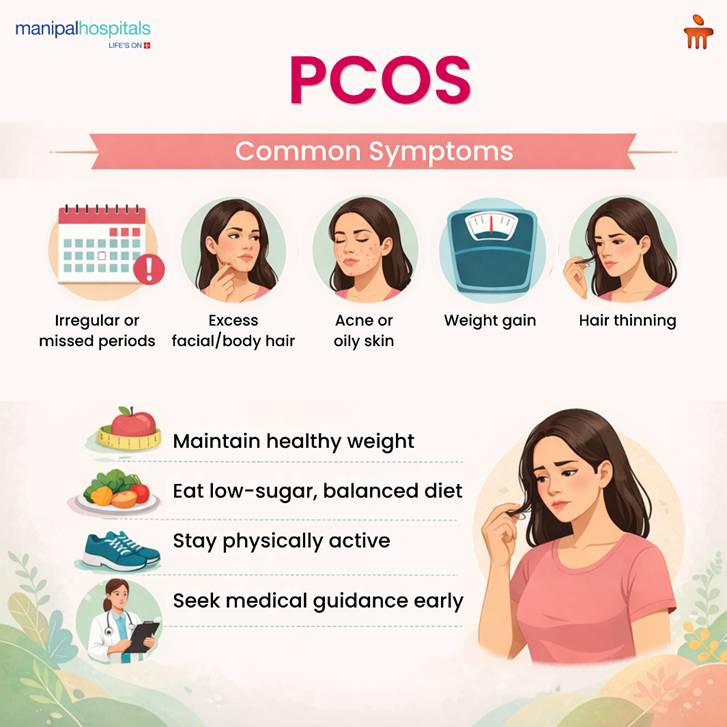
Some common signs are:
-
Irregular or absent periods
-
Excess hair on the face or body
-
Skin that is oily or has acne
-
Weight gain or obesity
-
Losing hair or thinning hair
Other signs that could mean something else:
-
Having trouble getting pregnant
-
Dark spots on the skin (acanthosis nigricans)
-
Changes in mood
For some women, PCOS may cause pregnancy complications such as gestational diabetes, preeclampsia, high blood pressure, preterm birth, or a C-section delivery.
Patients can link these symptoms to the condition by understanding what PCOS is.
How Is PCOS Diagnosed?
Doctors use symptoms, medical history, and tests to figure out if someone has PCOS.
Common diagnostic steps:
-
Medical history and symptom evaluation
-
Blood tests (hormone levels)
-
Ultrasound scan of the ovaries
-
Check vitals such as weight and blood pressure
-
Physical examination to locate acne and other skin changes
-
Pelvic exam to detect causes of abnormal bleeding
Most of the time, the diagnosis is based on at least two of the following symptoms:
-
Irregular ovulation or missed periods
-
High androgen levels cause acne and excess hair growth
-
Polycystic ovaries are located through an ultrasound
This helps to make sure that what is wrong with PCOS is correct.
What Happens in the Body with PCOS?
Knowing how the process works makes it easier to understand what the PCOS problem is.
What happens:
-
Hormonal imbalance occurs
-
Ovulation becomes irregular
-
Ovaries produce small cysts
-
The period cycle gets disturbed
This cycle shows why it's important to know what PCOS is to get the right treatment.
PCOS and Long-Term Health Risks
If not treated, the problem with PCOS can hurt your health over time.
Possible complications:
-
Type 2 diabetes
-
Heart disease
-
Infertility
-
Endometrial problems
Knowing what PCOS treatment is and getting diagnosed early can lower these risks.
What Is PCOS Treatment?
There is no one cure, but treatment focuses on controlling symptoms. Your doctor will decide how to treat you based on your symptoms, medical history, other health issues, and whether or not you want to get pregnant.
If you don’t plan for pregnancy:
-
Hormonal birth control: Pills, patches, shots, vaginal rings, or IUDs help regulate periods and reduce androgen-related symptoms.
-
Diabetes drugs (Metformin): Improve insulin sensitivity and help restore regular menstrual cycles.
-
Androgen-blocking drugs: Control acne and unwanted hair growth by reducing androgen effects.
-
Lifestyle changes: Healthy eating and weight management stabilise insulin levels and improve overall health.
If you plan for pregnancy:
-
Ovulation induction drugs: Medications like clomiphene citrate or letrozole stimulate ovulation.
-
Fertility support: Assisted reproductive technologies (ART) and IVF help achieve successful conception.
-
Surgical approach: Rarely used; may remove androgen-producing tissue to restore ovulation.
Patients can take charge of their condition by learning about PCOS treatment.
Diet and Lifestyle for PCOS
Lifestyle is a big part of dealing with the PCOS problem.
Helpful habits:
-
Eat low-glycaemic index foods
-
Avoid processed sugar
-
Stay physically active
-
Maintain a healthy weight
These changes make insulin more sensitive and help with PCOS treatment.
PCOS vs Normal Hormonal Cycle
This comparison helps you understand how PCOS affects the body compared to a normal hormonal cycle.
|
Feature |
PCOS |
Normal Cycle |
|
Periods |
Irregular |
Regular |
|
Ovulation |
Irregular/absent |
Monthly |
|
Hormones |
High androgens |
Balanced |
|
Fertility |
May be affected |
Normal |
This table helps people with PCOS understand their condition better.
When Should You See a Doctor?
If something about your cycle or body doesn’t feel right for a while, it’s worth getting it checked. You can consider seeing a doctor if you notice:
-
Periods that are irregular or stop coming for a few months
-
Extra hair growth on the face or body that feels unusual
-
Acne that keeps coming back or doesn’t improve
-
Sudden weight gain or difficulty losing weight
-
Trouble getting pregnant
-
Hair thinning or more hair fall than usual
-
Dark patches on the skin, especially around the neck or underarms
-
Mood changes, such as feeling low, anxious, or easily irritated
Getting help early can make it easier to manage symptoms and start the right PCOS treatment in Hebbal, Bangalore.
Conclusion
Understanding what is PCOS is the first step towards managing it effectively. Although it is a long-term condition, most women can control their symptoms with the right lifestyle changes and medical care.
Recognising early signs, knowing the possible causes, and exploring suitable PCOS treatment options can help improve overall health and quality of life. Consult our experienced OBG experts at Manipal Hospitals Hebbal, Bangalore for personalised care and support in managing PCOS confidently.
FAQ's
PCOS is a hormonal disorder in which the ovaries make too many androgens. This causes irregular periods, problems with ovulation, and symptoms like acne, weight gain, and excessive hair growth.
Hormonal imbalance, insulin resistance, genetics, and inflammation are some of the main causes of PCOS. In most cases, there isn't just one cause; instead, many things work together.
What is PCOS treatment? It includes changes to your lifestyle, medications, and help with getting pregnant if you need it. There is no permanent cure, but the right treatment can help control symptoms and improve long-term health outcomes.
Yes, it's important to know what PCOS is because it can affect ovulation and fertility. But with the right treatment for PCOS, many women can get pregnant and have healthy pregnancies.
If not treated, PCOS can cause long-term problems like diabetes or heart disease. But if you get diagnosed early and receive the right treatment for PCOS, you can greatly reduce these risks and problems.
Share this article on: